

Home
Class 12
PHYSICS
Positive and negative charges of equal m...

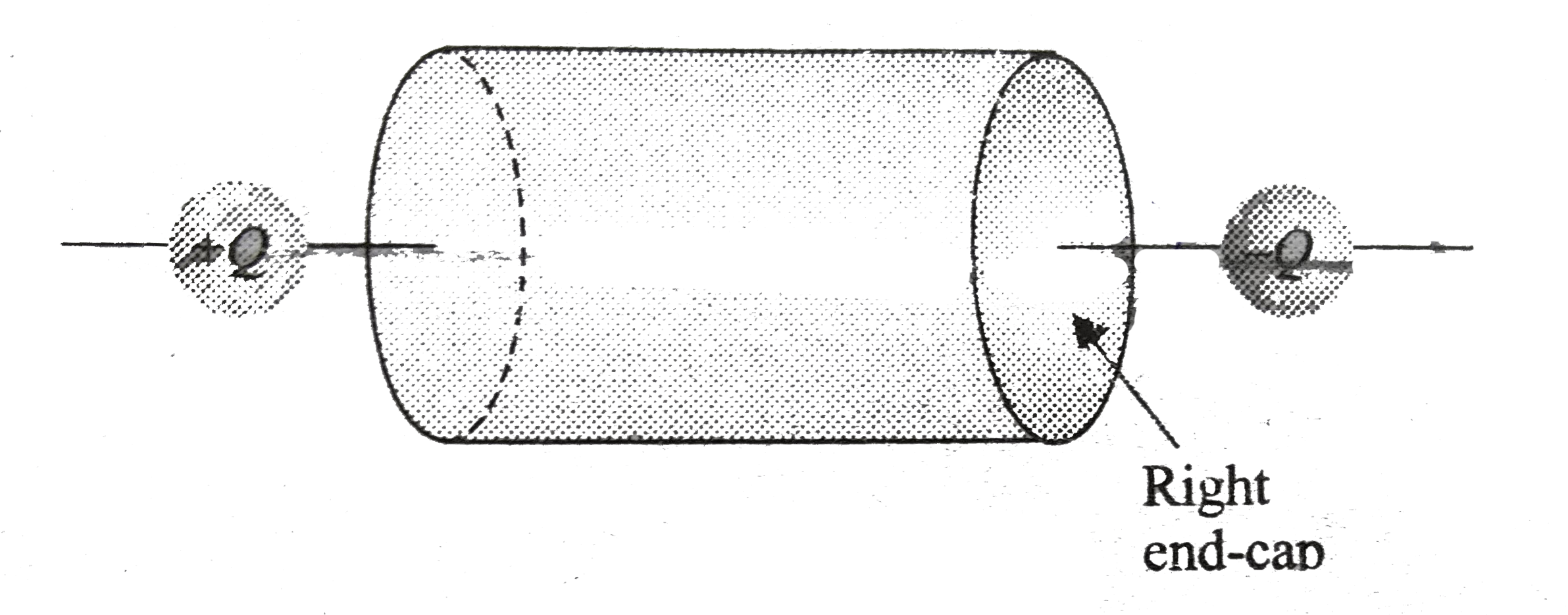
Positive and negative charges of equal magnitude lie along the symmetry axis of a cylinder. The distance from the positive charge to the left - end cap of the cylinder is the same as the distance from the negative charge to the right - end cap.

What is the flux of the electric field through the closed cylinder ?

Promotional Banner

Similar Questions

Explore conceptually related problems

Positive and negative charges of equal magnitude lie along the symmetry axis of a cylinder. The distance from the positive charge to the left - end cap of the cylinder is the same as the distance from the negative charge to the right - end cap. What is the sign of the flux through the right - end cap of the cylinder ?

A charge q is placed at the centre of a cylinder of radius R and length 2R. Then electric flux through the curved surface of the cylinder is

a point charge q is placed at the centre of a cylinder of length L and radius R the electric flux through the curved surface of the cylinder is

A cylinder of length L has a charge of magnitude q. The electric intensity at a point at a distance r from the axis of the cylinder is

An infinite line charge is at the axis of a cylinder of length 1 m and radius 7 cm. If electric field at any point on the curved surface of cylinder is 250" NC"^(-1) , then net electric flux through the cylinder is

An infinite line charge is at the axis of a cylinder of length 1 m and radius 7 cm. If electric field at any point on the curved surface of cylinder is 250" NC"^(-1) , then net electric flux through the cylinder is

An electric dipole consists of two equal and opposite point charge +Q and -Q, separated by a distance 2l. P is a point collinear with the charges such that its distance from the positive charge is half of its distance from the negative charge. Calculate electric intensity at P.