


Similar Questions
Explore conceptually related problems
Recommended Questions
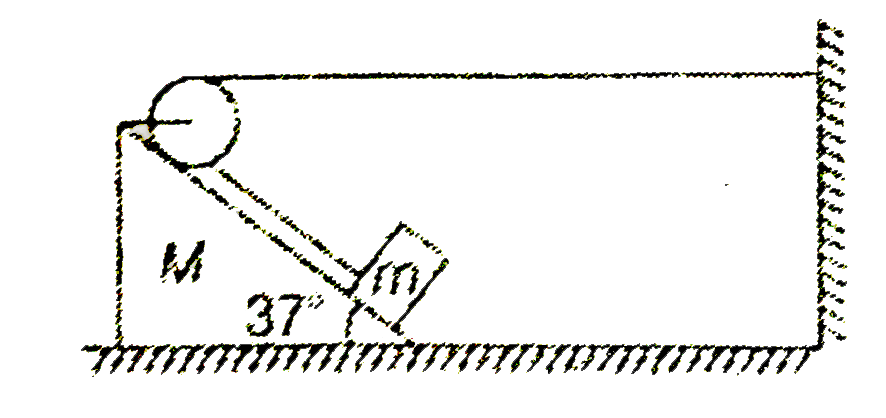
- A block of mass m=5 kg is placed on the wedge of mass M=32 kg as shown...
Text Solution
|
- In the adjoining figure a wedge is fixed to an elevator moving upwards...
Text Solution
|
- A block of mass m is released from the top of a wedge of mass M as sho...
Text Solution
|
- A block of mass m=5kg is placed on the wedge of mass M=32kg as shown i...
Text Solution
|
- A block of mass m=5 kg is placed on the wedge of mass M=32 kg as shown...
Text Solution
|
- A block of mass m slides down on inclined wedge of same mass m as show...
Text Solution
|
- In the arrangement shown in the fig. the block of mass m lies on the w...
Text Solution
|
- In the arrangement shown in the fig. the block of mass m lies on the w...
Text Solution
|
- Two blocks, each having mass m, are connected with an ideal string thr...
Text Solution
|