Home
Class 12
CHEMISTRY
Which of the following reactions cannot ...

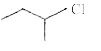
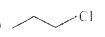
Which of the following reactions cannot proceed by `S_(N)1` mechaism ?

A

B

C

D

Text Solution

AI Generated Solution

The correct Answer is:

To determine which of the given reactions cannot proceed by the \( S_N1 \) mechanism, we need to analyze the stability of the carbocations formed in each reaction. The \( S_N1 \) mechanism involves the formation of a carbocation intermediate, and the stability of this carbocation is crucial for the reaction to proceed. ### Step-by-Step Solution: 1. **Understand the \( S_N1 \) Mechanism**: - The \( S_N1 \) mechanism involves two steps: 1. Formation of a carbocation by the departure of a leaving group (like Cl). 2. Nucleophilic attack on the carbocation. - The stability of the carbocation is key; more stable carbocations favor \( S_N1 \) reactions. 2. **Identify the Stability of Carbocations**: - Carbocations can be classified based on their degree: - **Tertiary (3°)**: Most stable due to hyperconjugation and inductive effects. - **Secondary (2°)**: Moderately stable. - **Primary (1°)**: Least stable and often does not form via \( S_N1 \). - **Methyl**: Very unstable, does not form via \( S_N1 \). 3. **Analyze Each Option**: - **Option A**: Forms a carbocation that is stabilized by resonance from a ring structure. This reaction can proceed via \( S_N1 \). - **Option B**: Forms a tertiary carbocation upon the departure of Cl. This reaction can proceed via \( S_N1 \). - **Option C**: Forms a secondary carbocation upon the departure of Cl. This reaction can also proceed via \( S_N1 \). - **Option D**: Forms a primary carbocation upon the departure of Cl. Primary carbocations are very unstable and do not favor \( S_N1 \); they typically undergo \( S_N2 \) reactions instead. 4. **Conclusion**: - The reaction that cannot proceed by \( S_N1 \) mechanism is the one that forms a primary carbocation, which is found in **Option D**. ### Final Answer: **Option D** cannot proceed by \( S_N1 \) mechanism.

To determine which of the given reactions cannot proceed by the \( S_N1 \) mechanism, we need to analyze the stability of the carbocations formed in each reaction. The \( S_N1 \) mechanism involves the formation of a carbocation intermediate, and the stability of this carbocation is crucial for the reaction to proceed. ### Step-by-Step Solution: 1. **Understand the \( S_N1 \) Mechanism**: - The \( S_N1 \) mechanism involves two steps: 1. Formation of a carbocation by the departure of a leaving group (like Cl). 2. Nucleophilic attack on the carbocation. ...
Promotional Banner

Topper's Solved these Questions

  • ORGANIC CHEMISTRY SOME BASIC PRINCIPLES AND TECHNIQUES

    DISHA PUBLICATION|Exercise Exercise - 2 : Concept Applicator|30 Videos
  • ORGANIC CHEMISTRY SOME BASIC PRINCIPLES AND TECHNIQUES

    DISHA PUBLICATION|Exercise Exercise - 1 : Concept Builder (Topicwise) TOPIC 2 : isomerism in Organic Compounds )|17 Videos
  • JEE MAIN 2019

    DISHA PUBLICATION|Exercise MCQs|30 Videos
  • POLYMERS

    DISHA PUBLICATION|Exercise EXERCISE -2 : CONCEPT APPLICATOR|30 Videos

Similar Questions

Explore conceptually related problems

Which of the following reactions cannot occur ?

Which of the following reactions take place by S_(N^(2)) reaction?

Which of the following reactions proceed at low pressure?

Which of the following reactions does not proceed in forward direction?

Which of the following reactions does not proceed in forward direction?

Which of the following reactions is an example of S_(N^(2)) reaction?

Which of the following reaction will not proceed via carbanion intermediate ?

Which of the following products can be obtained by S_(N^(1)) reaction?

DISHA PUBLICATION-ORGANIC CHEMISTRY SOME BASIC PRINCIPLES AND TECHNIQUES -Exercise - 1 : Concept Builder (Topicwise) TOPIC 3 : Concepts of Reaction Mechanism in Organic Compounds and Purification
  1. In which of the following pairs A is more stable than B ?

    Text Solution

    |

  2. Which of the following has the highest nucleophilicity ?

    Text Solution

    |

  3. The increasing order of the boiling points for the following compound ...

    Text Solution

    |

  4. Which of the following compouns has most acidic hydrogen ?

    Text Solution

    |

  5. Polarization of electrons in acrolein may be written as:

    Text Solution

    |

  6. Identify most acidic hydrogen present in the above compound :

    Text Solution

    |

  7. Of the following compounds, which will have a zero dipole moment ?

    Text Solution

    |

  8. Which statement is incorrect in respect of the above reaction ?

    Text Solution

    |

  9. Carbon-carbon double bond lenghth will be maximum in which of the foll...

    Text Solution

    |

  10. The structure of CH(2)=C=CH(2) is :

    Text Solution

    |

  11. Which of the following will show aromatic behaviour ?

    Text Solution

    |

  12. Which of the following reactions cannot proceed by S(N)1 mechaism ?

    Text Solution

    |

  13. Ketene CH2=C=O has

    Text Solution

    |

  14. Which one of the following does not have sp^(2) hybridised carbon ?

    Text Solution

    |

  15. How many pi - bonds are present in naphthalene ?

    Text Solution

    |

  16. The shape of methyl carbanion is similar to that of -

    Text Solution

    |

  17. Which of the following represents the correct order of stability of ca...

    Text Solution

    |

  18. Which one of the following is most reactive towards electrophilic reag...

    Text Solution

    |

  19. The pair of electron in the given carbanion, CH(3)C -= C^(Θ), is prese...

    Text Solution

    |

  20. The major product of dehydraction of the following

    Text Solution

    |
