

Home
Class 11
PHYSICS
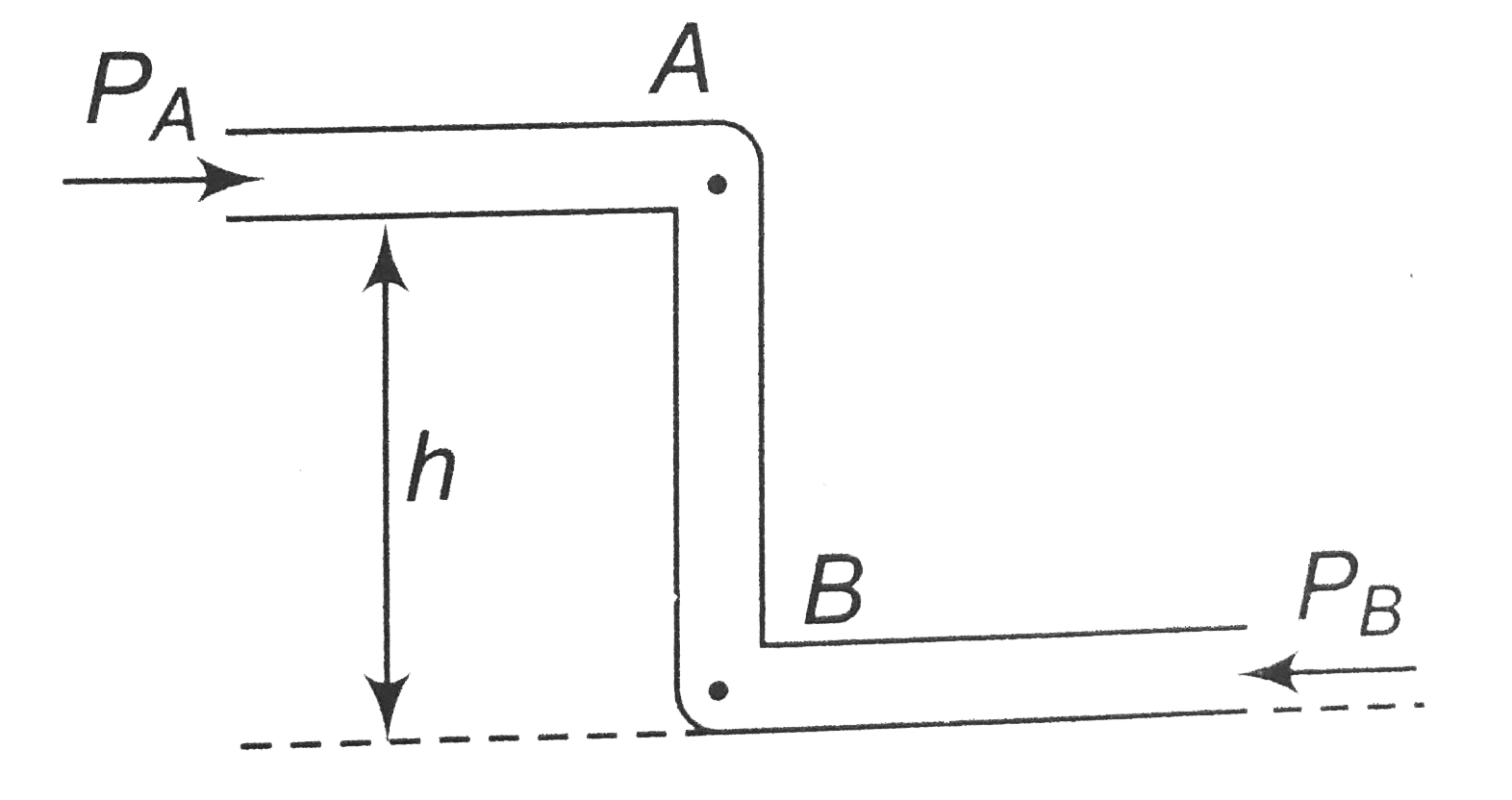
Figure shows an ideal fluid flowing thro...

Figure shows an ideal fluid flowing through a uniform cross-sectional tube in the vertical tube with liquid velocities `v_(A)` and `v_(B)` and pressure `P_(A)` and `P_(B)`. Knowing that offers no resistance to fluid flow then which of the following is true.

Promotional Banner

Similar Questions

Explore conceptually related problems

In the figure, an ideal liquid flows through the tube, which is of uniform cross section. The liquid has velocities v_(A) and v_(B) , and pressures P_(A) and P_(B) at the points A and B , respectively. Then

In the figure, an ideal liquid flows through the tube, which is of uniform cross section. The liquid has velocities v_(A) and v_(B) , and pressures P_(A) and P_(B) at the points A and B , respectively. Then

An ideal fluid is flowing through the given tubes which is placed on a horizontal surface. If the liquid has velocities V_(A) and V_(B) and pressure P_(A) and P_(B) at point A and B respectively, then the correct relation is ( A and B are at same height from ground level. the figure shown is as in the system is seen from the top):

An ideal fluid is flowing through the given tubes which is placed on a horizontal surface. If the liquid has velocities V_(A) and V_(B) and pressure P_(A) and P_(B) at point A and B respectively, then the correct relation is ( A and B are at same height from ground level. the figure shown is as in the system is seen from the top):

In this figure, an ideal liquid flows through the tube having uniform area of cross-section and is held in vertical plane. Find the ratio of speed of liquid at A and B and also find the pressure difference between- these points.

In this figure, an ideal liquid flows through the tube having uniform area of cross-section and is held in vertical plane. Find the ratio of speed of liquid at A and B and also find the pressure difference between- these points.

An ideal fluid flows through a pipe of circular cross - section with diameters 5 cm and 10 cm as shown in the figure. The ratio of velocities of fluid at A and B is