

Home
Class 12
PHYSICS
Figure shows a conductor of length l hav...

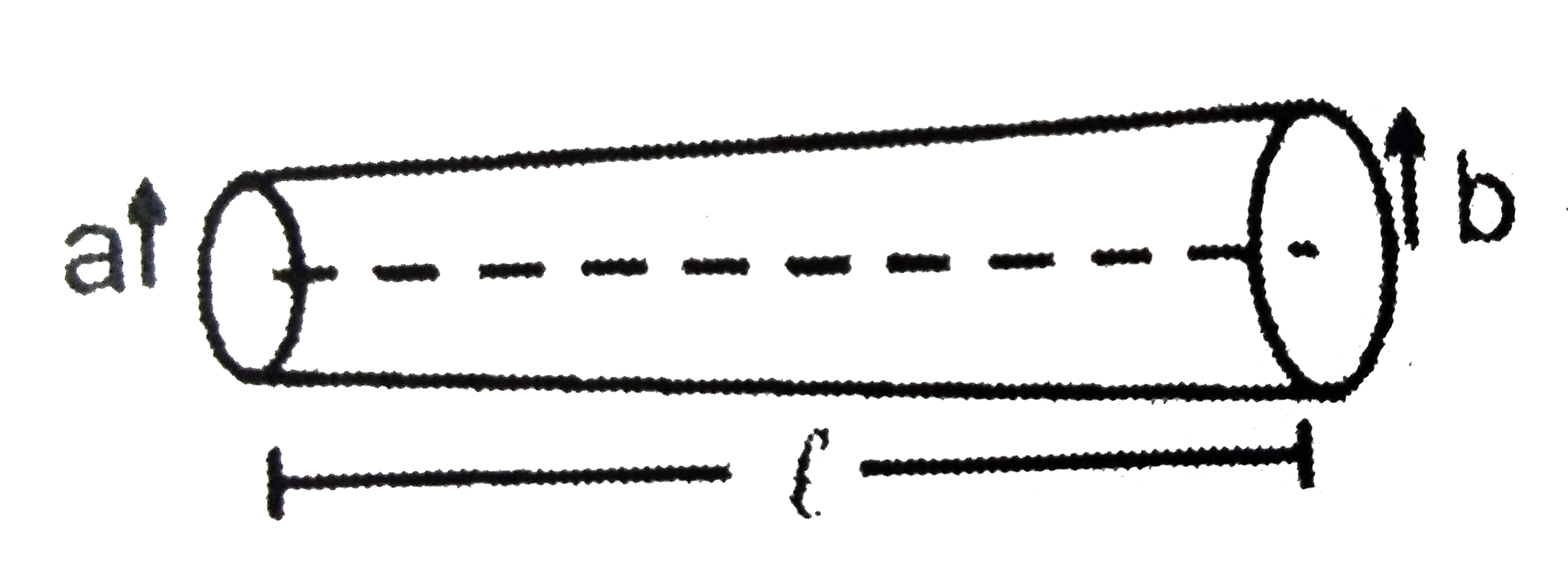
Figure shows a conductor of length l having a circular cross-section. The radius of cross-section varies linearly from a to b. Find the resistance of the conductor. ltbtgt

Promotional Banner

Similar Questions

Explore conceptually related problems

Shown a conductor of length l having a circular cross section. The radius of cross section varies linearly form a to b . The resistivity of the material is (rho) .Assuming that b-altltl ,find the resistance of the conductor.

Shown a conductor of length l having a circular cross section. The radius of cross section varies linearly form a to b . The resistivity of the material is (rho) .Assuming that b-altltl ,find the resistance of the conductor.

Shown a conductor of length l having a circular cross section. The radius of cross section varies linearly form a to b . The resistivity of the material is (rho) .Assuming that b-altltl ,find the resistance of the conductor.

Shown a conductor of length l having a circular cross section. The radius of cross section varies linearly form a to b . The resistivity of the material is (rho) .Assuming that b-altltl ,find the resistance of the conductor.

A conductor of length l has a non-uniform cross-section. The radius of cross-section varies linearly from a to b . The resistivity of the material is rho . Find the resistance of the conductc across its ends.

A conductor of length l has a non-uniform cross-section. The radius of cross-section varies linearly from a to b . The resistivity of the material is rho . Find the resistance of the conductc across its ends.

A conductor of length l and area of cross-section A has a resistance R then its specific resistance is

Resistance of a conductor of length l and area of cross-section A is R. If its length is doubled and area of cross-section is halved, then find its new resistance.