Home
Class 12
CHEMISTRY
The cyclobutyl methylamine with nitrous ...

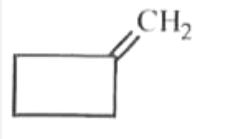
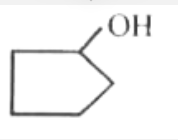
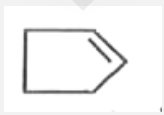
The cyclobutyl methylamine with nitrous acid gives

A

B

C

D

All of these

Text Solution

AI Generated Solution

The correct Answer is:

To solve the question regarding the reaction of cyclobutyl methylamine with nitrous acid, we will follow these steps: ### Step 1: Understand the Reactants We start with cyclobutyl methylamine, which has the following structure: - A cyclobutyl ring (a four-membered carbon ring). - A methyl group (–CH3) attached to a nitrogen atom (–NH2). ### Step 2: Reaction with Nitrous Acid When cyclobutyl methylamine reacts with nitrous acid (HNO2), a diazotization reaction occurs. This reaction typically converts primary amines into diazonium salts. ### Step 3: Formation of Diazotization Product The reaction can be represented as: - Cyclobutyl methylamine (C4H7NH2) + HNO2 → Cyclobutyl methyl diazonium salt (C4H7N2+Cl−). The nitrogen from the amine group is replaced with a diazonium group (N2+), and a chloride ion (Cl−) is formed as a byproduct. ### Step 4: Carbocation Formation Upon formation of the diazonium salt, the nitrogen gas (N2) is released, leading to the formation of a carbocation: - The diazonium salt loses nitrogen gas (N2) and forms a carbocation (C4H7+). ### Step 5: Possible Reactions of the Carbocation The carbocation can undergo several reactions: 1. **Proton Loss**: The carbocation may lose a proton (H+) to form an alkene. 2. **Ring Expansion**: The carbocation can also lead to ring expansion, resulting in the formation of larger cyclic compounds. 3. **Nucleophilic Attack**: If water is present, it can attack the carbocation, leading to the formation of an alcohol. ### Step 6: Conclusion Thus, the reaction of cyclobutyl methylamine with nitrous acid can yield multiple products including: - An alkene (from proton loss). - An alcohol (from nucleophilic attack by water). - A larger cyclic compound (from ring expansion). ### Final Answer The correct answer is that the reaction can produce multiple products, including an alcohol, an alkene, and a larger cyclic compound.
Promotional Banner

Topper's Solved these Questions

  • AMINES

    DISHA PUBLICATION|Exercise Exercise - 1 : Concept Builder (Topicwise)(TOPIC - 2 : Cyanides and Isocyanides)|9 Videos
  • AMINES

    DISHA PUBLICATION|Exercise Exercise - 1 : Concept Builder (Topicwise)(TOPIC - 3 : Concept Applicator)|13 Videos
  • AMINES

    DISHA PUBLICATION|Exercise Exercise - 2 : Concept Applicator|30 Videos
  • ALDEHYDES, KETONES AND CARBOXYLIC ACIDS

    DISHA PUBLICATION|Exercise Exercise - 2 : Concept Applicator|27 Videos
  • BIOMOLECULES

    DISHA PUBLICATION|Exercise Exercise - 2 : Concept Applicator|30 Videos

Similar Questions

Explore conceptually related problems

Treatment of cyclobutylmethyamine with nitrous acid does not give .

Diethylamine reacts with nitrous acid to give

1 mole of methylamine on reaction with nitrous acid gives at NTP:

The gas evolved when methylamine reacts with nitrous acid is

The gas evolved when methylamine reacts with nitrous acid is….

Tertiary amines with nitrous acid form

DISHA PUBLICATION-AMINES-Exercise - 1 : Concept Builder (Topicwise)(TOPIC - 1 : Amines and Amides)
  1. Aniline reacts with excess of phosgene and KOH to form :

    Text Solution

    |

  2. Primary amines on heating with "CS"(2) followed by excess of mercuric ...

    Text Solution

    |

  3. When benzene diazonium chloride is treated with cuprous chloride in H...

    Text Solution

    |

  4. The indicator that is obtained by coupling the diazonium salt of sulph...

    Text Solution

    |

  5. In a reaction of aniline a coloured product C was obtained. The s...

    Text Solution

    |

  6. The alkene formed as a major product in the above elimination reaction...

    Text Solution

    |

  7. Predict about the relative boiling point of the following two amines.

    Text Solution

    |

  8. Identify Z in the following sequence of reactions - CH(3)COONH(4) ov...

    Text Solution

    |

  9. Which of the following will produce isopropyl amine - (I) (CH(3))(2...

    Text Solution

    |

  10. In the following sequence of reactions, the compound C formed would be...

    Text Solution

    |

  11. Among the following isomeric C(4)H(11)N amines, one having the lowest ...

    Text Solution

    |

  12. Which of the following does not give N - ethyl cyclopentylamine as maj...

    Text Solution

    |

  13. Which of the following compounds is an enamine?

    Text Solution

    |

  14. Which of the following reaction will not given N, N - dimethyl benzami...

    Text Solution

    |

  15. A compound 'Z' reacts with three moles of CH(3)I and gives a product w...

    Text Solution

    |

  16. The cyclobutyl methylamine with nitrous acid gives

    Text Solution

    |

  17. The correct order of decreasing basic character of the three aliphatic...

    Text Solution

    |

  18. Predict the possible number of alkenes and the main alkene in the foll...

    Text Solution

    |

  19. Text Solution

    |

  20. Which of the following reactions is appropriate for converting acetami...

    Text Solution

    |
