

Home
Class 11
PHYSICS
A block of mass m has initial velocity u...

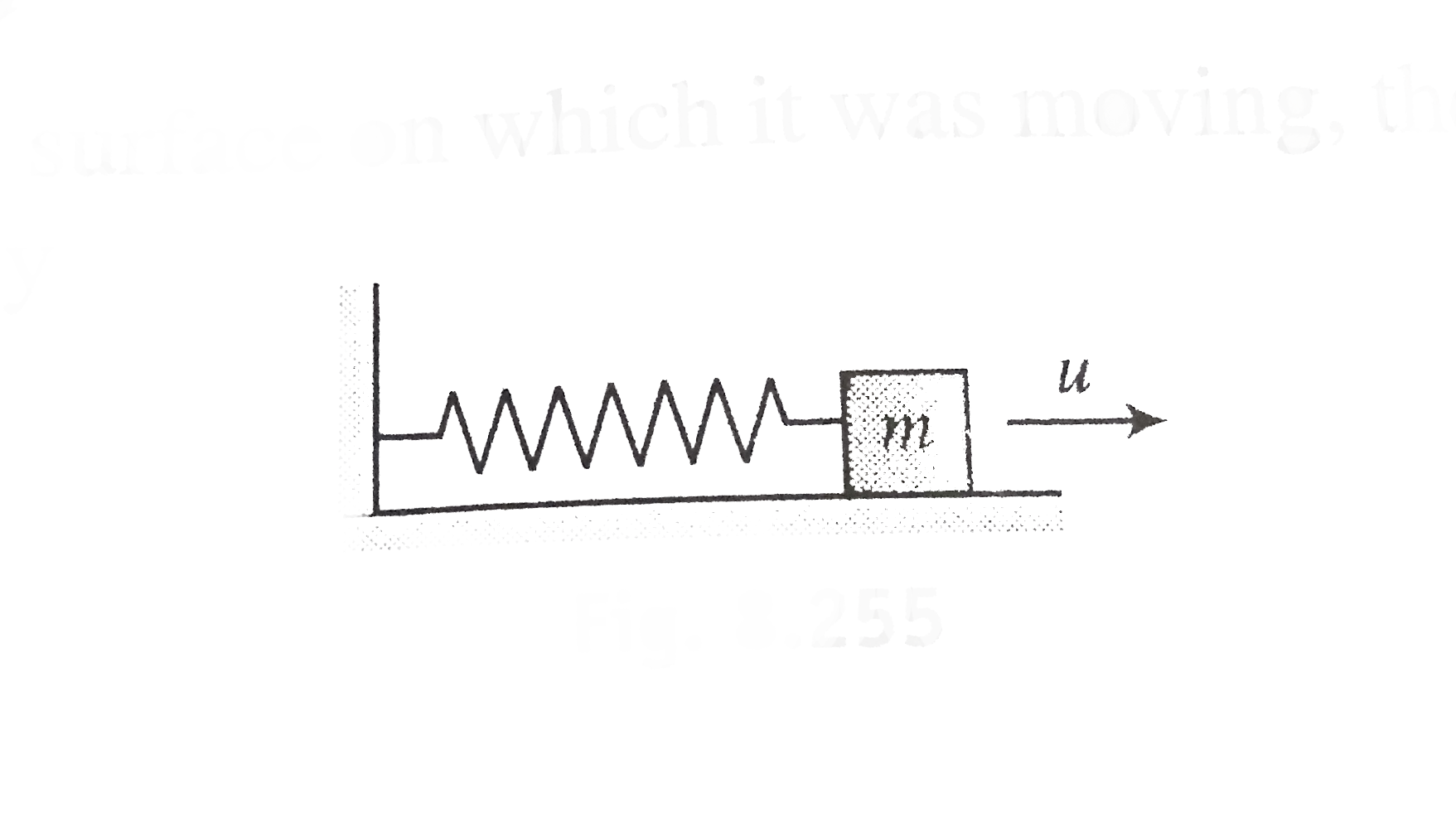
A block of mass `m` has initial velocity `u` having direction towards `+x` axis. The block stops after covering a distnce S causing similar extension in the spring of constant K holding it. If `mu` is the kinetic friction between the block and the surface on which it was moving, the distance S is given

Promotional Banner

Similar Questions

Explore conceptually related problems

The block shown is moving with constant velocity. Find mu_(k) between the block and the surface.

The block shown is moving with constant velocity. Find mu_(k) between the block and the surface.

A block of mass m is moving on a rough horizontal surface. mu is the coefficient of kinetic friction between the block and the surface. What is the net force exerted by the surface on the block?

A block slides with a velocity of 10 m/s on a rough horizontal surface. It comes to rest after covering a distance of 50 metre. If g is 10m//s^(2) , then the coefficient of dynamic friction between the block and the surface is

A block of mass m is moving with a speed v on a horizontal rought surface and collides with a horizontal monted spring of spring constant k as shown in the figure .The coefficient of friction between the block and the floor is mu The maximum cobnpression of the spring is

A block begins to move on a rough horizontal surface with an initial velocity u. If it loses of its initial kinetic energy in time t, the coefficient of kinetic friction between the block and the surface is

A rectangular block is kept on a rough horizontal surface and given some initial velocity. The coefficient of friction between the block and the surface is constant. The block will topple

A block of mass m is pushed momentarily along a horizontal surface with an initial velocity u. If mu_k is the coefficient of kinetic friction between the object and surface, find the time at which the block comes to rest.