Home
Class 11
CHEMISTRY
Passage Organic compounds mainly consi...

Passage
Organic compounds mainly consist of covalent bonds. The electron pair in these covalent bonds may undergo displacement either of their own or under the influence of other species. The cleavage of covalent bond between two atoms takes place in homolytic or heterolytic fashion. The homolytic fission results into free radicals while heterolytic fission results into carbocations and carbanions. These are also called reaction intermediates and are attacked by electrophiles and nucleophiles. The electrophiles seek electron rich sites while nucleophiles seek electron deficient sites.
Answer the followings Questions :
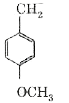
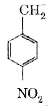
The most stable carbanion among the following is

A

B

C

D

Text Solution

AI Generated Solution

The correct Answer is:

To determine the most stable carbanion from the given options, we need to analyze the effects of substituents on the stability of the carbanion. Here’s a step-by-step solution: ### Step 1: Identify the Carbanions We have four carbanions to evaluate: 1. CH2^- 2. CH2^- with an electron-donating group (e.g., CH3) 3. CH2^- with an electron-withdrawing group (e.g., OCH3) 4. CH2^- with a strong electron-withdrawing group (e.g., NO2) ### Step 2: Understand the Stability Factors The stability of carbanions is influenced by: - **Electron-withdrawing groups (EWGs)**: These groups stabilize negative charges by pulling electron density away from the carbanion. - **Electron-donating groups (EDGs)**: These groups destabilize carbanions by increasing electron density at the negatively charged carbon. ### Step 3: Analyze Each Carbanion 1. **CH2^-**: This carbanion has no substituents, so it has a moderate stability. 2. **CH2^- with CH3**: The CH3 group is an EDG, which increases electron density and destabilizes the carbanion. 3. **CH2^- with OCH3**: The OCH3 group has a lone pair that can donate electrons (through resonance), which also increases electron density and destabilizes the carbanion. 4. **CH2^- with NO2**: The NO2 group is a strong EWG. It pulls electron density away from the carbanion, stabilizing the negative charge. ### Step 4: Conclusion Among the four carbanions, the one with the NO2 group is the most stable due to the strong electron-withdrawing effect of the NO2 group, which stabilizes the negative charge on the carbanion. ### Final Answer The most stable carbanion among the given options is the one with the NO2 group (option 4). ---
Promotional Banner

Topper's Solved these Questions

  • ORGANIC CHEMISTRY: BASIC PRINCIPLES AND TECHNIQUES

    MODERN PUBLICATION|Exercise (Competition File) MULTIPLE CHOICE QUESTIONS (with more than one correct answers)|10 Videos
  • MOCK TEST-2

    MODERN PUBLICATION|Exercise SECTION D|1 Videos
  • REDOX REACTIONS

    MODERN PUBLICATION|Exercise COMPETITION FILE (Objective Questions) (C. MULTIPLE CHOICE QUESTIONS)|9 Videos

Similar Questions

Explore conceptually related problems

Passage Organic compounds mainly consist of covalent bonds. The electron pair in these covalent bonds may undergo displacement either of their own or under the influence of other species. The cleavage of covalent bond between two atoms takes place in homolytic or heterolytic fashion. The homolytic fission results into free radicals while heterolytic fission results into carbocations and carbanions. These are also called reaction intermediates and are attacked by electrophiles and nucleophiles. The electrophiles seek electron rich sites while nucleophiles seek electron deficient sites. Answer the followings Questions : The most stable free radical among the following is

Passage Organic compounds mainly consist of covalent bonds. The electron pair in these covalent bonds may undergo displacement either of their own or under the influence of other species. The cleavage of covalent bond between two atoms takes place in homolytic or heterolytic fashion. The homolytic fission results into free radicals while heterolytic fission results into carbocations and carbanions. These are also called reaction intermediates and are attacked by electrophiles and nucleophiles. The electrophiles seek electron rich sites while nucleophiles seek electron deficient sites. Answer the followings Questions : The most stable carbocation is :

Passage Organic compounds mainly consist of covalent bonds. The electron pair in these covalent bonds may undergo displacement either of their own or under the influence of other species. The cleavage of covalent bond between two atoms takes place in homolytic or heterolytic fashion. The homolytic fission results into free radicals while heterolytic fission results into carbocations and carbanions. These are also called reaction intermediates and are attacked by electrophiles and nucleophiles. The electrophiles seek electron rich sites while nucleophiles seek electron deficient sites. Answer the followings Questions : Which of the following is most stable carbocation ?

Passage Organic compounds mainly consist of covalent bonds. The electron pair in these covalent bonds may undergo displacement either of their own or under the influence of other species. The cleavage of covalent bond between two atoms takes place in homolytic or heterolytic fashion. The homolytic fission results into free radicals while heterolytic fission results into carbocations and carbanions. These are also called reaction intermediates and are attacked by electrophiles and nucleophiles. The electrophiles seek electron rich sites while nucleophiles seek electron deficient sites. Answer the followings Questions : The hybridisation state of carbon in the carbocation C_6 H_5 CH_(2)^(+) is

Passage Organic compounds mainly consist of covalent bonds. The electron pair in these covalent bonds may undergo displacement either of their own or under the influence of other species. The cleavage of covalent bond between two atoms takes place in homolytic or heterolytic fashion. The homolytic fission results into free radicals while heterolytic fission results into carbocations and carbanions. These are also called reaction intermediates and are attacked by electrophiles and nucleophiles. The electrophiles seek electron rich sites while nucleophiles seek electron deficient sites. Answer the followings Questions : Which of the following is the most stable cation ?

Passage Organic compounds mainly consist of covalent bonds. The electron pair in these covalent bonds may undergo displacement either of their own or under the influence of other species. The cleavage of covalent bond between two atoms takes place in homolytic or heterolytic fashion. The homolytic fission results into free radicals while heterolytic fission results into carbocations and carbanions. These are also called reaction intermediates and are attacked by electrophiles and nucleophiles. The electrophiles seek electron rich sites while nucleophiles seek electron deficient sites. Answer the followings Questions : Diazomethane decomposes in the presence of light to give

The cleavage of a covalent bond between two atoms of a reactant in organic reaction can occur in

For a covalent bond to form between two atoms A and B.
