

Home
Class 12
PHYSICS
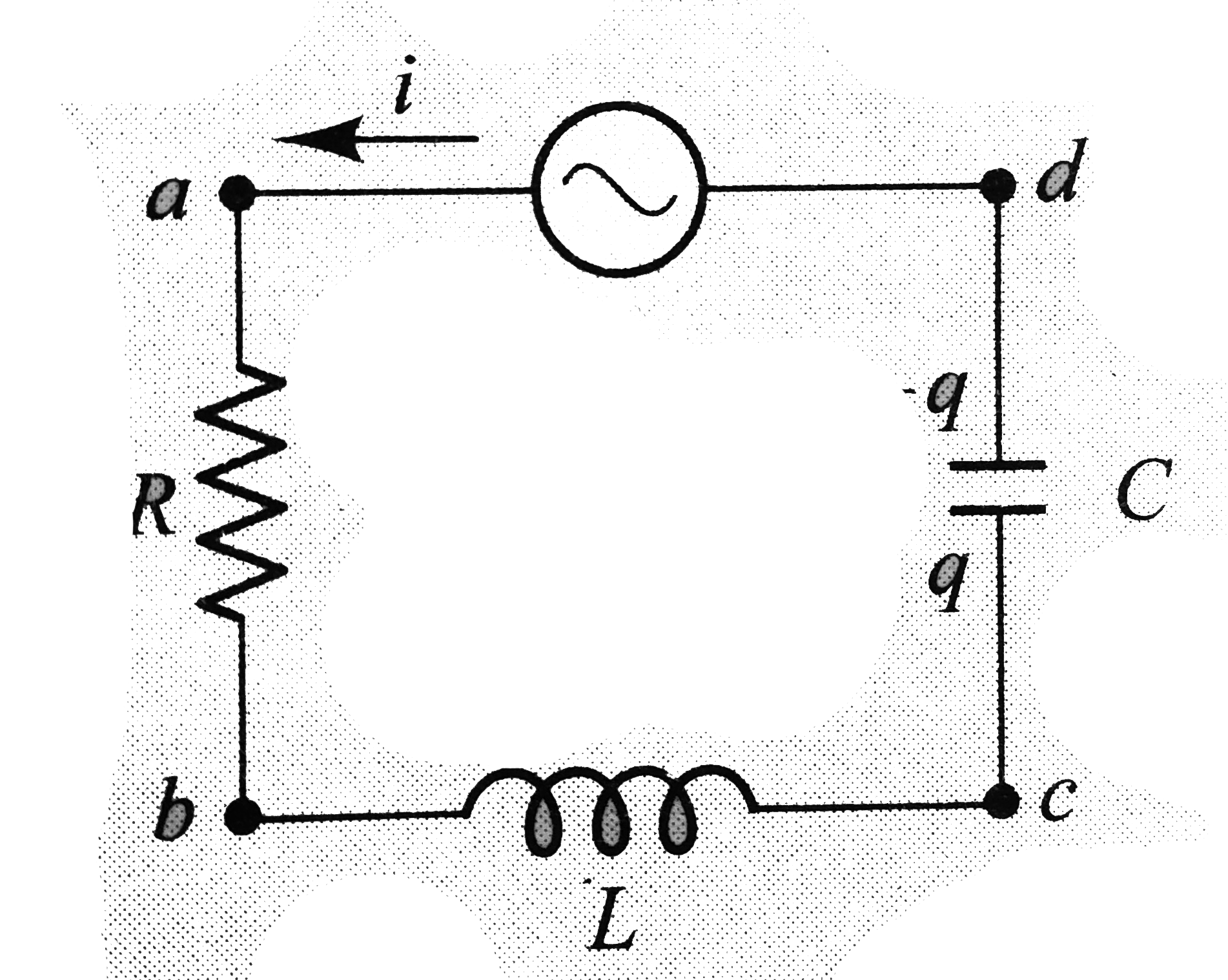
In the series curcuit of fig, suppose R=...

In the series curcuit of fig, suppose `R=300 Omega,L=60mH,C=0.50(mu)F`, source amplitude is `E_(0)=50V and omega=10000 rad s^(-1)`. Find the reactances `X_(L) and X_(C)`, the impedance Z, the current amplitude `I_(0)`, the phase angle `phi`, and the voltage amplitude across each circuit element.
.

Promotional Banner

Similar Questions

Explore conceptually related problems

In the series curcuit of fig, suppose R=300 Omega,L=60mH,C=0.50(mu)F , source amplitude is E_(0)=50V and omega=10000 rad s^(-1) . Find the reactances X_(L) and X_(C) , the impedance Z and the current amplitude I_(0) . .

In a series circuit R=300Omega, L=0.9H, C=2.0 mu F, omega=1000 rad/s. The imedance of the circuit is

A series circuit consisting of a capacitor with capacitance C=22 mu F and a coil with active resistance R=20 Omega and iniductance L=0.35 H is connected to a source of alternating voltage with amplitude V_(m)=180 V and frequency omega=314 s^(-1) . Find : (a) the current amplitude in the circuit, (b) the phase difference between the current and the external voltage , (c) the amplitudes of voltage across the capacitor and the coil.

" In a series circuit "R=300Omega,L=0.9H,C=2.0 mu F" and "omega=1000rad/sec" ,The impendence of the circuit is "

In a series circuit R=300Omega, L=0.9H, C=2.0 muF and omega=1000rad//sec . The impedence of the circuit is

In a series circuit R=300Omega, L=0.9H, C=2.0 muF and omega=1000rad//sec . The impedence of the circuit is

In a series RC circuit, R = 30 ohm, C = 0.25 mu F , V = 100 V, omega = 10000 rad//s . Find the current in the circuit and calculate the voltage across the resistor and capacitor. Is the algebraic sum of these voltages more than the source voltage ? If yes, resolve the paradox.

In a series RC circuit, R = 30 ohm, C = 0.25 mu F, V = 100 V, omega = 10000 rad//s . Find the current in the circuit and calculate the voltage across the resistor and capacitor. Is the algebraic sum of these voltages more than the source voltage ? If yes, resolve the paradox.