

Home
Class 11
PHYSICS
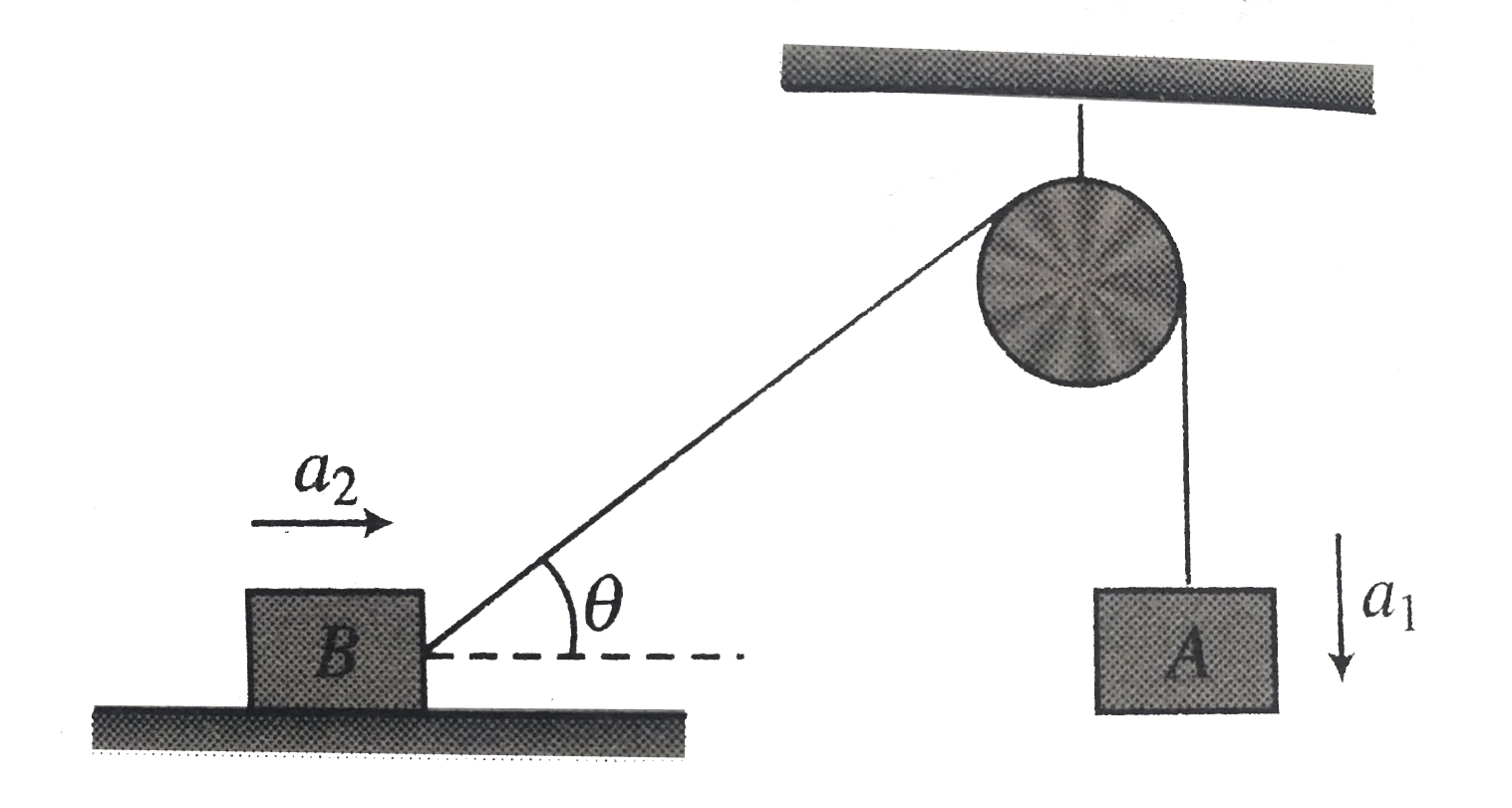
Figure shows two blocks each of mass m s...

Figure shows two blocks each of mass m system is released from rest. If acceleration of blocks A and B at any instant (not initially) are `a_(1)` and `a_(2)`, respectively. Then

Promotional Banner

Similar Questions

Explore conceptually related problems

In given system a_(1) and a_(2) are the accelerations of blocks 1 and 2. Then constraint relation is

In given system a_(1) and a_(2) are the accelerations of blocks 1 and 2. Then constraint relation is

Figure-2.54 shows a block of mass m is placed on an inclined wedge of mass M If the system is released from rest find the acceleration of m and M.

Figure shows a block of mass 2m sliding on a block of mass m. Find the acceleration of each block . ( All surface are smooth )

Figure shows a block of mass 2m sliding on a block of mass m. Find the acceleration of each block . ( All surface are smoth )

What is the acceleration of block A when the system is released from rest ?

Figure-2.64 shows a block of mass M supporting a bar of mass m through a pulley system. If system is released from rest, find the acceleration of block M and the tension in the strings

In Fig. a pulley is shown which is frictionless and a ring of mass m can slide on the string without any friction. One end of the string is attached to point B and to the other end, a block 'P' of mass m is attached. The whole system lies in vertical plane. Now another block 'C' of same mass m is attached to the block 'P' and system is released from rest. If a_(1) and a_(2) are the magnitudes of initial accelerations of ring and blocks, respectively, then

In Fig. a pulley is shown which is frictionless and a ring of mass m can slide on the string without any friction. One end of the string is attached to point B and to the other end, a block 'P' of mass m is attached. The whole system lies in vertical plane. Now another block 'C' of same mass m is attached to the block '13' and system is released from rest. If a_(1) and a_(2) are the magnitudes of initial accelerations of ring and blocks, respectively, then