

Home
Class 11
PHYSICS
A small coin of mass 80g is placed on th...

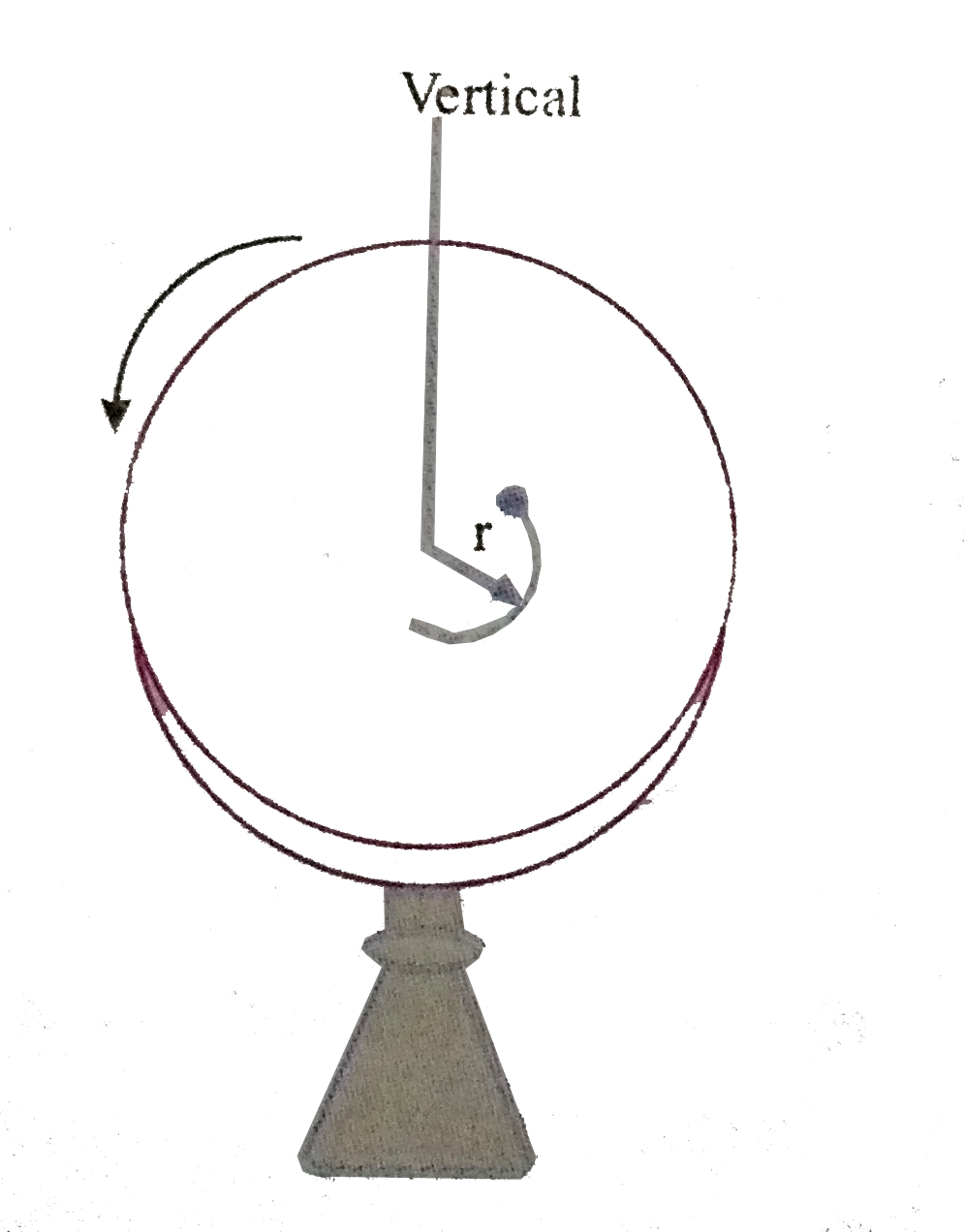
A small coin of mass `80g` is placed on the horizontal surface of a rotating disc. The disc starts from rest and is given a constant angular acceleration `alpha=2rad//s^(2)`. The coefficient of static friction between the coin and the disc is `mu_(s)=3//4` and cofficient of kinetic friction is `mu_(k)=0.5`. The coin is placed at a distance `r=1m` from the centre of the disc. The magnitude of the resultant force on the coin exerted by the disc just before it starts slipping on the disc is

Promotional Banner

Similar Questions

Explore conceptually related problems

A small coin of mass 40 g is placed on the horizontal surface of a rotating disc. The disc starts from rest and is given a constant angular acceleration alpha="2 rad s"^(-2) . The coefficient of static friction between the coin and the disc is mu_(s)=3//4 and the coefficient of kinetic friction is mu_(k)=0.5. The coin is placed at a distance r=1m from the centre of the disc. The magnitude of the resultant force on the coin exerted by the disc just before it starts slipping on the disc is?

A small coin of mass 40 g is placed on the horizontal surface of a rotating disc. The disc starts from rest and is given a constant angular acceleration alpha="2 rad s"^(-2) . The coefficient of static friction between the coin and the disc is mu_(s)=3//4 and the coefficient of kinetic friction is mu_(k)=0.5. The coin is placed at a distance r=1m from the centre of the disc. The magnitude of hte resultant force on the coin exerted by the disc just before it starts slipping on the disc is :

A coin placed on a horizontal rotating disc, with its centre at 10 cm from the centre of the disc, is about to slip off when the disc performs 60 rpm. Find the coefficient of friction between the coin and the disc.

A circular disc rotates at 60 rpm about an axis passing through its centre. A coin of 18 g is placed at a distance of 8 cm from the centre of the disc. Calculate the centrifugal force on the coin.

The coefficient of static friction between a small coin and the surface of a turntable is 0.30 . The turntable rotates at 2 rad s^(-1) . What is maximum distance from the centre of the turntable at which the coin will not slide ?

A disc of radius R rotates from rest about a vertical axis with a constant angular acceleration such that a coin placed with a tangenitial between a as shown in figure If the coefficient of static friction between the coin and disc is mu_(s) .Find the velocity of the before it start sliding relative as the disc

A disc of radius R rotates from rest about a vertical axis with a constant angular acceleration such that a coin placed with a tangenitial between a as shown in figure If the coefficient of static friction between the coin and disc is mu_(s) .Find the velocity of the before it start sliding relative as the disc

A disc of radius R rotates from rest about a vertical axis with a constant angular acceleration such that a coin placed with a tangenitial between a as shown in figure If the coefficient of static friction between the coin and disc is mu_(s) .Find the velocity of the before it start sliding relative as the disc

A coin just remains on a disc rotating at a steady rate of 180r.p.m .A coin is kept at a distance of 2 cm from the axis of rotationn . The coefficient of fricition between the coin and the disc is _____ [ gg= 9.8 m//s^(2)]

A coin is placed on the horizontal surface of a rotation disc. The distance of the coin from the axis is 1 m and coefficient of friction is 0.5. If the disc starts from rest and is given an angular acceleration (1)/(sqrt(2)) rad / sec^(2) , the number of revolutions through which the disc turns before the coin slips is