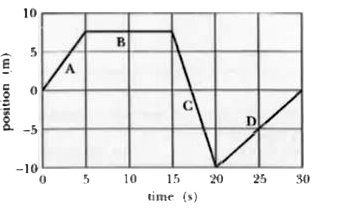
A
B
C
D
Text Solution
Verified by Experts
The correct Answer is:



Topper's Solved these Questions
MOTION ALONG A STRAIGHT LINE
RESNICK AND HALLIDAY|Exercise PRACTICE QUESTIONS ( Matrix-Match)|3 VideosMOTION ALONG A STRAIGHT LINE
RESNICK AND HALLIDAY|Exercise PRACTICE QUESTIONS ( Integer Type )|3 VideosMOTION ALONG A STRAIGHT LINE
RESNICK AND HALLIDAY|Exercise PRACTICE QUESTIONS ( More than One Correct Choice Type )|6 VideosMAGNETIC FORCE
RESNICK AND HALLIDAY|Exercise Practice Questions (Integer type )|7 VideosMOTION IN TWO AND THREE DIMENSIONS
RESNICK AND HALLIDAY|Exercise PRACTICE QUESTIONS (MATRIX-MATCH)|10 Videos
Similar Questions
Explore conceptually related problems
RESNICK AND HALLIDAY-MOTION ALONG A STRAIGHT LINE-PRACTICE QUESTIONS ( Linked Comprehension )
- A racecar, traveling at constant speed, makes one lap around a circula...
Text Solution
|
- A racecar, traveling at constant speed, makes one lap around a circula...
Text Solution
|
- A racecar, traveling at constant speed, makes one lap around a circula...
Text Solution
|
- A racecar, traveling at constant speed, makes one lap around a circula...
Text Solution
|
- The figure shows the speed as a function of time for an object in free...
Text Solution
|
- The figure shows the speed as a function of time for an object in free...
Text Solution
|
- The figure shows the speed as a function of time for an object in free...
Text Solution
|
- The figure shows the speed as a function of time for an object in free...
Text Solution
|
- A rock, dropped from rest near the surface of an atmosphere-free plane...
Text Solution
|
- A rock, dropped from rest near the surface of an atmosphere-free plane...
Text Solution
|
- A rock, dropped from rest near the surface of an atmosphere-free plane...
Text Solution
|
- A rock, dropped from rest near the surface of an atmosphere-free plane...
Text Solution
|
- An object is moving along a straight line in the positive x direction....
Text Solution
|
- An object is moving along a straight line in the positive x direction....
Text Solution
|
- An object is moving along a straight line in the positive x direction....
Text Solution
|