

Home
Class 11
PHYSICS
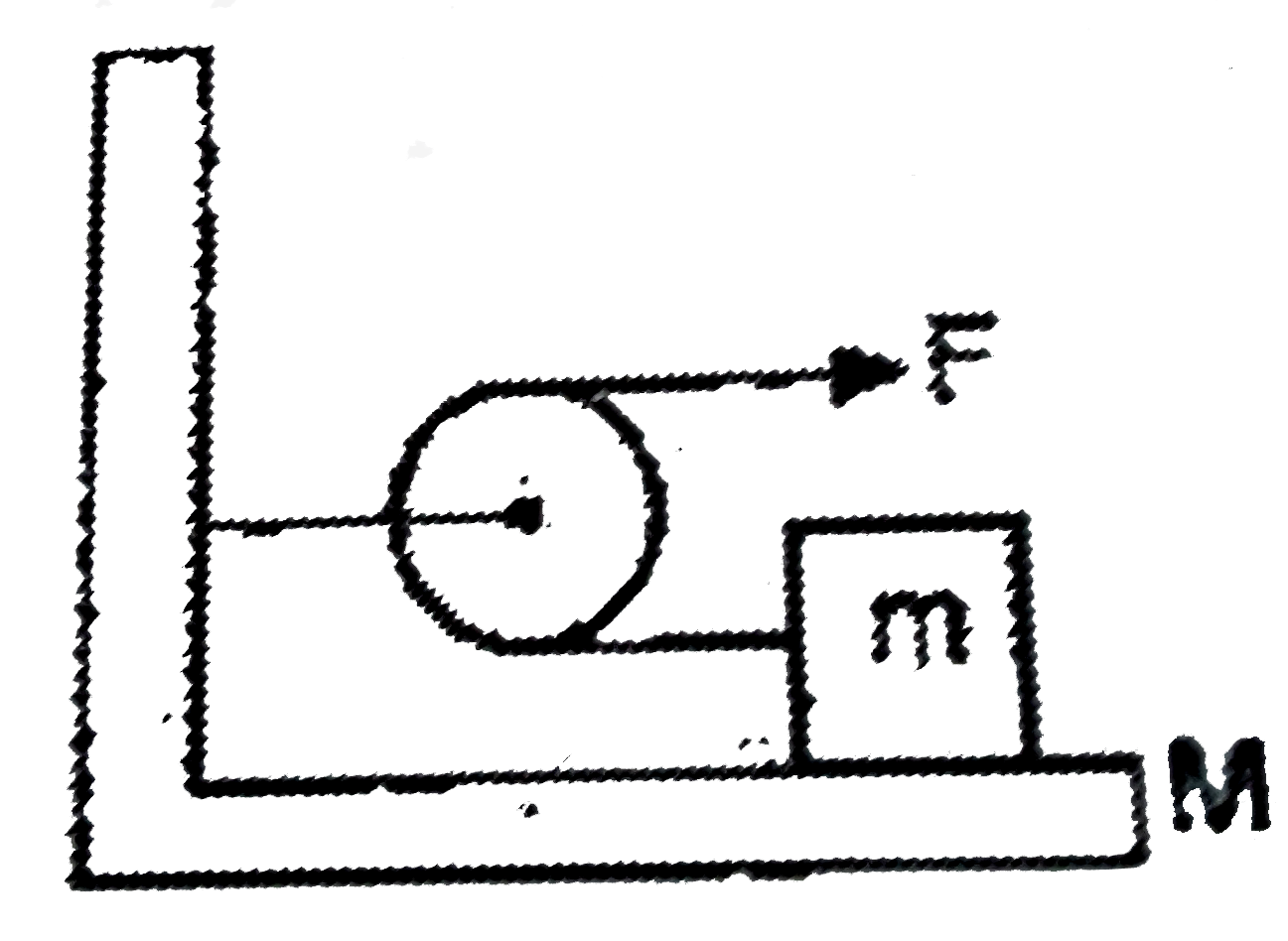
A block of mass m rests on a bracket of ...

A block of mass m rests on a bracket of mass M. The coefficients of friction between block and bracket are `mu_(s)` and `mu_(k)` . The bracket rests on a frictionless surface. What is the maximum force F that can be applied if the block is not to slide on the bracket?

Promotional Banner

Similar Questions

Explore conceptually related problems

A 10kg block rests on a 5kg bracket as shown in figureThe 5kg breaket rests on a horizontal surface The coefficient of frictionbetween the 10kg block and the braket on wich it rests are mu_(s) = 0.40 and mu_(k) = 0.30 The maximum force F that can be applied if the 10 kg block is not to slide on the braket is

A 10kg block rests on a 5kg bracket as shown in figureThe 5kg breaket rests on a horizontal surface The coefficient of frictionbetween the 10kg block and the braket on wich it rests are mu_(s) = 0.40 and mu_(k) = 0.30 The maximum force F that can be applied if the 10 kg block is not to slide on the braket is

A block of mass m sides down an inclined right angled trough .If the coefficient of friction between block and the trough is mu_(k) acceleration of the block down the plane is

A block of mass m sides down an inclined right angled trough .If the coefficient of friction between block and the trough is mu_(k) acceleration of the block down the plane is

A block of mass M slides on a frictionless surface with an initial speed of v_(0) On top of block is a small box of mass m. the coefficients of friction between box and block are mu_(6) and mu_(k) . The sliding block encounters and ideal spring with force constant K. Answer following questions. Suppose the value of k is just slightly greater then the value found in previous question, so that the box begins to slide just as the spring reaches maximum compression. The acceleration of box and block are repectively.

A block of mass m is placed on another block of mass M which itself is lying on a horizontal surface .The coefficient of friction between two blocks is mu_(1) and that between the block of mass M and horizontal surfece is mu_(2) What maximum horizontal force can be applied to the lower block move without separation?

A block of mass m is placed on another block of mass M which itself is lying on a horizontal surface .The coefficient of friction between two blocks is mu_(1) and that between the block of mass M and horizontal surfece is mu_(2) What maximum horizontal force can be applied to the lower block move without separation?

A block of mass M slides on a frictionless surface with an initial speed of v_(0) On top of block is a small box of mass m. the coefficients of friction between box and block are mu_(6) and mu_(k) . The sliding block encounters and ideal spring with force constant K. Answer following questions. Assuming no relative motion between box and block what is the maximum possible acceleration of block and box at the instant of maximum compression?