


Similar Questions
Explore conceptually related problems
Recommended Questions
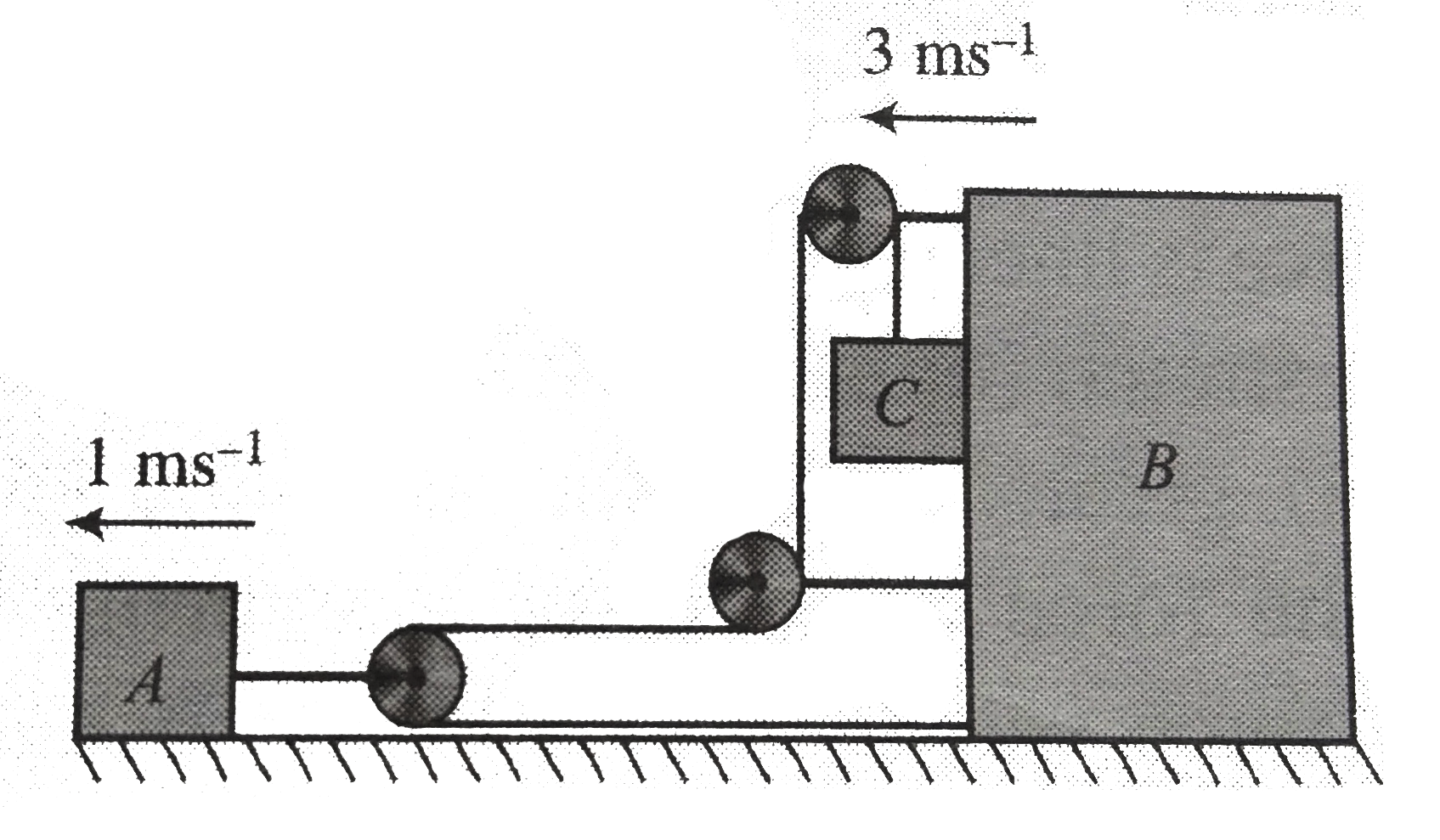
- The velocities of A and B shown in fig. Find the speed (in ms^(-1)) of...
Text Solution
|
- A pulley-rope-mass arrangement is shown in fig. Find the acceleration ...
Text Solution
|
- The system shown in fig, is released from rest. Calculate the tension ...
Text Solution
|
- System is shown in fig. and wedge is moving toward left with speed 2ms...
Text Solution
|
- Find the acceleration blocks in fig. The pulley and the string are mas...
Text Solution
|
- The velocities of A and B shown in fig. Find the speed (in ms^(-1) ) o...
Text Solution
|
- In the arrangement shown, the pulleys and the string are ideal. The ac...
Text Solution
|
- Two blocks are connected by an inextensible string as shown. The pulle...
Text Solution
|
- Find out velocity of block B in the given figure : (all the pulleys ar...
Text Solution
|