


Topper's Solved these Questions
LINES AND ANGLES
NCERT TELUGU|Exercise EXERCISE XERCISE - 4.3|19 VideosLINES AND ANGLES
NCERT TELUGU|Exercise EXERCISE XERCISE - 4.4|17 VideosLINES AND ANGLES
NCERT TELUGU|Exercise EXERCISE XERCISE - 4.1|9 VideosLINEAR EQUATIONS IN TWO VARIABLES
NCERT TELUGU|Exercise EXERCISE 8.5|6 VideosPOLYNOMIALS AND FACTORISATION
NCERT TELUGU|Exercise TRY THESE|6 Videos
Similar Questions
Explore conceptually related problems
NCERT TELUGU-LINES AND ANGLES -EXERCISE XERCISE - 4.2
- In the given figure three lines bar(AB) , bar(CD) and bar(EF) intersec...
Text Solution
|
- Find the value of x in the following figures.
Text Solution
|
- From the figure find x and y.
Text Solution
|
- From the figure find x and y.
Text Solution
|
- In the given figure anglePQR = anglePRQ, then prove that anglePQS = an...
Text Solution
|
- In the given figure, if x+y = w+z, then prove that AOB is a line.
Text Solution
|
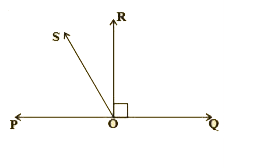
- In the given figure bar(PQ) is a line. Ray bar(OR) is perpendicular t...
Text Solution
|
- It is given that angleXYZ= 64^(@) and XY is produced to point P. A ray...
Text Solution
|