

Home
Class 11
PHYSICS
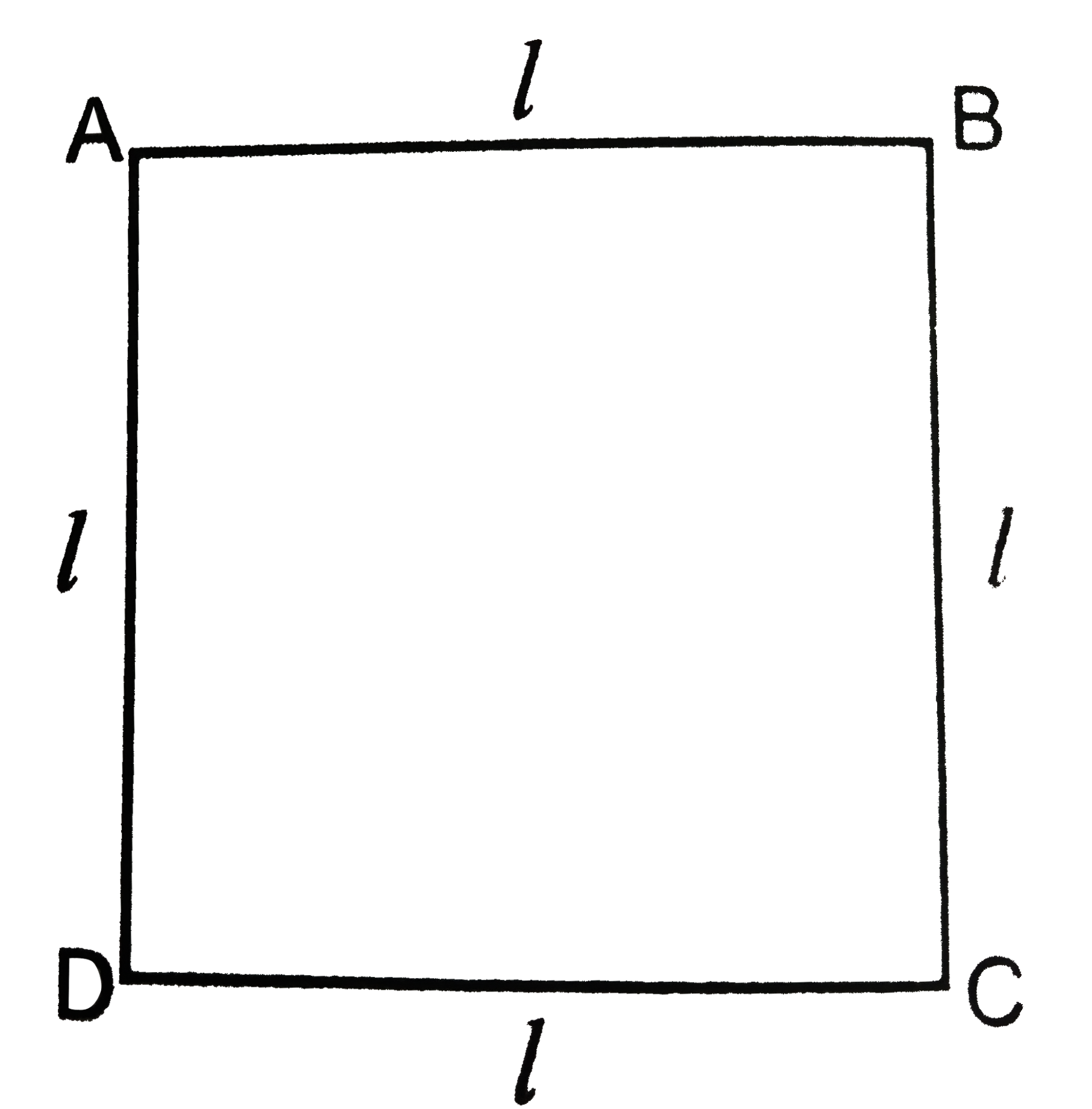
A praticle moves along the side of a squ...

A praticle moves along the side of a squre fo length (l) starting from (A) andreaches the opposite crne (C ) by travelling from (A) to (B) and (B) to (C ). If the tiemtaken is (T), the average velocity of the particle is
.

Promotional Banner

Similar Questions

Explore conceptually related problems

In 1 s, a particle goes from point A to point B, moving along a semicircle of radius 1 m. The magnitude of the average velocity of the particle is

A particle moving with uniform acceleration from A to B along a straight line has velcities v_(1) and v_(2) at A and B respectively. If C is the mid-point between A and B then determine the velocity of the particle at C . .

A particle moving with uniform acceleration from A to B along a straight line has velcities v_(1) and v_(2) at A and B respectively. If C is the mid-point between A and B then determine the velocity of the particle at C . .

The speed time graph of a particle moving along a fixed direction is as shown in the figure. Obtain the distance travelled by the particle from, (a) t = 0 to 10s (b) t= 2s to 6s (c) What is the average speed of the particle over the intervals in (a) and (b)?

A particle moves in a straight line from A to B with speed v_(1) and then from B to A with speed v_(2) . Find the average velocity and average speed.

A particle crosses points A, B, C in a straight line at a constant acceleration. The particle travels from A to B in time t_(1) and B to C in time t_(2) . If AB = a , BC = b then prove that the acceleration of the particle is 2(bt_(1)-at_(2))//t_(1)t_(2)(t_(1)+t_(2)) .

A particle is moving with uniform acceleration along a straight line ABC, where AB= BC. The average velocity of the particle from A to B is 10 m/s and from B to C is 15 m/s. The average velocity for the whole journey from A to C in m/s is

A particle moves along a circle of radius R. It starts from A and moves in anticlockwise direction. Calculate the distance travelled by the particle (a)from A to B (b)from A to C ©from A to D (d) in one complete revolution . Also, calculate the magnitude of displacement in each case .

In the diagram shown, the displacement of particles is given as a function of time. The particle a is moving under constant velocity of 9 m//s . The particle B is moving under variable acceleration. From time t=0 s to t=6 s . The average velocity of the particle B will be equal to :-