

Home
Class 12
PHYSICS
Three masses of 1 kg, 6 kg and 3 kg are ...

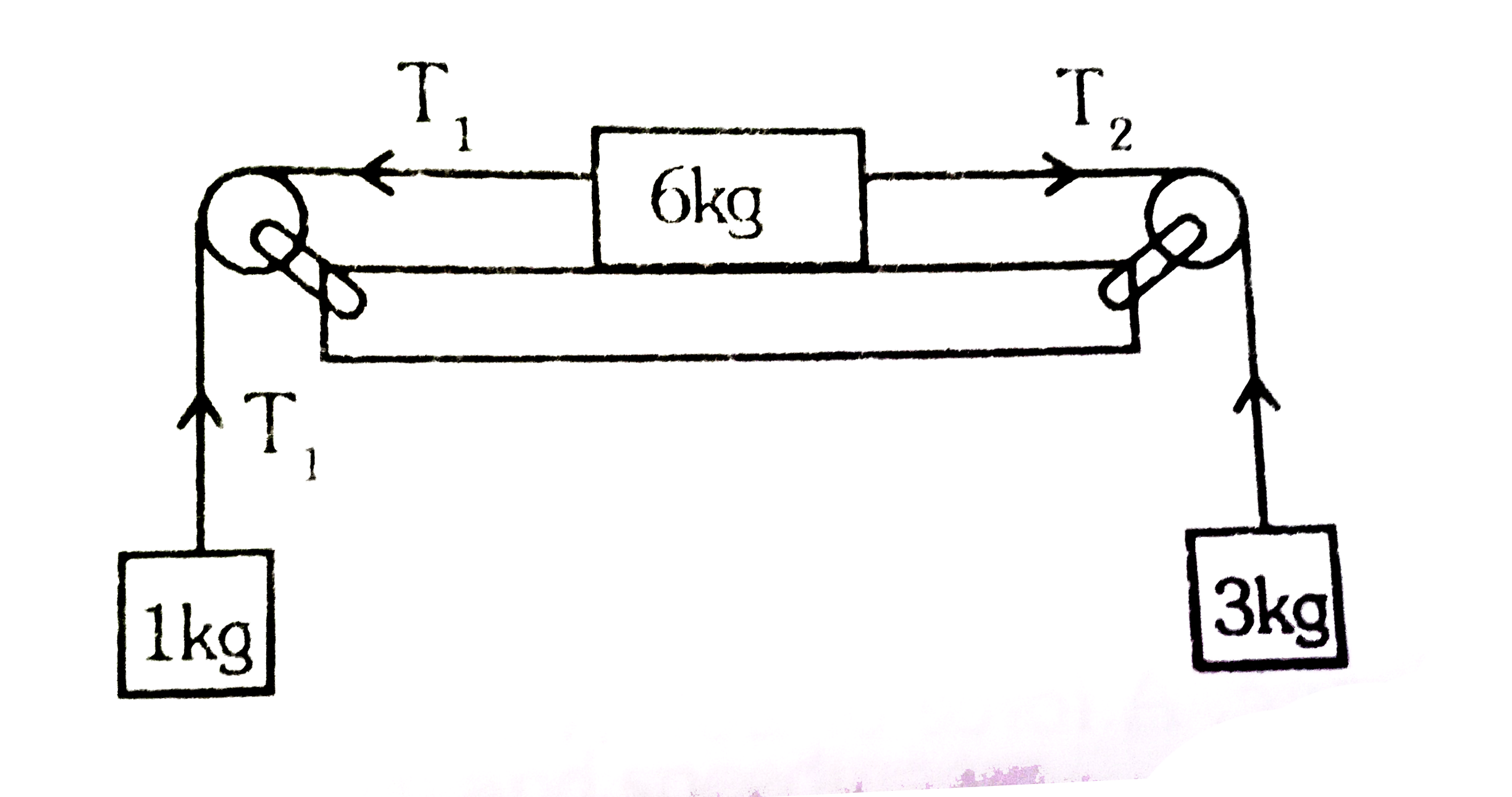
Three masses of 1 kg, 6 kg and 3 kg are connected to each other with threads and are placed on a table as shown in figure. What is the accelration with which the system is moving? Take `g=10ms^(-2)`:

Promotional Banner

Similar Questions

Explore conceptually related problems

Three masses of 1kg, 6 kg and 3 kg are connected to each other with theads and are placed on a table as shown in figure. What is the acceleration with which the system is moving? ( Take g=ms^(-2) )

Three masses of 1kg, 6 kg and 3 kg are connected to each other with theads and are placed on a table as shown in figure. What is the acceleration with which the system is moving? ( Take g=ms^(-2) )

Three masses of 2 kg, 12 kg and 4 kg are connected to each other with threads and are placed on a table as shown in figure. If g=10" m s"^(-2) , the acceleration with which the system is moving is

Three masses 1kg,6kg and 3kg are of connected to each other with thread and are placed on a table as shown in figure. If g - 10 m//s^(2) , the acceleration with which the system is moving is ............. m//s^(2) .

Three blocks of masses 2 kg , 3 kg and 5 kg are connected to each other with light string and are then placed on a frictionless surface as shown in the figure. The system is pulled by a force F= 10 N then tension T_(1)=

Three point particles of masses 1.0 kg, 1.5 kg and 2.5 kg are placed at three corners of a right angle triangle as shown in figure. The centre of mass of the system is at a point :

Three point particles of masses 1.0 kg, 1.5 kg and 2.5 kg are placed at three corners of a right angle triangle as shown in figure. The centre of mass of the system is at a point :

Three point particles of masses 1.0 kg, 1.5 kg and 2.5 kg are placed at three corners of a right angle triangle as shown in figure. The centre of mass of the system is at a point :