Home
Class 11
CHEMISTRY
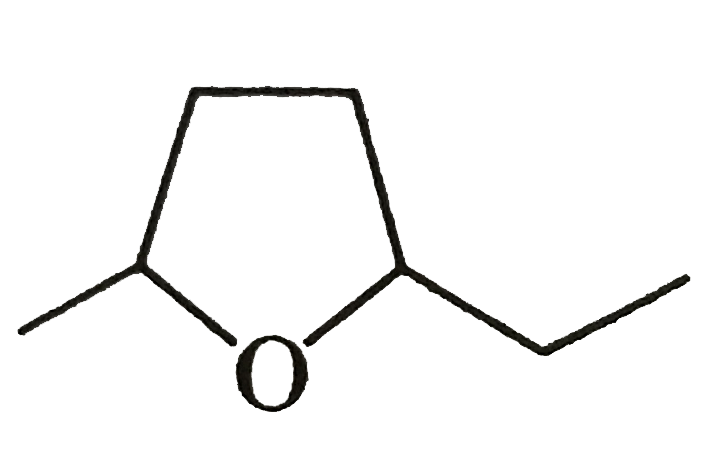
Statement-1: IUPAC name is 1,4-epocy-1-...

Statement-1: IUPAC name is 1,4-epocy-1-ethyl-4-methylbutane.

Statement-2: Substituents are written in alphabetic order.

Promotional Banner

Similar Questions

Explore conceptually related problems

Statement-1: IUPAC name is 2-ethyl-3-methyl-1-,4-epoxy butane. Statement-2: Substituents are written in alphabetic order.

The IUPAC name of Is 2-Ethyl-3-methylpent-2-en-1-aI.

Statement-1: IUPAC name of H_(2)C=CH-CH_(2)-C=CH is pent-4-en-1-yne. Statement-2: Alkene is preferred over alkyne when they are placed at same position.

Statement 1 : The IUPAC name for is 7-oxobicyclo [4.1.0] heptane. Statement 2 : The prefix oxo is used for C=O group.

Four numbers are chosen at random (without replacement) from the set {1, 2, 3, ....., 20}. Statement-1: The probability that the chosen numbers when arranged in some order will form an AP Is 1/(85) . Statement-2: If the four chosen numbers form an AP, then the set of all possible values of common difference is {1, 2, 3, 4, 5}. (1) Statement-1 is true, Statement-2 is true; Statement-2 is not the correct explanation for Statement-1 (2) Statement-1 is true, Statement-2 is false (3) Statement-1 is false, Statement-2 is true (4) Statement-1 is true, Statement-2 is true; Statement-2 is the correct explanation for Statement-1

Four numbers are chosen at random (without replacement) from the set {1, 2, 3, ....., 20}. Statement-1: The probability that the chosen numbers when arranged in some order will form an AP Is 1/(85) . Statement-2: If the four chosen numbers form an AP, then the set of all possible values of common difference is {1, 2, 3, 4, 5}. (1) Statement-1 is true, Statement-2 is true; Statement-2 is not the correct explanation for Statement-1 (2) Statement-1 is true, Statement-2 is false (3) Statement-1 is false, Statement-2 is true (4) Statement-1 is true, Statement-2 is true; Statement-2 is the correct explanation for Statement-1

Four numbers are chosen at random (without replacement) from the set {1, 2, 3, ....., 20}. Statement-1: The probability that the chosen numbers when arranged in some order will form an AP Is 1/(85) . Statement-2: If the four chosen numbers form an AP, then the set of all possible values of common difference is {1, 2, 3, 4, 5}. (1) Statement-1 is true, Statement-2 is true; Statement-2 is not the correct explanation for Statement-1 (2) Statement-1 is true, Statement-2 is false (3) Statement-1 is false, Statement-2 is true (4) Statement-1 is true, Statement-2 is true; Statement-2 is the correct explanation for Statement-1

Four numbers are chosen at random (without replacement) from the set {1, 2, 3, ....., 20}. Statement-1: The probability that the chosen numbers when arranged in some order will form an AP Is 1/(85) . Statement-2: If the four chosen numbers from an AP, then the set of all possible values of common difference is {1, 2, 3, 4, 5}. (1) Statement-1 is true, Statement-2 is true; Statement-2 is not the correct explanation for Statement-1 (2) Statement-1 is true, Statement-2 is false (3) Statement-1 is false, Statement-2 is true (4) Statement-1 is true, Statement-2 is true; Statement-2 is the correct explanation for Statement-1
