

Home
Class 12
PHYSICS
The stopping potential V for photoelectr...

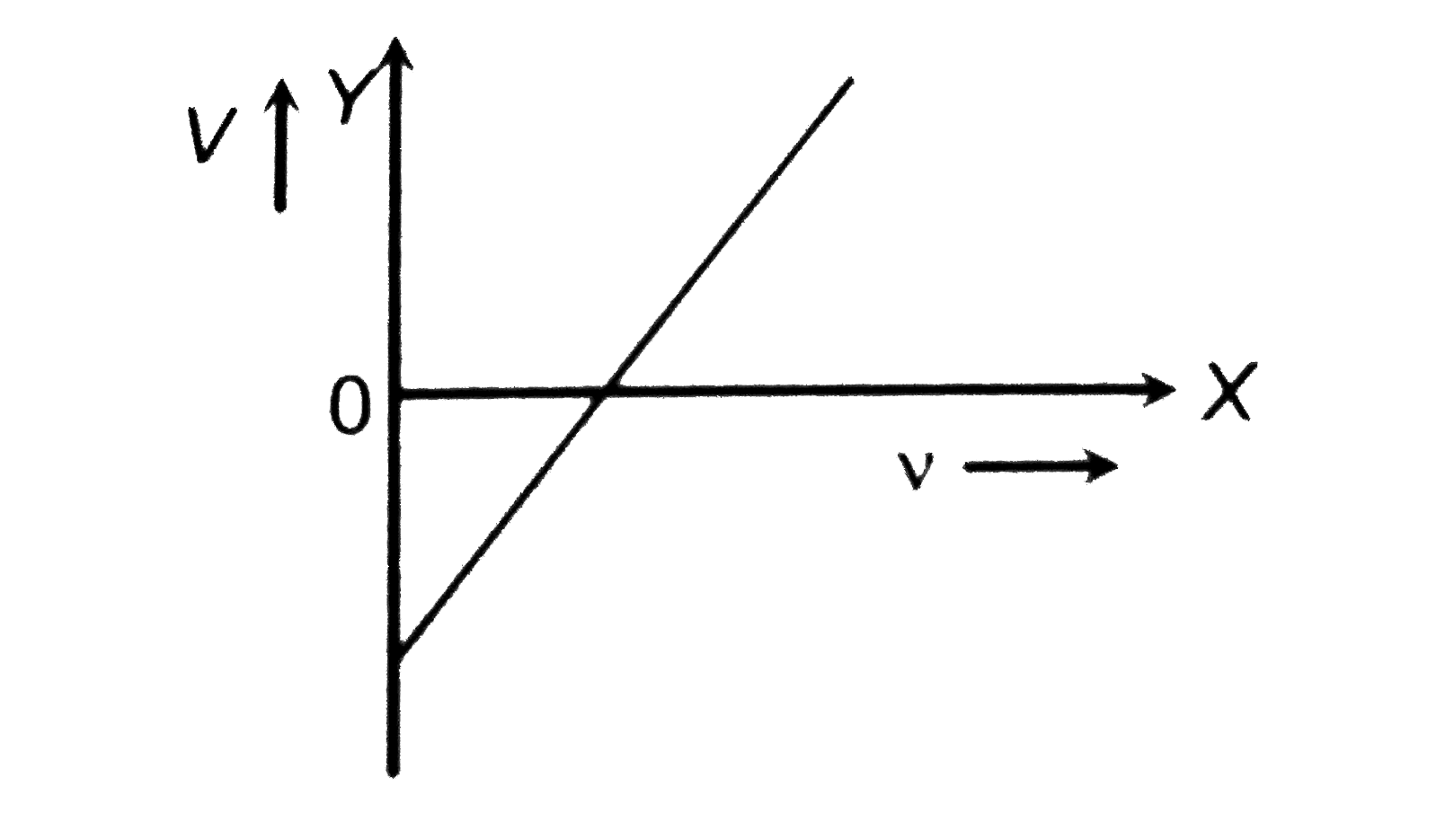
The stopping potential `V` for photoelectric emission from a metal surface is plotted along Y - axis and frequency `v` of incident light along X - axis . A straight line is obtained as shown . Planck's constant is given by

Promotional Banner

Similar Questions

Explore conceptually related problems

What is meant by stopping potential in photoelectric emission? Does the stppping potential depend on the intensity and the frequency of the incident light? Explain.

What is meant by stopping potential in photoelectric emission ? Does the stopping potential depend on (i) the intensity and (ii) the frequency of the incident light ? Explain

The stopping potential for photoelectrons from a metal surface is V_(1) when monochromatic light of frequency v_(1) is incident on it. The stopping potential becomes V_(2) when monochromatic light of another frequency is incident on the same metal surface. If h be the Planck's constant and e be the charge of an electron, then the frequency of light in the second case is

In a photoelectric experiment, the graph of frequency v of incident light (in Hz) and stopping potential V (in V) is as shown in the figure. Planck's constant is (e is the elementary charge)

In a photoelectric experiment, the graph of frequency v of incident light (in Hz) and stopping potential V (in V) is as shown in the figure. Planck's constant is (e is the elementary charge)

The stopping potential for photoelectrons from a metal surface is V_(1) when monochromatic light of frequency upsilon_(1) is incident on it. The stopping potential becomes V_(2) when monochromatic light of another frequency is incident on the same metal surface. If h be the Planck’s constant and e be the charge of an electron, then the frequency of light in the second case is:

The stopping potential for photoelectrons from a metal surface is V_(1) when monochromatic light of frequency upsilon_(1) is incident on it. The stopping potential becomes V_(2) when monochromatic light of another frequency is incident on the same metal surface. If h be the Planck’s constant and e be the charge of an electron, then the frequency of light in the second case is: