

Home
Class 11
CHEMISTRY
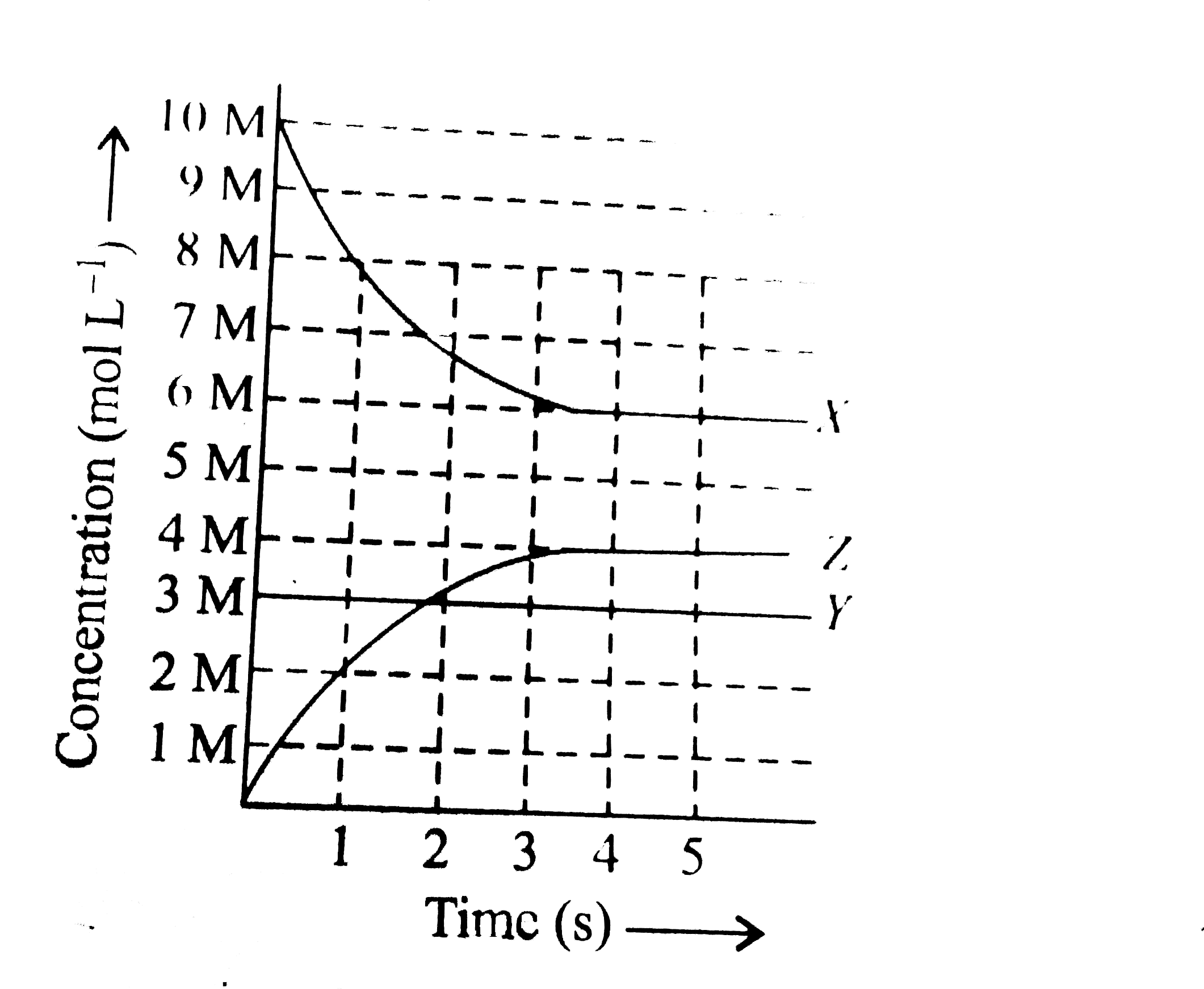
X, Y and Z react in the 1:1:1 stoichiome...

X, Y and Z react in the `1:1:1` stoichiometric ratio.
The concentration of X, Y and Z we are found to vary with time as shown in the figure below:

Which of the following equilibrium reaction represents the correct variation of concentration with time?

Promotional Banner

Similar Questions

Explore conceptually related problems

A,B and C react in the 1:1:1 stoichiometric ratio. The concentration of A,B and C where found to vary with time as shown in the figure below: Which of the following equilibrium reaction represents the correct variation of concentration with time?

A,B and C react in the 1:1:1 stoichiometric ratio. The concentration of A,B and C where found to vary with time as shown in the figure below: The value of equilibrium repreasented in above sketch will be :

X, Y and Z react in the 1:1:1 stoichiometric ratio. The concentration of X, Y and Z we are found to vary with time as shown in the figure below: The value of the equilibrium constant (K_(c)) for the equilibrium represented the in above sketch will be

X, Y and Z react in the 1:1:1 stoichiometric ratio. The concentration of X, Y and Z we are found to vary with time as shown in the figure below: The value of the equilibrium constant (K_(c)) for the equilibrium represented the in above sketch will be

X, Y and Z react in the 1:1:1 stoichiometric ratio. The concentration of X, Y and Z we are found to vary with time as shown in the figure below: If the above equilibrium is established in a 2.0 L container by taking reactants in sufficient amount then how many moles of components Y must have reacted to establish the equilibrium?

X, Y and Z react in the 1:1:1 stoichiometric ratio. The concentration of X, Y and Z we are found to vary with time as shown in the figure below: If the above equilibrium is established in a 2.0 L container by taking reactants in sufficient amount then how many moles of components Y must have reacted to establish the equilibrium?

A first order homogeneous reaction of the type X rarrY rarr Z (consecutive reaction) is carried out in a CSTR . Which of the following curves reacpectively show the variation of the concentration of X, Y nad Z with time