

Home
Class 12
PHYSICS
Two ballons are simultaneously released ...

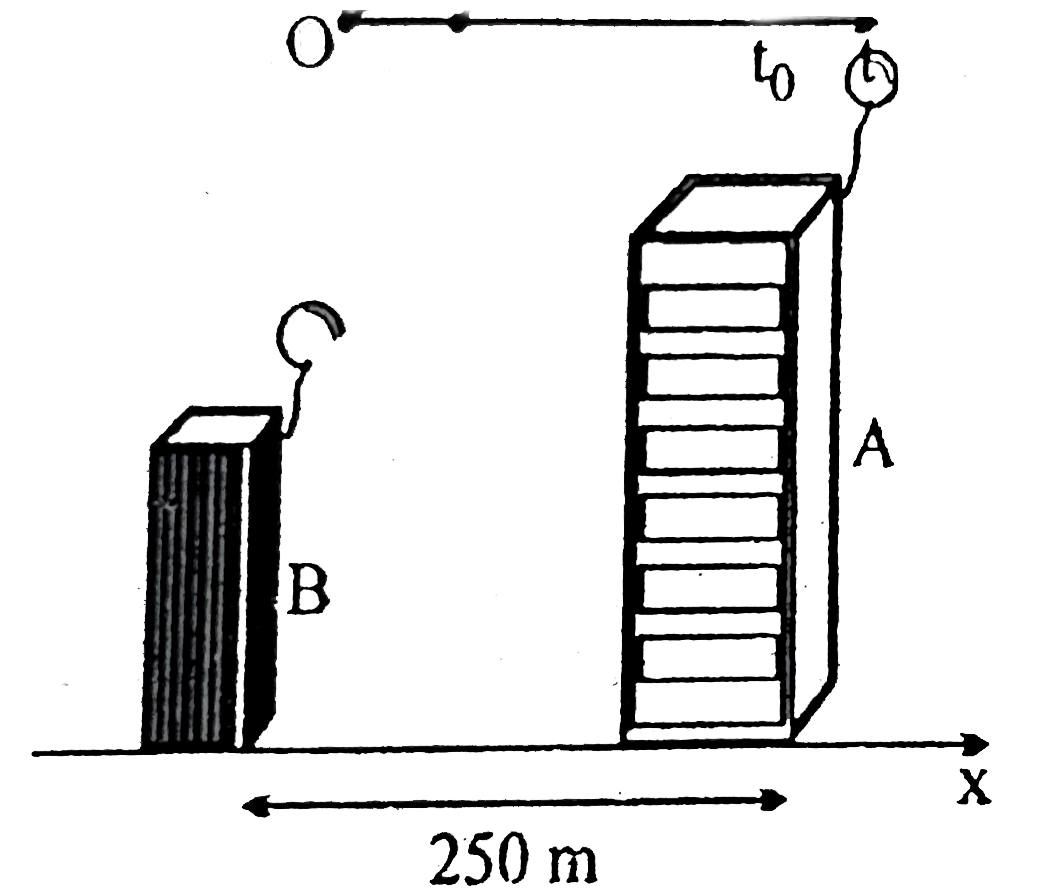
Two ballons are simultaneously released from two buildings A and B. Balloon from A rises with constant velocity `10ms^(-1)` While the other one rises with constant velocity of `20ms^(-1)` Due to wind the balloons gather horizontal velocity `V_(x)=0.5` y, where 'y' is the height from the point of release. The buildings are at a distance of `250` m & after some time 't' the balloons collide.

Promotional Banner

Similar Questions

Explore conceptually related problems

A balloon rises with uniform velocity of 10 ms^(-1) . When the balloon is at a height of 75 m if a stone is dropped from it the time taken by it to reach the ground is

A balloon rises with uniform velocity of 10 ms^(-1) . When the balloon is at a height of 75 m if a stone is dropped from it the time taken by it to reach the ground is

A stone is dropped from a balloon rising upwards with a velocity of 16 ms^(-1) . The stone reaches the ground in 4 s. Calculate the height of the balloon when the stone was dropped.

Two balls are released simultaneously from a certain height, one is allowed to fall freely and other thrown with some horizontal velocity. Will they hit the ground together?

A balloon starts rising from the surface of the earth with vertical component of velocity v_(0) . The balloon gathers a horizontal velocity v_(x) = ay , where a is a constant and y is the height from the surface of the earth, due to a horizontal wind. Determine (a) the equation of trajectory of the balloon. (b) the tangential, normal and total acceleration of the balloon as function of y.

A balloon starts rising from the earth's surface. The ascension rate is constant and equal to v_(0) . Due to the wind. The balloon gathers the horizontal velocity component v_(x)=ky , where k is a constnat and y is the height of ascent. Find how the following quantities depednd on the height of ascent. (a) the horizontal drift of the balloon x (y) (b) the total tangential and normal accelrations of the balloon.