

Home
Class 12
PHYSICS
A long horizontal wire AB, which is free...

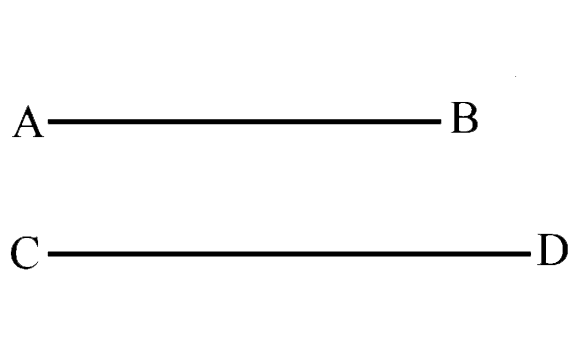
A long horizontal wire `AB`, which is free to move in a vertical plane and carries a steady current of `20 A`, is in equilibrium at a height of `0.01 m` over another parallel long wire `CD` which is fixed in a horizontal plane and carries a steady current of ` 30 A`, as shown in figure. Shown that when `AB` is slightly depressed, it executes simple harmonic motion. Find the period of oscillations.

Promotional Banner

Similar Questions

Explore conceptually related problems

A long horizontal wire AB which is free to move in a vertical plane and carries a steady current of 20 A ,is in equilibrium at a height of 0.01 m over another parallel infinitely long wire CD ,which is fixed in a horizontal plane and carries a steady current of 30 A .Show that when AB is slightly depressed, it executes simple harmonic motion.the period of oscillations is 1/N seconds.then find the value of N .(Use pi^(2)=10 & g=10 m//s^(2) )

A horizontal wire AB of length 'l' and mass 'm' carries a steady current I_1 , free to move in vertical plane is in equilibrium at a heigh of 'h' over another parallel long wire CD carrying a steady current I_2 , which is fixed in a horizontal plane as shown. Derive the expression for the force acting per unit length on the wire AB and write the condition for which wire AB is in equilibrium.

A long cylindrical wire carries a steady current which is uniformly distributed across its cross section. Which of the following is true?

Wire carrying a study current and rod AB are in the same plane the rod move parallel to wire with velocity v then which end of the rod is at higher potential.

A square loop, carrying a steady curren I is placed in a horizontal plane near a long straight conductor carrying a steady curren I_(1) at a distance d from the conductor as shown in figure. The loop will experience

A square loop, carrying a steady 1, is placed in a horizontal plane near a long staright conductor carryinf a steady current I , at a distance d from the conductor as shown in Fig. The loop wil experience