(a) PCR polymerase chain reaction (PCR) is a technique in molecular biology to amplify a gene or a piece of DNA to obtain its several copies. It is extensively used in the process of gene
manipulation. The process involves in-vitrosynthesis of sequences using a primer, a template strand, and a thermostable DNA polymerase enzyme obtained from a bacterium, called thermus aquaticus. the enzyme utilizes building blocks dNTPs (deoxynucleotides) to extend the primer.
Three steps in PCR are
- Inthe first step, the double stranded DNA molecules are heated to a high temperature so that the two strands separate into a single stranded DNA molecule. This process is called denaturation.
- Then, this ssDNA molecule is used as a template strant for the sythesisof a new strand by the DNA polymerase enzyme and this process is called annealing, thish results in the duplication of the original DNA molecule. This process is repeated over several cycles to obtain multiple copies of the rDNA fragment.
- Extension of primer by Taq DNA polymerase isolated form thermits aquaticus.
(b). Restriction enzymes and DNA
Restriction enzymes are molecular scissors sued in molecular biology for cutting DNA sequences from a specific site. it plays an important role in gene manipulation. The enzymes recognize a specific six-box pair sequence known as the recognition sequence and cut the sequence at a specific site. for example, the recognition site for enzyme ECORI is as follows:
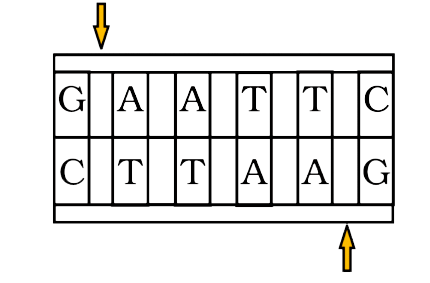
.
Restriction enzyme are categorized into two types: -
Exonuclease
It is a type of restriction enzyme that removes the nucleotide from either 5' or 3' ends of the DNA molecule.
-It is a type of restriction enzyme that makes a cut within the DNA at a specific site. This enzyme acts as an important tool in genetic engineering. it is commonly used to make a cut in the sequence to obtain DNA fragements with sticky ends, which are later joined by enzyme DNA ligase.
(c). Chitinase is a class of enzymes used for the degradation of chitin, which forms a major component of the fungal cell wall. therefore, to isolate the DNA enclosed within the cell membrane of the fungus, enzyme chitinase is used to break the cell for releasing its genetic material.


