

Home
Class 12
PHYSICS
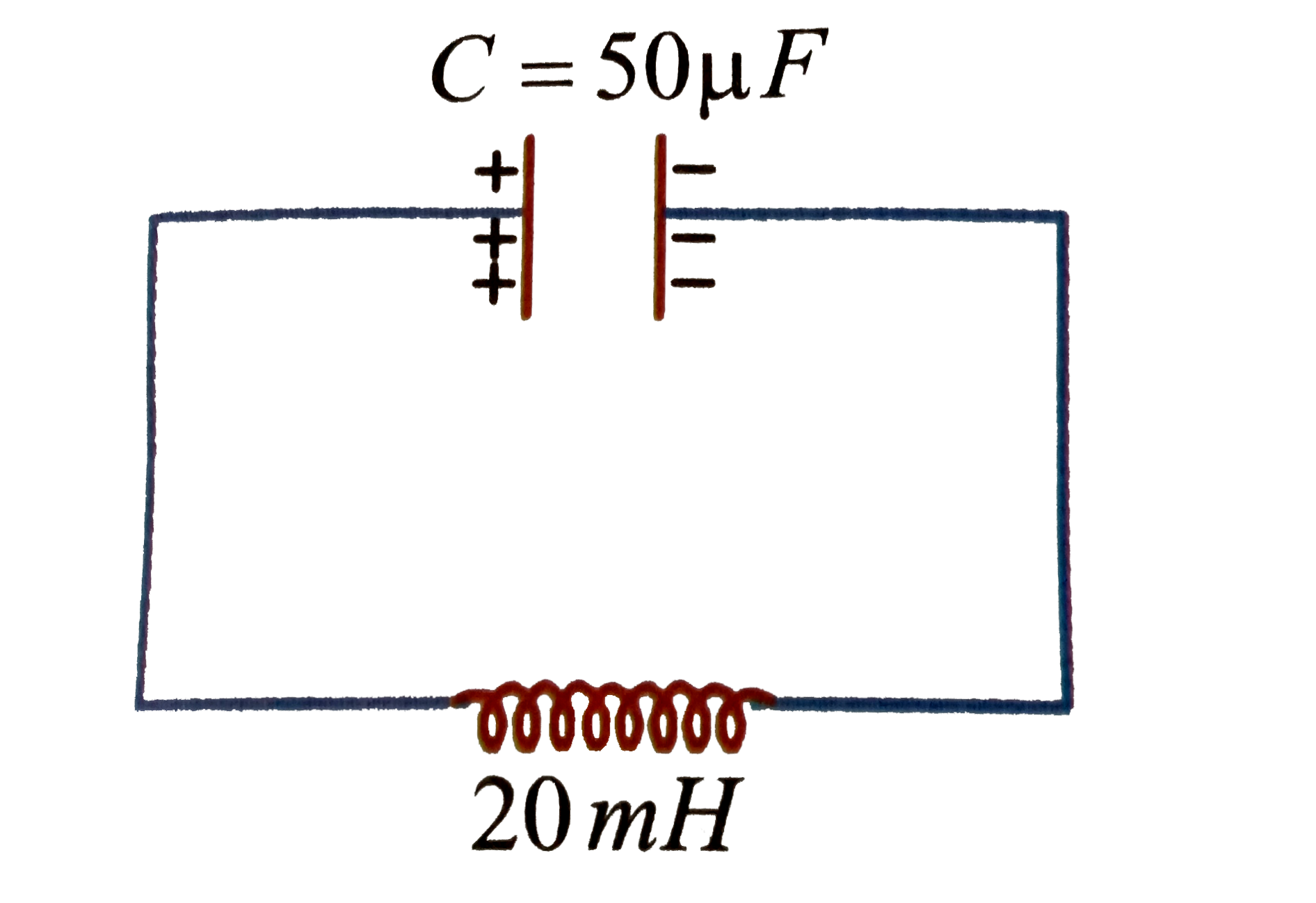
An LC circuit contains a 20 mH inductor ...

An `LC` circuit contains a `20 mH` inductor asn a `50 mu F` capacitor with initial change of `10 mC`. The resistance of the circuit is negligible. Let the instant the circuit is closed be `t = 0`.

Promotional Banner

Similar Questions

Explore conceptually related problems

An LC circuit contains a 20 mH inductor and a 50 mu F capacitor with an initial charge of 10 mC. The resistance of the circuit is negligible. Let the instant the circuit is closed be t = 0. (a) What is the total energy stored initially ? Is it conserved during the oscillalions? (b) What is the natural frequency of the circuit? (c ) At what time is the energy stored? (i) Completely electrical ? (ii) Completely magnetic ? (d) At what time is the total energy shared equally between the inductor and the capacitor ? (e) If a resistor is inserted in the circuit, how much energy is eventually dissipated as heat ?

An LC circuit contains a 20 mH inductor and a 50 mu F capacitor with an initial charge of 10 mC. The resistance of the circuit is negligible. Let the instant the circuit is closed be t = 0. (a) What is the total energy stored initially ? Is it conserved during the oscillalions? (b) What is the natural frequency of the circuit? (c ) At what time is the energy stored? (i) Completely electrical ? (ii) Completely magnetic ? (d) At what time is the total energy shared equally between the inductor and the capacitor ? (e) If a resistor is inserted in the circuit, how much energy is eventually dissipated as heat ?

An LC circuit contains a 20 mH inductor and a 50 muF capacitor with an initial charge of 10 mC. The resistance of the circuit is negligible. Let the instant the circuit is closed be t = 0. What is the total energy stored initially? Is it conserved during LC oscillations?

An LC circuit contains a 20 mH inductor and a 50 muF capacitor with an initial charge of 10 mC. The resistance of the circuit is negligible. Let the instant the circuit is closed be t = 0. At what times is the total energy shared equally between the inductor and the capacitor?

An LC circuit contains a 20 mH inductor and a 50 muF capacitor with an initial charge of 10 mC. The resistance of the circuit is negligible. Let the instant the circuit is closed be t = 0. What is the total energy stored initially? What is the natural frequency of the circuit?

An LC circuit contains a 20 mH inductor and a 50 muF capacitor with an initial charge of 10 mC. The resistance of the circuit is negligible. Let the instant the circuit is closed be t = 0. At what time is the energy stored completely magnetic (i.e., stored in the inductor)?

An LC circuit contains a 20 mH inductor and a 50 muF capacitor with an initial charge of 10 mC. The resistance of the circuit is negligible. Let the instant the circuit is closed be t = 0. If a resistor is inserted in the circuit, how much energy is eventually dissipated as heat?

An LC circuit contains a 20 mH inductor and a 50 muF capacitor with an initial charge of 10 mC. The resistance of the circuit is negligible. Let the instant the circuit is closed be t = 0. At what time is the energy stored completely electrical (i.e., stored in the capacitor)?

An LC circuit contains a 20 mH inductor and a 50 muF capacitor with an initial charge of 10 mC. The resistance of the circuit is negligible. Let the instant the circuit is closed be t = 0. (a) What is the total energy stored initially? Is it conserved during LC oscillations? (b) What is the natural frequency of the circuit? (c) At what time is the energy stored (i) completely electrical (i.e., stored in the capacitor)? (ii) completely magnetic (i.e., stored in the inductor)? (d) At what times is the total energy shared equally between the inductor and the capacitor? (e) If a resistor is inserted in the circuit, how much energy is eventually dissipated as heat?