Home
Class 12
CHEMISTRY
Statement 1 : Proton -proton electrostat...

Statement 1 : Proton -proton electrostatic repulsions begin to overcome attractive forces involving protons and neutrons in heavier nuclides
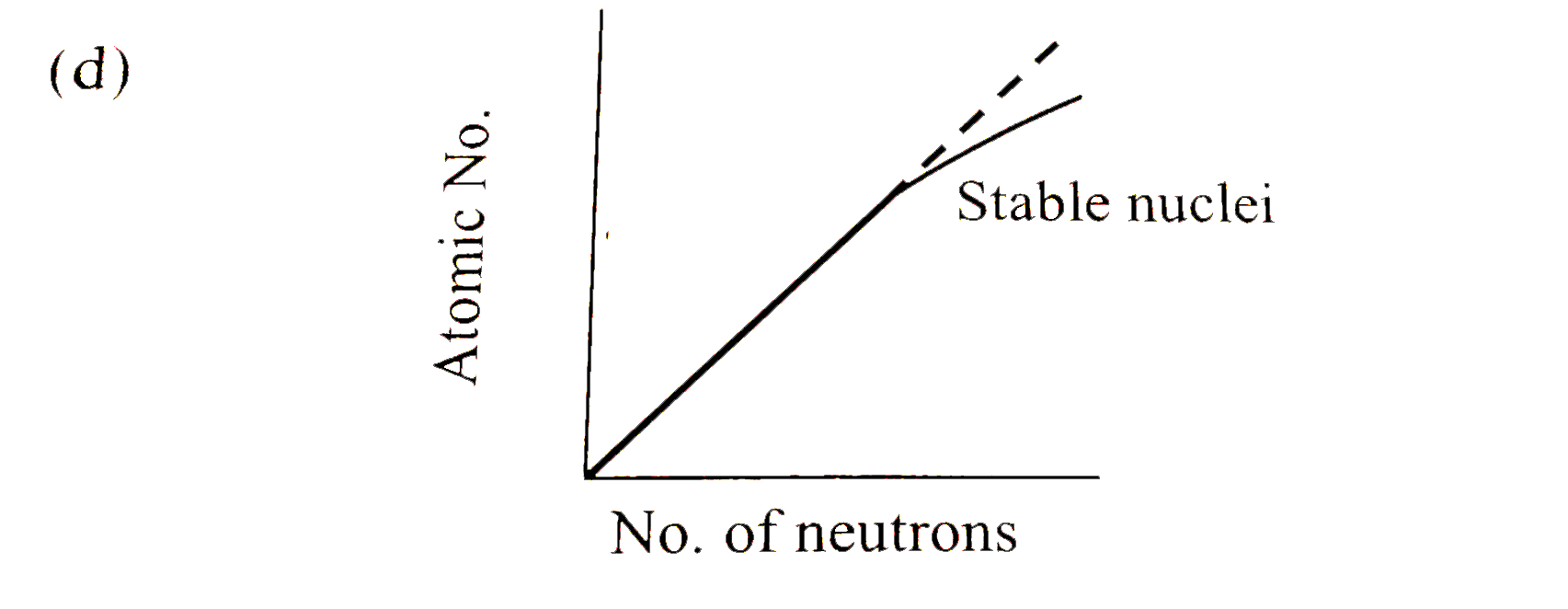
Statement 2 : The plot of atomic number (y-axis) veruse number of neutrons (x-axis) for stable nuclei shows a curvature towards x-axis from the line of `45^(@)` slope as the atomic number is increased.

A

Statement 1 is true, statement 2 is true , statement 2 is a correct explanation for statement 1

B

Statement 1 is true, Statement 2 is true, statement 2 is not a correct explanation for statement 1

C

Statement 1 is true, statement 2 is false

D

Statement 1 is false, statement 2 is true

Text Solution

Verified by Experts

The correct Answer is:
D


With increase in atomic no. `(Z gt 20)`, no. of neutrons increases more than th eno. of protons. So a curvature is observed as shown. Hence, Statement -1 is correct. The stability of heavier nuclides is due to the fact that attractive forces between protons and neutrons overcome the proton-proton electrostatic repulsions. Hence, Statement -2 is false
Promotional Banner

Similar Questions

Explore conceptually related problems

Statement : The plot of atomic number ( y -axis ) versus number of neutrons ( x -axis ) for stable nuclei shows a curvature towards x-axis fron the line of 45^@ slope as the atomic number is increased . Explanation : proton -proton electrostatic repulsions begin to overcome attracive forces involving protons and neutrons in heavier nuclides.

The figure shows a plot of number of neutron (N) versus number of protons (z) in all stable nuclei found in nature. What kind of decay are nuclei X,Y and Z expected to show?

The statements below are false. For each statement, replace the underlined term to make a true statement. The atomic number of an element is the number of protons and neutrons in the nucleus.

Atomic number of an element is equal to the number of (1) Electrons (2) Protons (3) Neutrons (4) Electrons and protons

An atom of element X contains 3 protons, 3 electrons and 4 neutrons: What is its atomic number?

