

Home
Class 11
CHEMISTRY
The maximu kinetic energy (E(k)) of the ...

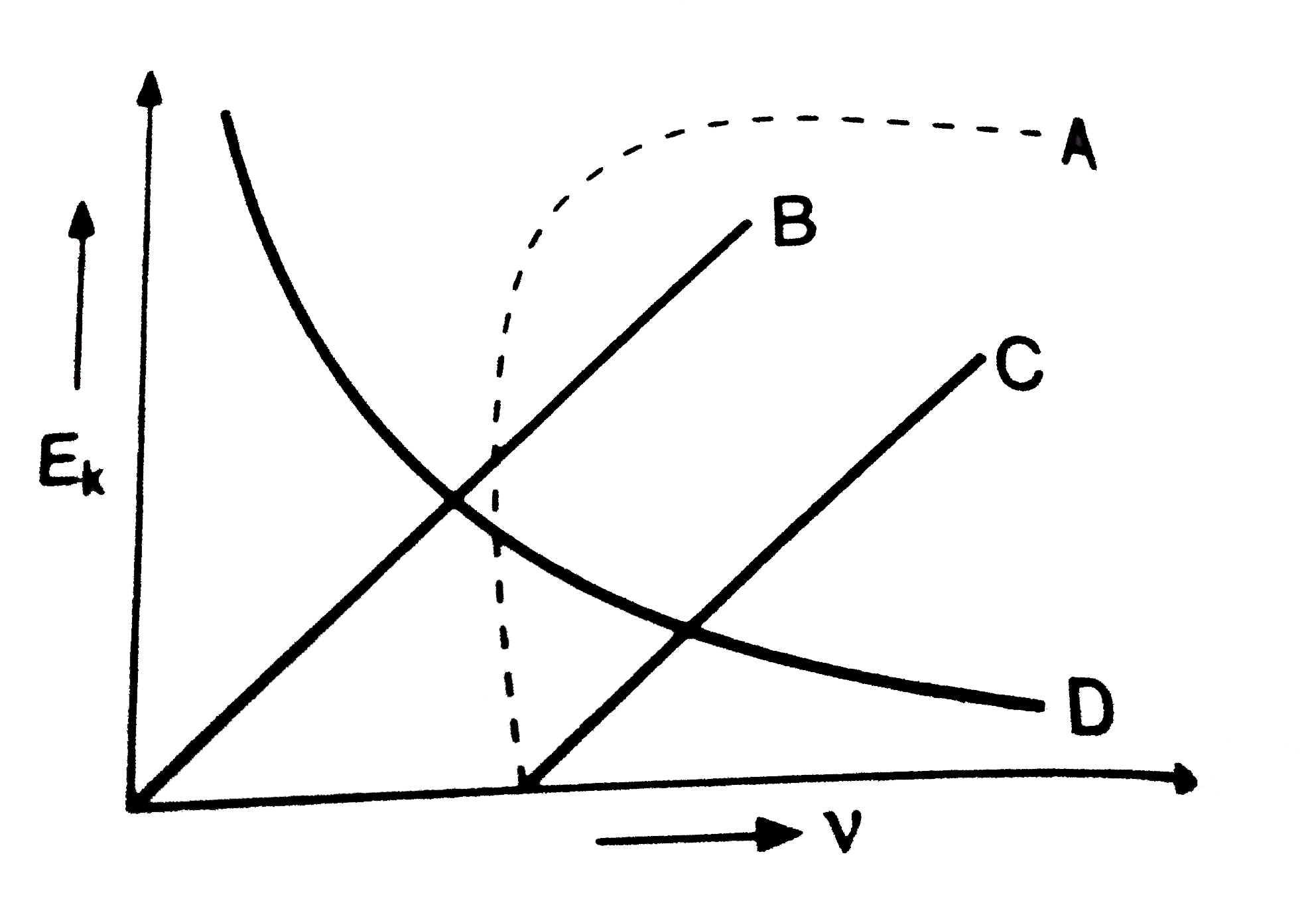
The maximu kinetic energy `(E_(k))` of the photoelectron varies with frequency (v) of the incident light as shown by the curve:

Promotional Banner

Similar Questions

Explore conceptually related problems

Maximum kinetic energy (E_(k)) of a photoelectron varies with the frequency (v) of the incident radiation as

Maximum kinetic energy (E_(k)) of a photoelectron varies with the frequency (v) of the incident radiation as

Maximum kinetic energy (E_k) of a photoelectron varies with the frequency (nu) of the incident radiation as

The kinetic energy (E_(k)) of a photoelectron varies with the frequency (v) of the incident radiation as which of the following graph ?

In an experiment of photo-electric effect, the graph of maximum kinetic energy E_(k) of the emitted photoelectrons versus the frequency v of the incident light is a straight line AB as shown in figure below : Threshold frequency of the metal.

In an experiment of photo-electric effect, the graph of maximum kinetic energy E_(k) of the emitted photoelectrons versus the frequency v of the incident light is a straight line AB as shown in figure below : Stopping potential for the photoelectrons emitted by the light of frequency v=30xx10^(14)Hz

In an experiment of photo-electric effect, the graph of maximum kinetic energy E_(k) of the emitted photoelectrons versus the frequency v of the incident light is a straight line AB as shown in figure below : Work function of the metal.

In an experiment of photoelectric effect, the graph of maximum kinetic energy E_(K) of the emitted photoelectrons versus the frequency v of the incident light is a straight line AB as shown in Figure below: Find : (i) Threshold frequency of the metal. (ii) work function of the metal (iii) Stopping potential for the photoelectrons emitted by the light of frequency v=30xx10^(14) Hz.

For the photoelectric effect, the maximum kinetic energy E_(k) of the emitted photoelectrons is plotted against the frequency  of the incident photons as shown in the figure. The slope of the curve gives

For the photoelectric effect, the maximum kinetic energy E_(k) of the emitted photoelectrons is plotted against the frequency ν of the incident photons as shown in the figure. The slope of the curve gives