

Home
Class 11
PHYSICS
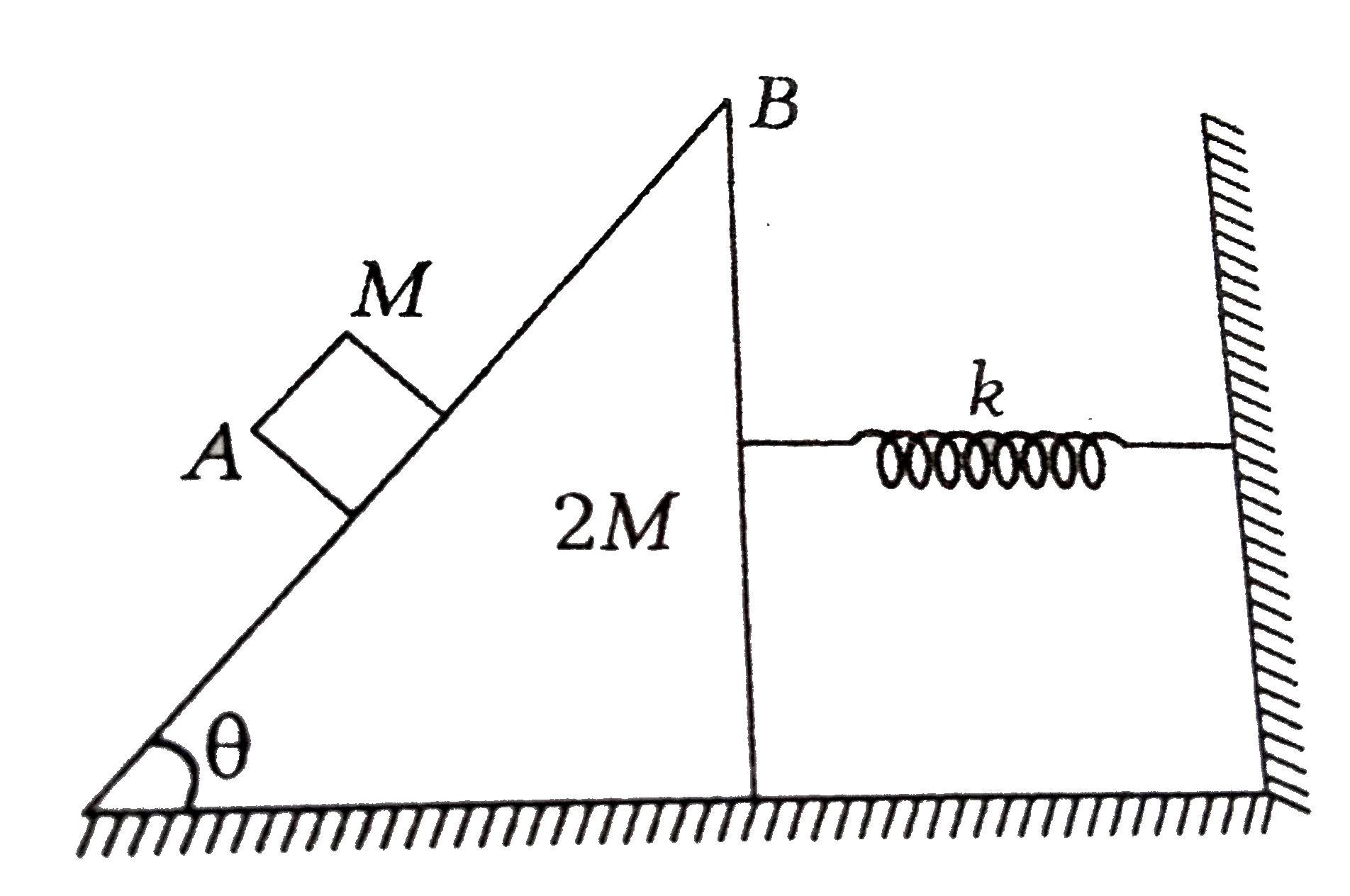
A block A of mass M rests on a wedge B o...

A block A of mass M rests on a wedge B of mass 2M and inclination `theta`. There is sufficient friction between A and B so that A does not slip on B. If there is no friction between B and ground, the compression in spring is

Promotional Banner

Similar Questions

Explore conceptually related problems

The coefficient of friction between the block A of mass m and the triangular wedge B of mass M is mu . There in no friction between the wedge and the plane if the system (block A+ wedge B) is released so that there is no stiding between A and B find the inclination theta

The coefficient of friction between the block A of mass m and the triangular wedge B of mass M is mu . There in no friction between the wedge and the plane if the system (block A+ wedge B) is released so that there is no stiding between A and B find the inclination theta

A rolling body is kept on a plank B . There is sufficient friction between A and B and no friction between B and the inclined plane. Then body:

A block of mass m is kept on an inclined plane of mass 2m and inclination alpha to horizontal. If the whole system is accelerated such that the block does not slip on the wedge then :

A block of mass m lies on wedge of mass Mas shown in figure. Find the minimum friction coeffcient required between wedge Mand ground so that it does not move while block m slips down on it.

A block of mass m lies on wedge of mass Mas shown in figure. Find the minimum friction coeffcient required between wedge Mand ground so that it does not move while block m slips down on it.

A block of mass m lies on wedge of mass Mas shown in figure. Find the minimum friction coeffcient required between wedge Mand ground so that it does not move while block m slips down on it.

a Block of mass m is placed on a wedge of mass M there is no friction between the block and the wedge .The minmum coefficient of friction between the wedge and the gound so that wedge does not move is,