Text Solution
Verified by Experts



Similar Questions
Explore conceptually related problems
Recommended Questions
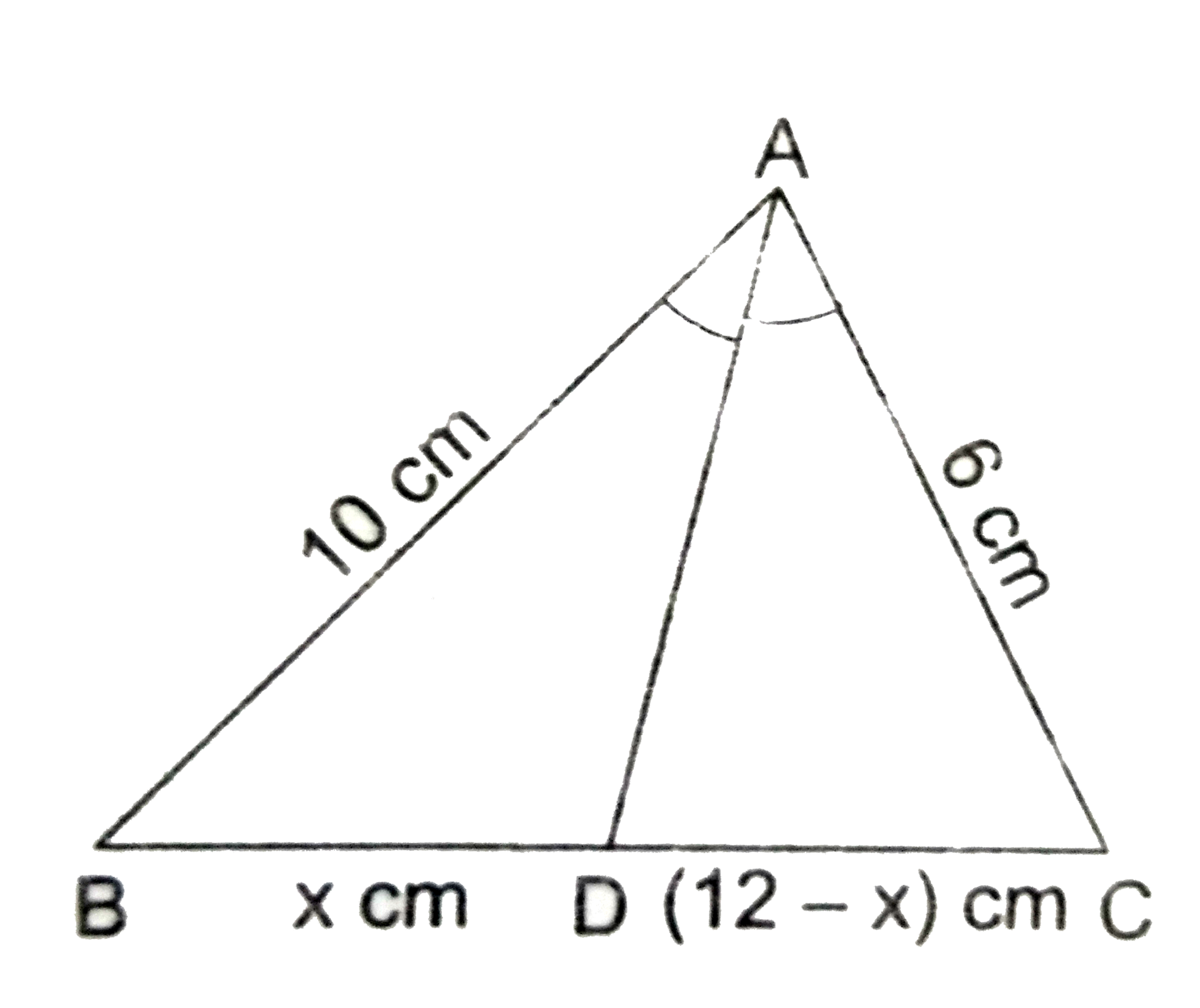
- In the given figure, AD is the bisector of angle BAC. If AB =10 cm , A...
Text Solution
|
- In the given figure, AD is the bisector of angle BAC. If AB =10 cm , A...
Text Solution
|
- In a Delta ABC, AD is the bisector of angle A. (i) If AB=6.4 cm, A...
Text Solution
|
- दी गई आकृति में AD, angle BAC को दो भागो में बाटता है । यदि AB = 10 स...
Text Solution
|
- चित्र में यदि AD, angle BAC का अन्तः समद्विभाजक है तथा AB = 10 सेमि,...
Text Solution
|
- त्रिभुज ABC में angle A का समद्विभाजक AD , सम्मुख भुजा BC को D पर म...
Text Solution
|
- दिये चित्र में , AD , angleA कि समद्विभाजक है यदि BD=4 सेमी, DC= सेमी...
Text Solution
|
- triangleABC में AD कोण BAC का समद्विभाजक है। यदि AB=4 cm, AC=6 cm, BD=...
Text Solution
|
- In Delta ABC, AD is the bisector of / BAC. If AB = 8 cm, BD = 6 cm and...
Text Solution
|