

Home
Class 11
PHYSICS
A cylinder of 150 mm radius rotates conc...

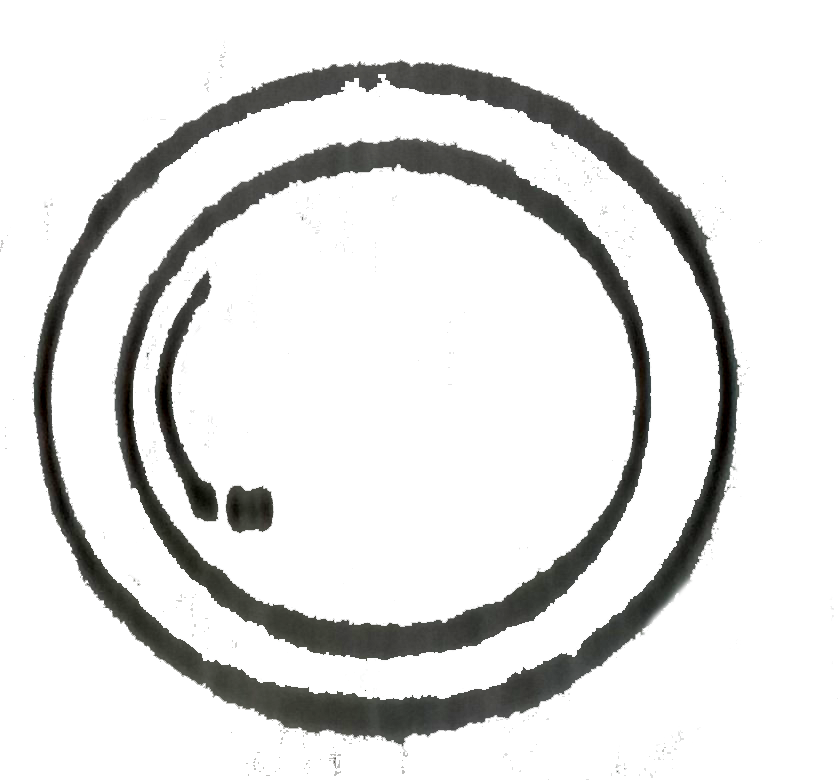
A cylinder of `150 mm` radius rotates concentrically inside a fixed cylinder of `155 mm` radius. Both culinders are `300 mm` long. Determine the viscosity of the liquid which fills the space between the cylinders if a torque of `0.98 n-m` is required to maintain an angular velocity of `60 r.p.m.`

Promotional Banner

Similar Questions

Explore conceptually related problems

A solid cylinder of radius 0.5 m and mass 50 kg is rotating at 300 rpm. Then the torque which will bring it to rest in 5 seconds is

A cylinder of mass M, radius r_(1) and lenglth l is kept inside another cylinder of radius r_(2) and length l. The space between them is filled with a liquid of viscosity eta . The inner cylinder starts rotating with angular velocity omega while the other cylinder is at rest. Find time when inner cylinder stops.

A solid cylinder of mass 20 kg rotates about its axis with angular velocity of 100 radian s^(-1) . The radius of the cylinder is 0.25m . The magnitude of the angular momentum of the cylinder about its axis of rotation is

A solid cylinder of mass 20 kg rotates about its axis with angular velocity of 100 radian s^(-1) . The radius of the cylinder is 0.25m . The magnitude of the angular momentum of the cylinder about its axis of rotation is

A long cylinder of radius R_1 is displaced along its axis with a constant velocity v_0 inside a stationary co-axial cylinder of radius R_2 . The space between the cylinders is filled with viscous liquid. Find the velocity of the liquid as a function of the distance r from the axis of the cylinders. The flow is laminar.

A hollow cylinder of radius r is rotating about its own vertical axis. Both ends of the cylinder are open. A piece of stone of mass m remains fixed on the inner side of the cylinder. What should be the minimum velocity of rotation of the cylinder so that the stone remains fixed on the surface of the cylinder without falling down? Coefficient of static friction between the wall of the cylinder and the stone = mu , acceleration due to gravity = g. Also, prove that this velocity is independent of the mass of the stone.

The axis of the uniform cylinder in figure is fixed. The cylinder is initially at rest. The block of mass M is initially moving to the friction and with speed v_(1) . It passes over the cylinder to the dashed position. When it first makes contact with the cylinder, it slips on the cylinder, but the friciton is large enough so that slipping ceases before M loses contacts wtih the cylinder. the cylinder has a radius R and a rotaitonal intertia I If omega is final angular velocity of the cylinder, then