

Home
Class 11
PHYSICS
A solid cylinder of mass m rolls on a ro...

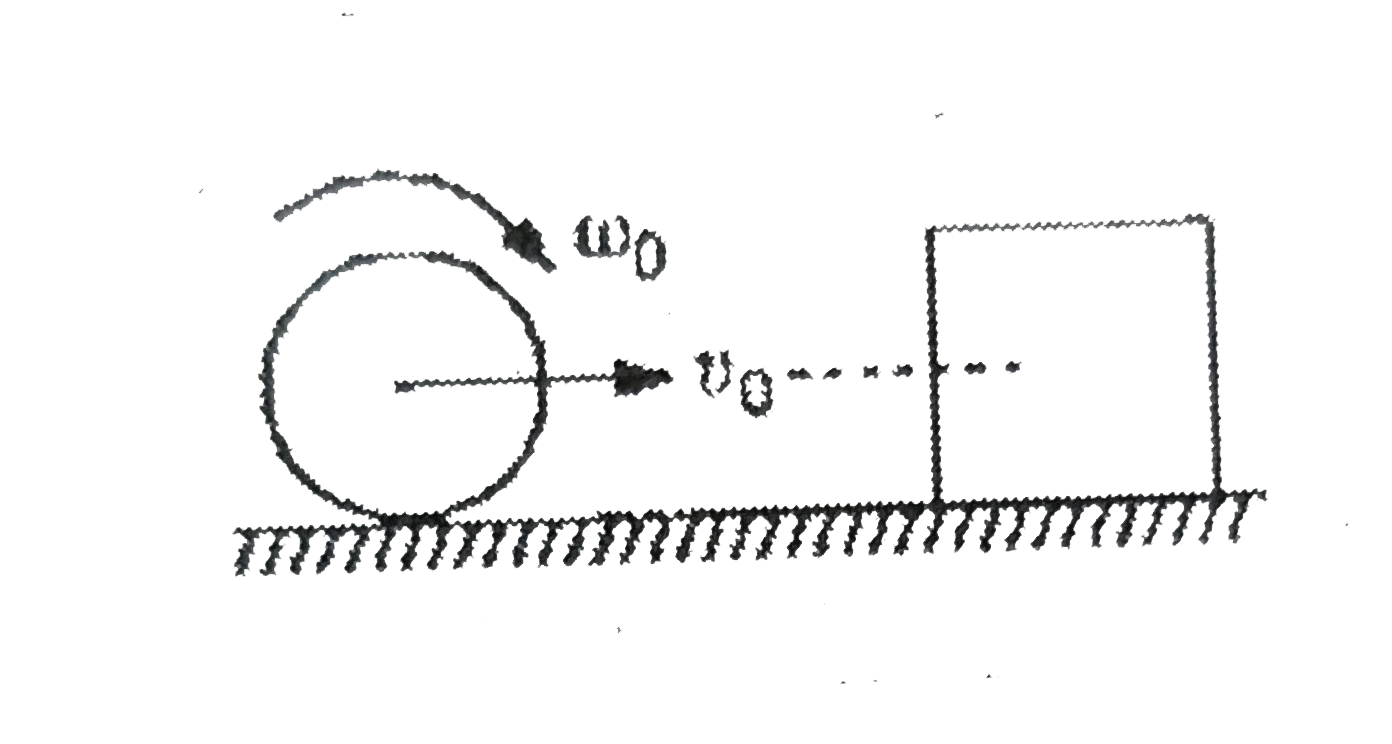
A solid cylinder of mass `m` rolls on a rough surface with velocity `v_(0)`. It collides elastically with a cubical block of same mass at rest. The centre of mass of both the bodies are at same height. Coefficient of friction between horizontal surface and cylinder as well as horizontal surface and cube is `mu`. No frictional exists between cylinder and cube. The cylinder collides the, cube at `t = 0`, then.

Percentage of energy of cylinder lost due to collision is:

Promotional Banner

Similar Questions

Explore conceptually related problems

A solid cylinder of mass m rolls on a rough surface with velocity v_(0) . It collides elastically with a cubical block of same mass at rest. The centre of mass of both the bodies are at same height. Coefficient of friction between horizontal surface and cylinder as well as horizontal surface and cube is mu . No frictional exists between cylinder and cube. The cylinder collides the, cube at t = 0 , then. Velocity of cube when the cylinder starts pure rolling:

A solid cylinder of mass m rolls on a rough surface with velocity v_(0) . It collides elastically with a cubical block of same mass at rest. The centre of mass of both the bodies are at same height. Coefficient of friction between horizontal surface and cylinder as well as horizontal surface and cube is mu . No frictional exists between cylinder and cube. The cylinder collides the, cube at t = 0 , then. Maximum separation between cylinder before it collide the cube again is:

A solid cylinder of mass m rolls on a rough surface with velocity v_(0) . It collides elastically with a cubical block of same mass at rest. The centre of mass of both the bodies are at same height. Coefficient of friction between horizontal surface and cylinder as well as horizontal surface and cube is mu . No frictional exists between cylinder and cube. The cylinder collides the, cube at t = 0 , then. Velocity of cylinder with which it will collide with cube again is:

A solid cylinder of mass m rolls on a rough surface with velocity v_(0) . It collides elastically with a cubical block of same mass at rest. The centre of mass of both the bodies are at same height. Coefficient of friction between horizontal surface and cylinder as well as horizontal surface and cube is mu . No frictional exists between cylinder and cube. The cylinder collides the, cube at t = 0 , then. Regarding frictional force acting on cylinder we can say that:

A solid cylinder of mass m rolls on a rough surface with velocity v_(0) . It collides elastically with a cubical block of same mass at rest. The centre of mass of both the bodies are at same height. Coefficient of friction between horizontal surface and cylinder as well as horizontal surface and cube is mu . No frictional exists between cylinder and cube. The cylinder collides the, cube at t = 0 , then. Time after which the cylinder starts pure rolling again:

A string wrapped around a cyliner of mass m and radius R . The end of the string is connected to block of same mass hanging vertically. No friction exists between the horizontal surface and cylinder. Acceleration of cylinder is:

A block of mass m is moving on a rough horizontal surface. mu is the coefficient of kinetic friction between the block and the surface. What is the net force exerted by the surface on the block?

A string wrapped around a cyliner of mass m and radius R . The end of the string is connected to block of same mass hanging vertically. No friction exists between the horizontal surface and cylinder. Velocity of hanging block at this moment is: is: