

Home
Class 11
PHYSICS
A projectile is fired from the base of c...

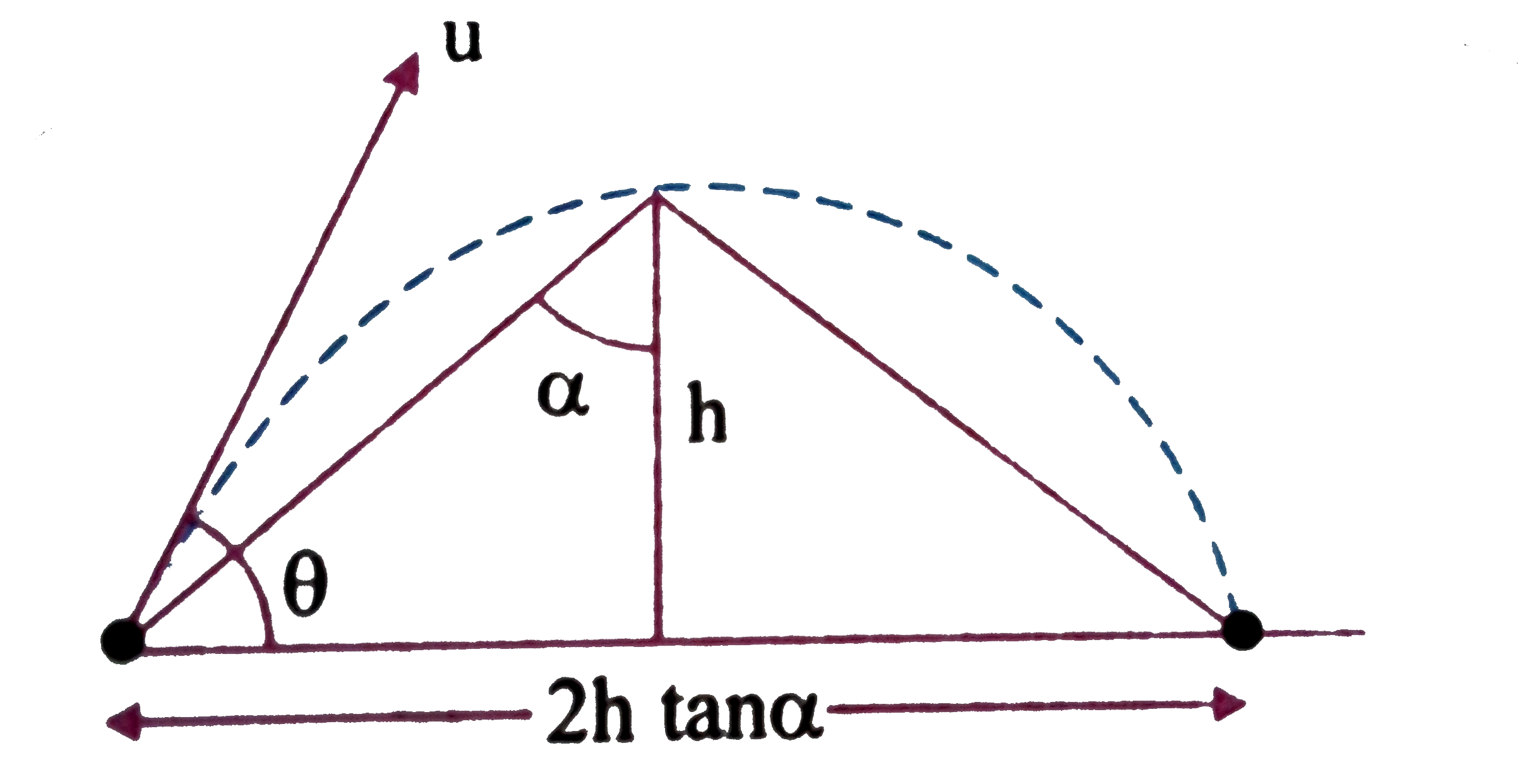
A projectile is fired from the base of cone shaped hill. The projectile grazes the vertex and strikes the hill again at the base.If `alpha` be the half-angle of the cone, `h` its height, `u` the initial velocity of projection and `theta` angle of projection, then then `tan theta`is

Promotional Banner

Similar Questions

Explore conceptually related problems

A projectile is fired from the base of coneshaped hill. The projectile grazes the vertex and strikes the hill again at the base.If alpha be the half-angle of the cone, h its height, u the initial velocity of projection and theta angle of projection, then then theta tan theta is

A projectile is fired from the base of cone shaped hill. The projectle grazes the vertex and strikes the hill again at the base. If alpha be the half-angle of the cone, h its height, u the initial velocity of projection and theta angle of projection, then tan theta tan alpha is:

If the initial velocity of a projectile be doubled, keeping the angle of projection same, the maximum height reached by it will

A projectile fired with initial velocity u at some angle theta has a range R . If the initial velocity be doubled at the same angle of projection, then the range will be

A particle is projected over a traingle from one end of a horizontal base and grazing the vertex falls on the other end of the base. If alpha and beta be the base angles and theta the angle of projection, prove that tan theta = tan alpha + tan beta .

What will be the effect on horixontal range of a projectile when its initial velocity is doubled, keeping the angle projection same ?

A particle is projected over a triangle from one extremity of its horizontal base. Grazing over the vertex, it falls on the other extremity of the base. If a and b are the base angles of the triangle and theta the angle of projection, prove that tan theta = tan prop + tan beta .

A particle is thrown over a triangle from one end of a horizontal base and after grazing the vertex falls on the other end of the base. If alpha and beta be the base angles and theta the angle of projection, prove that tan theta = tan alpha + tan beta .