

Home
Class 11
PHYSICS
A smooth ball 'A' moving with velocity '...

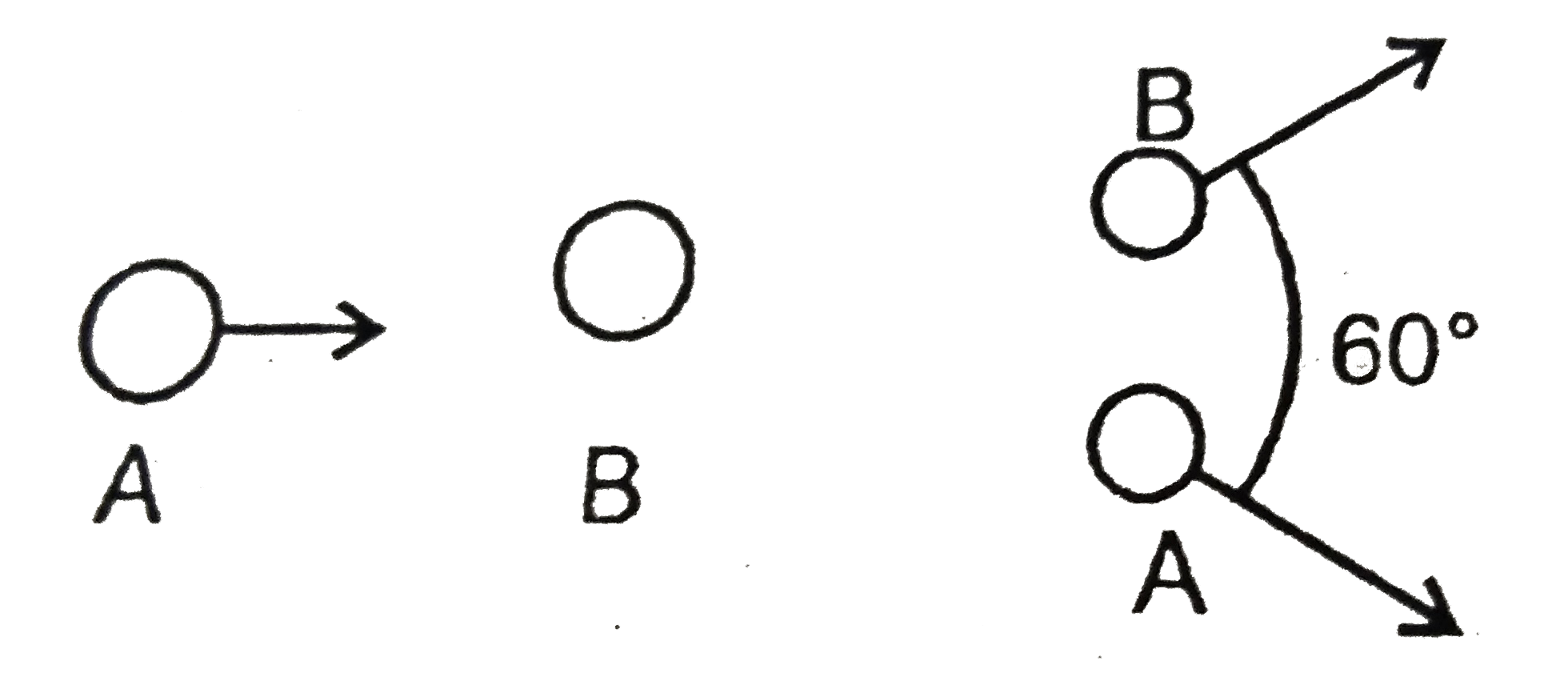
A smooth ball `'A'` moving with velocity `'V'` collides with another smooth identical ball at rest. After collision both the balls move with same speed with angle between their velocities `60^(@)`. No external force acts on the system of balls.

The speed of each ball after the collision is

Promotional Banner

Similar Questions

Explore conceptually related problems

A smooth ball 'A' moving with velocity 'V' collides with another smooth identical ball at rest. After collision both the balls move with same speed with angle between their velocities 60^(@) . No external force acts on the system of balls. The value of coefficient of resititution is

A smooth ball 'A' moving with velocity 'V' collides with another smooth identical ball at rest. After collision both the balls move with same speed with angle between their velocities 60^(@) . No external force acts on the system of balls. The value of coefficient of resititution is

A smooth ball 'A' moving with velocity 'V' collides with another smooth identical ball at rest. After collision both the balls move with same speed with angle between their velocities 60^(@) . No external force acts on the system of balls. If the kinetic energy lost is fully converted to heat then heat produced is

A smooth ball 'A' moving with velocity 'V' collides with another smooth identical ball at rest. After collision both the balls move with same speed with angle between their velocities 60^(@) . No external force acts on the system of balls. If the kinetic energy lost is fully converted to heat then heat produced is

A ball of mass m moving with velocity v collides head on elastically with another identical ball moving with velocity - V. After collision

A ball of mass m moving with velocity v collides head on elastically with another identical ball moving with velocity - V. After collision

A ball moving with velocity 9ms^(-1) collides with another smiliar stationary ball. If after the collision, both the balls move in the directions making an angle of 30^(@) with the initial direction, then their speeds, after collision will be

A ball moving with speed u collides with an identical ball at rest. The velocities of two balls after collision are (If the collision is elastic):

A ball of mass m moving with a velocity v undergoes an oblique elastic collision with another ball of the same mass m but at rest. After the collision if the two balls move with the same speeds , the angle between their directions of motion will be: