

Home
Class 12
PHYSICS
A parallel narrow beam of light is incid...

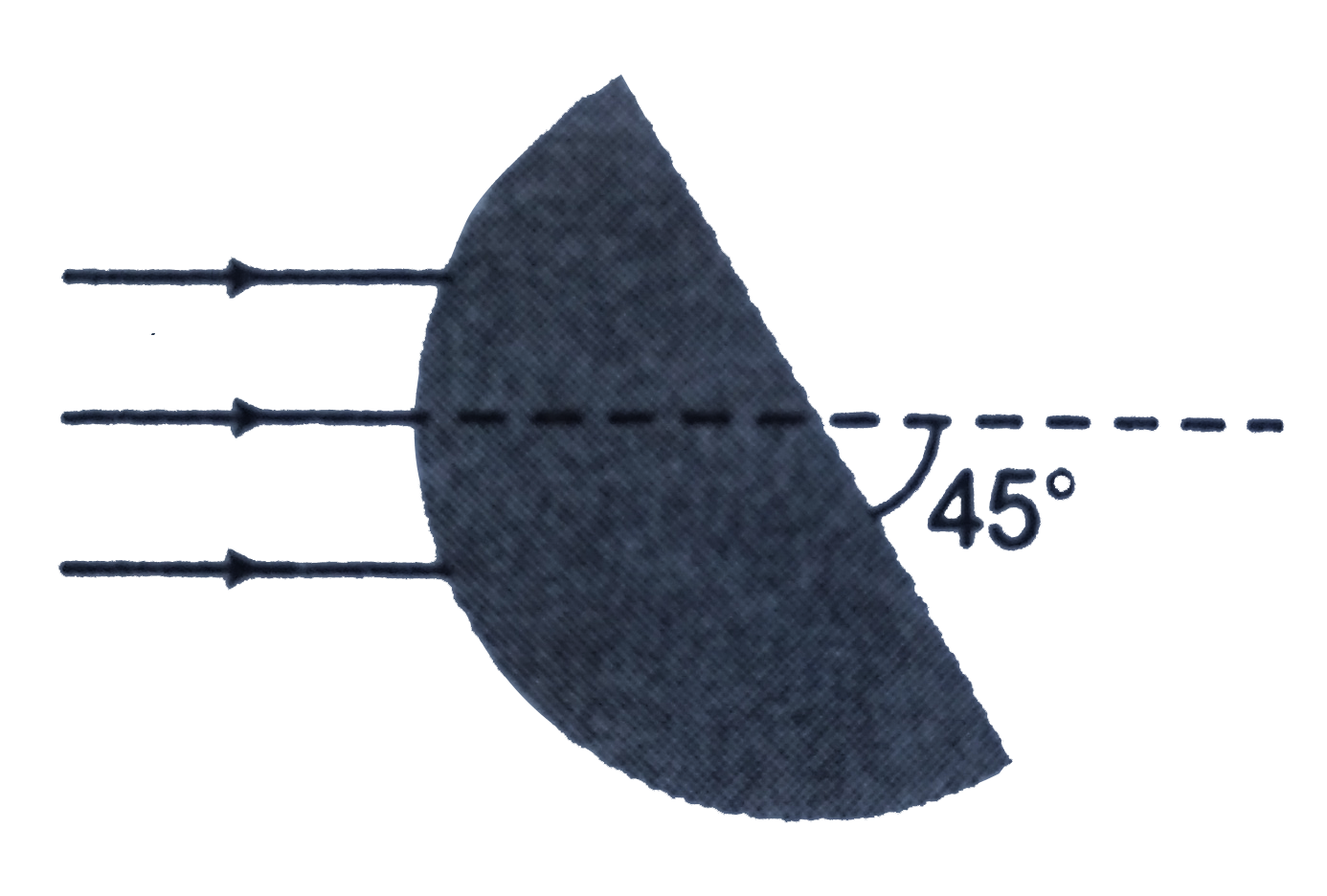
A parallel narrow beam of light is incident on the surface of a transparent hemisphere of radius R and refractive index `mu=1.5` as shown. The position of the image formed by refraction at the image formed by refraction at the spherical surface only as

Promotional Banner

Similar Questions

Explore conceptually related problems

A parallel beam of light is incident on the surface of a transparent hemisphere of radius R and refractive index 2.0 as shown in figure. The position of the image formed by refraction at the first surface is :

A parallel beam of light is incident normally on the flat surface of a hemisphere of radius 6 cm and refractive index 1.5 , placed in air as shown in figure (i). Assume paraxial ray approxiamtion. .

A parallel beam of light is incident normally on the flat surface of a hemisphere of radius 6 cm and refractive index 1.5 , placed in air as shown in figure (i). Assume paraxial ray approxiamtion. .

A ray of light is incident on the surface of plate of glass of refractive index 1.5 at the polarising angle. The angle of refraction of the ray will be

AN unpolarised beam of light is incident at the polarising angle on the surface of a transparent medium of refractive index 1.6. The angle of refraction in the medium is

A narrow parallel beam of light falls on a glass sphere of radius R and refractive index mu at normal incidence. The distance of the image from the outer edge is given by-

A long glass rod has a hemispherical end. A narrow beam of light is incident on the spherical end, the beam being parallel to the length of the rod. What is the position of the image formed if the refractive index of glass is 1.5 and the radius of curvature of the spherical surface is 10 cm ?

Figure below shows a parallel beam of monochromatic light incident on a convex spherical surface, radius of curvature R = 30 cm, which separates glass (refractive index - 1 6) from air. Find the position of the image formed due to refraction of light at this single spherical surface.