


Similar Questions
Explore conceptually related problems
Recommended Questions
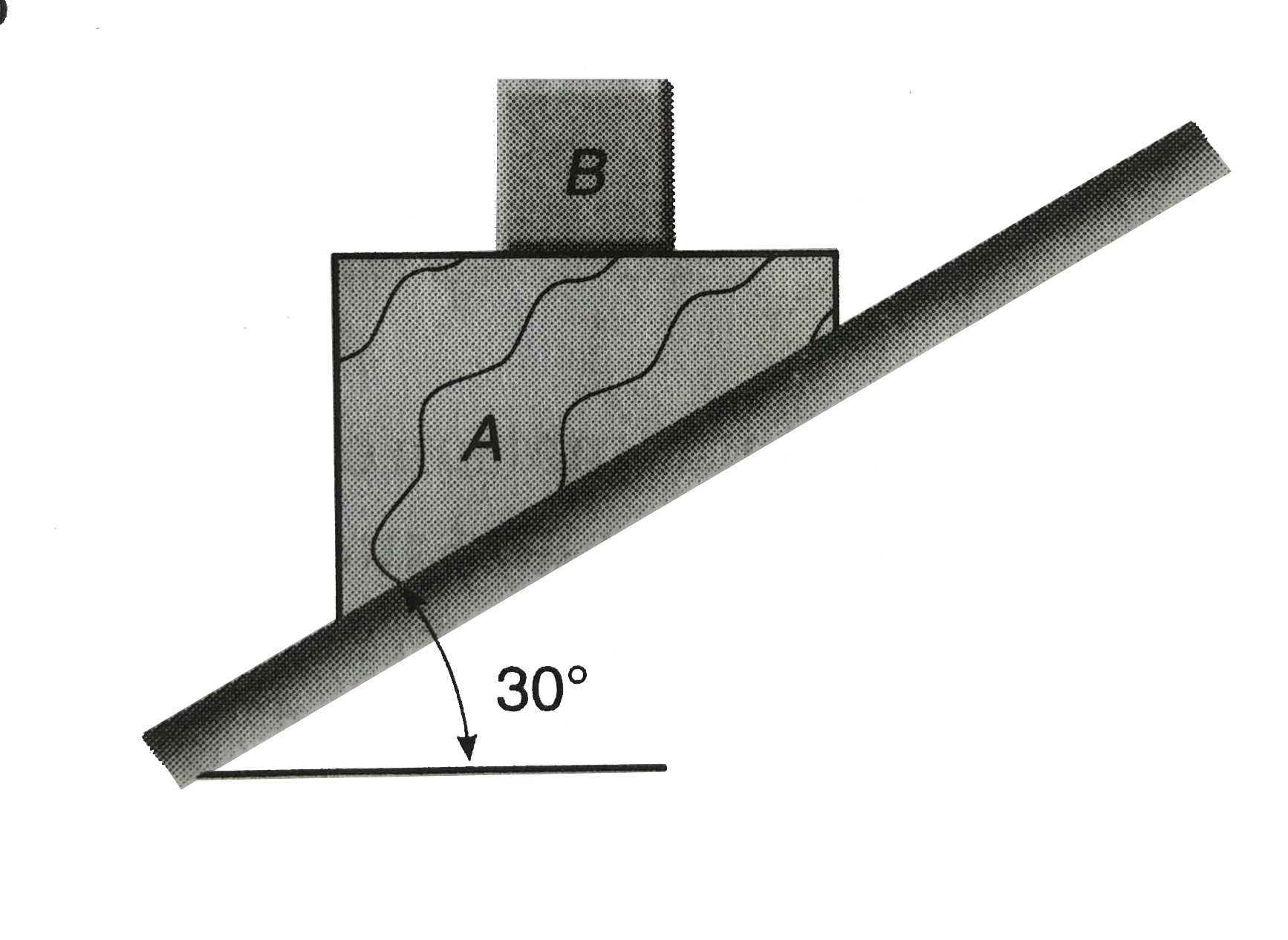
- A 6 kg block B rests as shown on the upper surface of a 15 kg wedge A ...
Text Solution
|
- A block of mass 1 kg is at rest relative to a smooth wedge moving left...
Text Solution
|
- Determine the acceleration of the 5 kg block A . Neglect the mass of t...
Text Solution
|
- A 6 kg block B rests as shown on the upper surface of a 15 kg wedge A ...
Text Solution
|
- Find the acceleration of the two blocks . The system is initialy at re...
Text Solution
|
- A block A of mass 10 kg rests on a second block B of mass 8 kg. The co...
Text Solution
|
- A 20 kg block B is suspended from a cord attached to a 40 kg cart A. T...
Text Solution
|
- The block B starts from rest and slides on the wedge A which can move ...
Text Solution
|
- A rod 'A' constrained to move in vertical direction rests on a wedge B...
Text Solution
|