


Similar Questions
Explore conceptually related problems
Recommended Questions
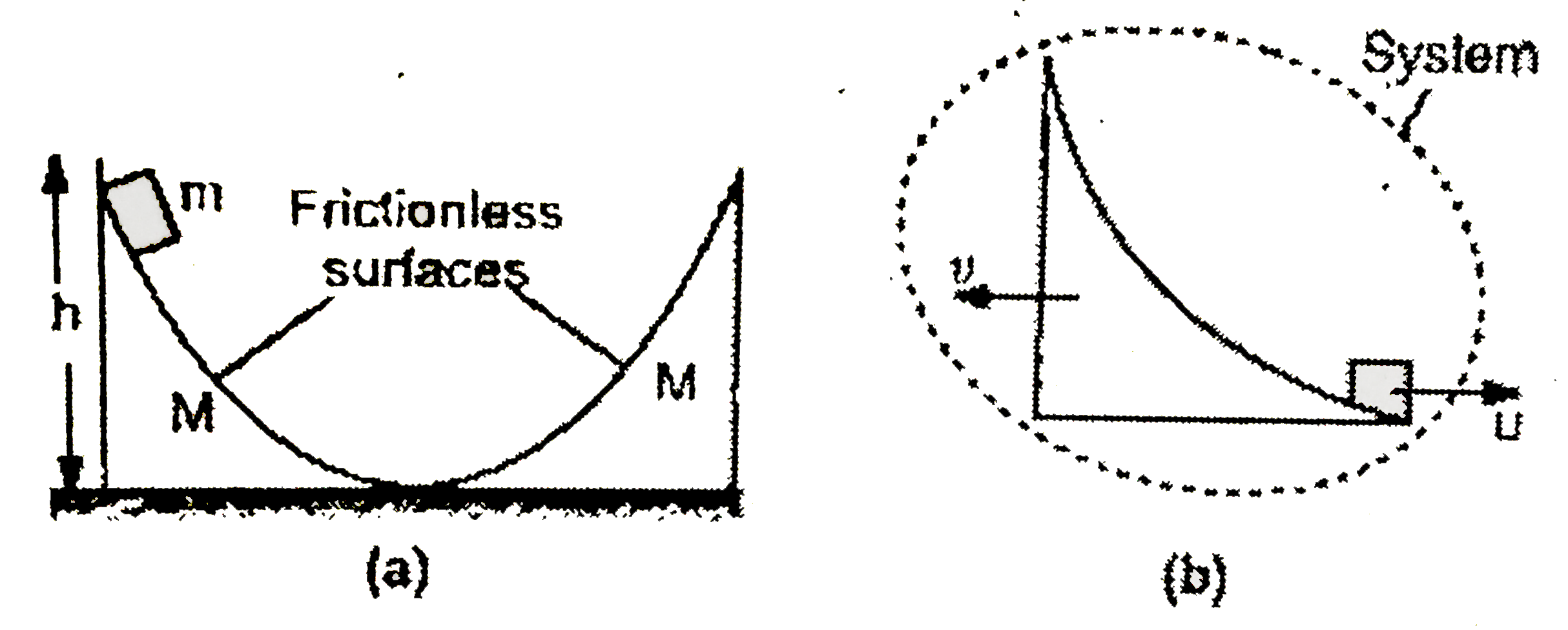
- Two identical wedges of mass M are smoothly conjugated . The wedges ar...
Text Solution
|
- All surfaces shown in figure are smooth. Wedges of mass 'M' is free to...
Text Solution
|
- A small block of mass m is placed at rest on the top of a smooth wedge...
Text Solution
|
- In fig. mass m is being pulled on the incline of a wedge of mass M. Al...
Text Solution
|
- A block of mass m is pushed towards the movable wedge of mass M and he...
Text Solution
|
- A block of mass m slides down a wedge of mass M as shown . The whole s...
Text Solution
|
- In the Fig. shown, mass 'm' is being pulled on the incline of a wedge ...
Text Solution
|
- Two identical wedges of mass M are smoothly conjugated . The wedges ar...
Text Solution
|
- The inclined surfaces of two movable wedges of the same mass M are smo...
Text Solution
|