

Home
Class 11
PHYSICS
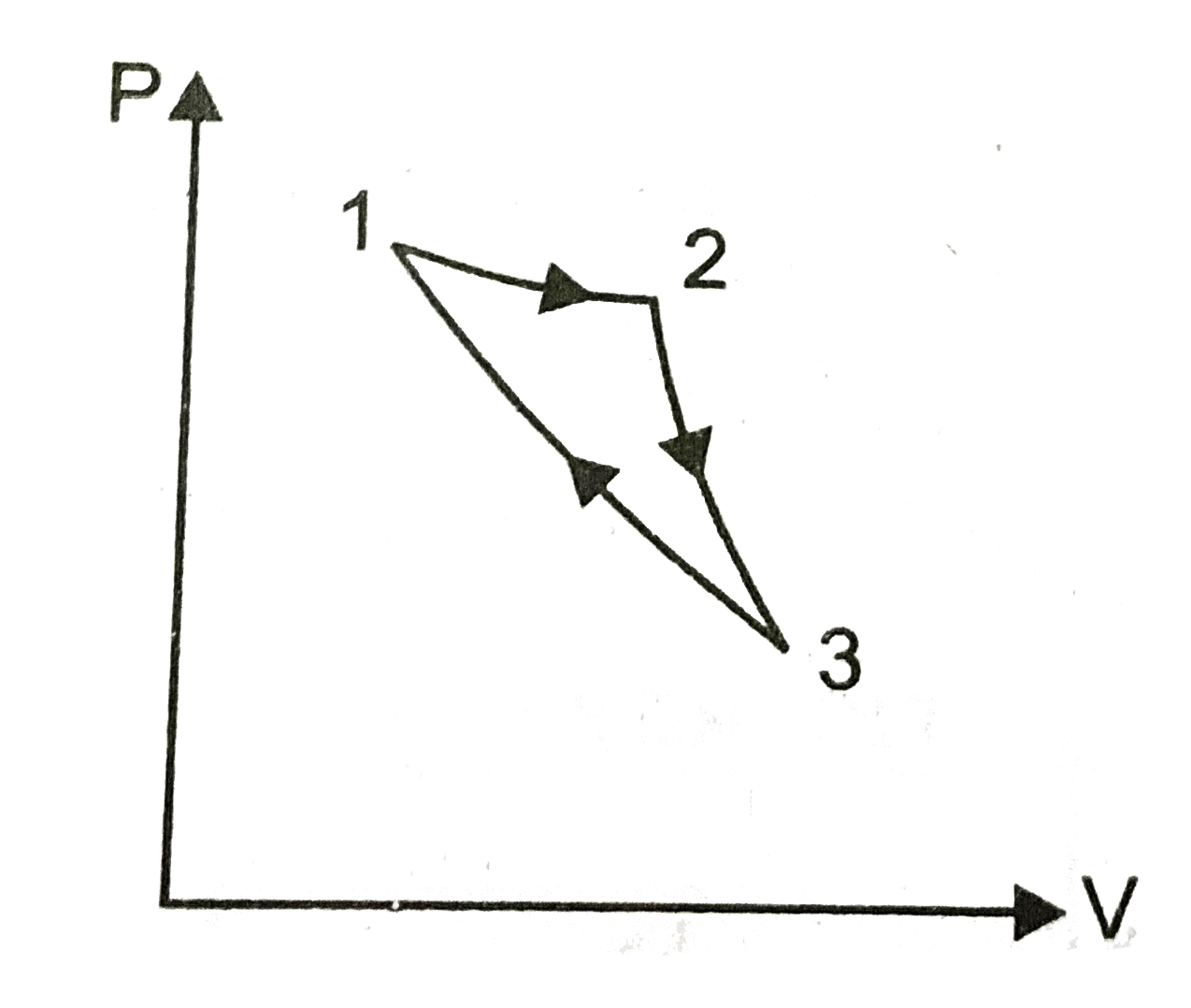
Consider a cycle followed by an engine, ...

Consider a cycle followed by an engine, (figure)

1 to 2 is isothermal 2 to 3 is adiabatic 3 to 1 is adiabatic
such a process does not exist because

Promotional Banner

Similar Questions

Explore conceptually related problems

Consider a cycle followed by an engine (figure.) 1 or 2 is isothermal 2 to 3 is adiabatic 3 to 1 is adiabatic Such a process does not exist, because

Consider a cycle followed by an engine (figure.) 1 or 2 is isothermal 2 to 3 is adiabatic 3 to 1 is adiabatic Such a process does not exist, because

Consider a cycle followed by an engine as shown in figure, 1 to 2 is isothermal 2 to 3 is adiabatic 3 to 1 is adiabatic Such a process does not exist because

Consider a cycle followed by an engine 1 to 2 is isothermal 2 to 3 is adiabatic 3 to 1 is adiabatic such a process does not exist because a) heat is completely converted to mechanical energy in such a process, which is not possible b) mechanical energy is completely converted to heat in this process, which is not possible c) curves representing two adiabatic processes don't intersect d) curves representing an adiabatic process and an isothermal process don't intersect

The three processes in a thermodynamic cycle shown in the figure are : Process 1 to 2 is isothermal, Process 2 to 3 is isochoric (volume remains constant), Process 3 to 1 is adiabatic. The total work done by the ideal gas in this cycle is 10 J. The internal energy decreases by 20 J in the isochoric process. The work done by the gas in the adiabatic process is -20 J. The heat added to the system in the isothermal process is

Find work in the given cycle, If AB is isothermal process and CA is adiabatic.

The carnot cycle of a reversible heat engine consist of A. one isothermal and two adiabatic processes B. Two isobaric and one adiabatic processes C. Two isothermal and two adiabatic processes D. Two isobraic and two isothermal processes

One mole of an ideal gas is carried through a thermodynamics cycle as shown in the figure. The cycle consists of an isochoric, an isothermal and an adiabatic process. Find the adiabatic exponent of the gas.

Why should a Carnot cycle have two isothermal two adiabatic processes?