

Home
Class 11
PHYSICS
The sides of an isosceles right prism ar...

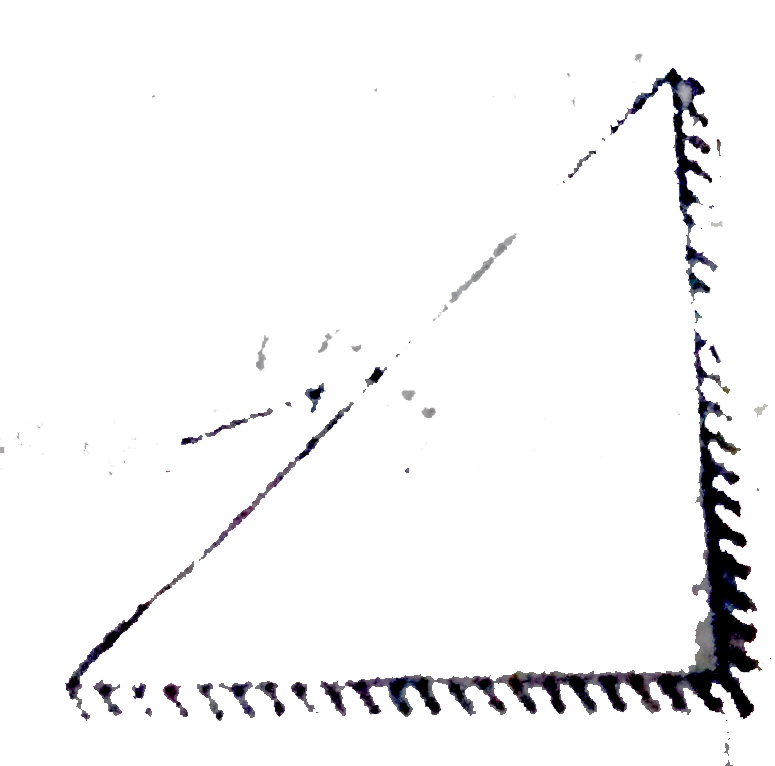
The sides of an isosceles right prism are coated with a reflecting coating. A ray of light falls on the hypotenuse at an arbitrary angle i. For what value of i the ray leaving the prism is parallel to the incident ray ?

Promotional Banner

Similar Questions

Explore conceptually related problems

Light of wavelength 5000 Å falls on a reflecting surface. For what angle of incidence is the reflected ray normal to the incident ray?

A ray of light PQ is incident normally on the hypotenuse of a right angled prism ABC as shown in the diagram given below: What is the value of the angle of deviation of the ray ?

A ray of light PQ is incident normally on the hypotenuse of a right angled prism ABC as shown in the diagram. Name an instrument where this action of the prism is used.

A ray of light, incident on an equilateral glass prism (μ_g =√3) moves parallel to the base line of the prism inside it. find the angle of incidence for this ray.

A total reflecting right angled isosceles prism can be used to deviate a ray of light through :

A ray of light falls normally on one side other than the hypotenuse of a right angled isosceles prism of refractive index 1.5. From which side will the ray emerge from the prism? Find the deviation of the incident ray.

An isosceles prism has one of the refracting surfaces silvered. A ray of light is incident normally on the refracting face AB. After two reflections, the ray emerges from the base of the prism perpendicular to it. Find the angle of the prism.

An isosceles prism has one of the refracting surfaces silvered. A ray of light is incident normally on the refracting face AB. After two reflections, the ray emerges from the base of the prism perpendicular to it. Find the angle of the prism.