Home
Class 12
BIOLOGY
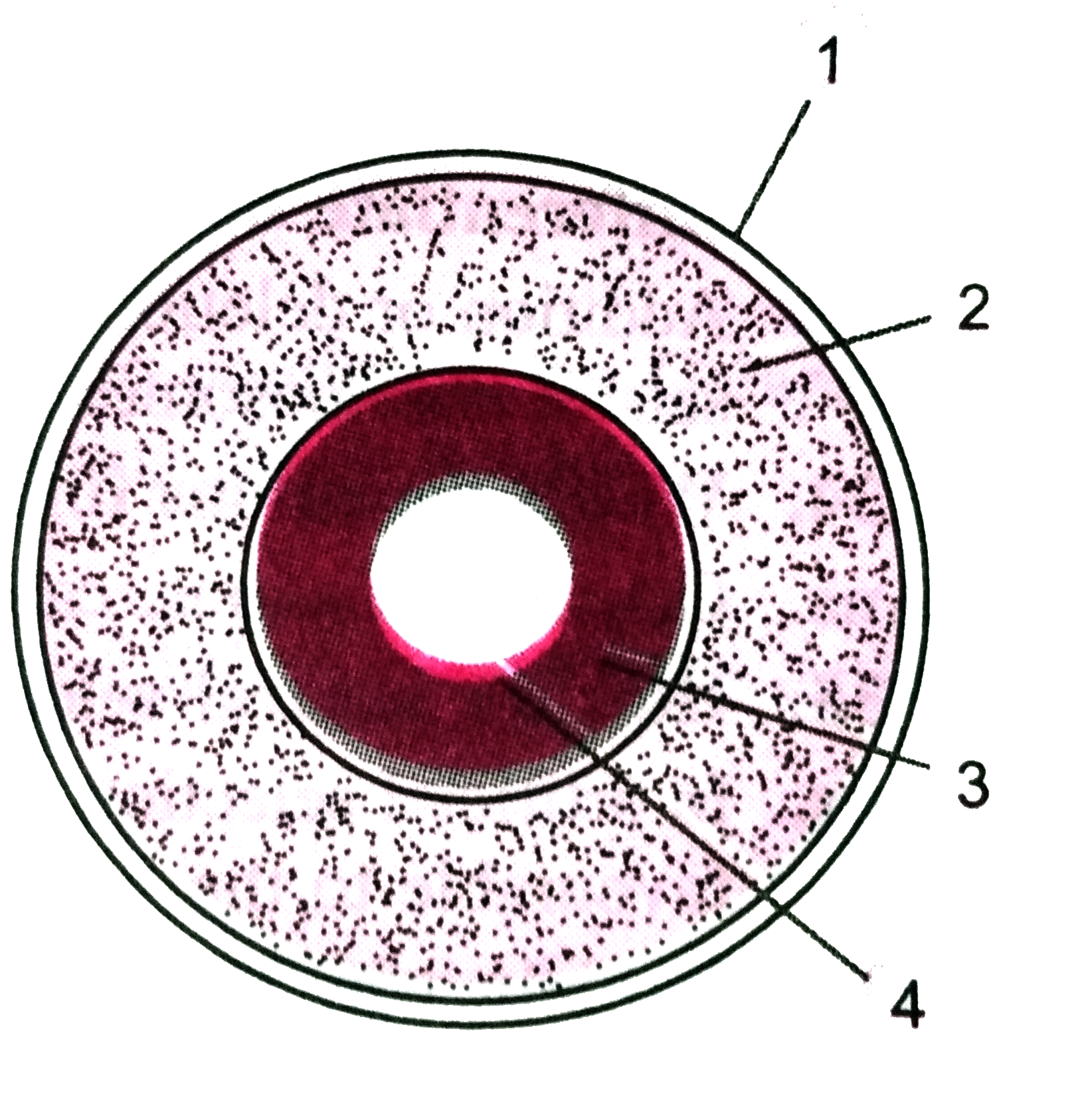
Diagram of Earth is given . Answer the q...

Diagram of Earth is given . Answer the question :
(a)Label the regions marked as 1,2,3 and 4
(b)Give thickness of the above four regions .
(c )Name important elements present in these regions.
(d)Give alternative name of central (core) part of the earth and that of mantle.
(e)Name the galaxy to which our solar system belongs .

Text Solution

Verified by Experts

(a)1.Earth crust 2.Mantle 3.Outer core 4. Inner core
(b)1.Earth crust -20-25 miles 2.Mantle -1800 miles 3.Outer core -1400 miles 4.Inner core -800 miles
(c )1.Silica and aluminium 2.Silica , magnesium and manganese 3 & 4 . Iron and Nickel
(d)Baryosphere or nife , Pyrosphere .
(e)Akash Ganga or The Milky way.
Promotional Banner

Similar Questions

Explore conceptually related problems

From the part of the periodic table given, answer the following questions. (a) Which is the most reactive metal ? (b) Name the family of L, Q, R, T. (c) Name one element of group 2 and 15, (d) Name one member of group 18 other than neon. (e) Give the name of the element S placed below carbon in group 14.

Protective proteinous chemical compounds produed by the immune cells in response to antigens are called antibodies, also called immunoglobulins. There are five classes of antibodies: IgA, IgD, IgE, IgG and IgM. Following diagram is that of a specific class of antibodies. Observe the diagram and answer the questions listed below the diagram: (i) To which class of antibodies, this antibody belongs to ? (ii) Identify the parts of the diagram labelled as A and B. (iii) Give the name of the part of antibody which binds the antigen. (iv) Which type of immune system is formed by the antibodies?

(a) Electropositive nature of the element(s) increases down the group and decreases across the period (b) Electronegativity of the element decreases down the group and increases across the period (c) Atomic size increase down the group and decreases across a period (left to right) (d) Metallic character increases down the group and decreases across a period On the basis of the above trends of the periodic table, answer the following about the electron with atomic number 3 to 9 (a) Name the most electropositive element among them (b) Name the most electronegative element (c) Name of the element with smallest atomic size (d) Name the element which is a metalloid (e) Name the element which shows maximum valency.

Study the Figure and answer the following questions : (a) Name the organism and write down the phylum to which it belongs. (b) Label A, B and C (c) Which type of symmetry is present? (d) What type the organ is present for excretion ?

Answer the following : (a) How many types of fission are possible of a covalent bond? (b) how many types of ions are formed by heterolytic fission and what are their names? (c) What are the names and nature of the parts formed by homolytic fission? (d) How many electrons are present in the valence shell of the carbon atom of the carbonium ion? (e) How many electrons are present in the valence shell of carbon atom of the carbanion ion? (f) Name the attacking reagents and give their nature. (g) Write the names of the parts obtained when C-Cl bond of ethyl chloride undergoes heterolytic fission. (h) What is the major factor that influences the relatives stabilities of carbocations, carbanions and free radicals.

Study the following table in which positions of six elements A,B,C,D,E and F are shown as they are in the modern periodic table. On the basis of the above table, answer the following question : (i) Name the element which form only covalent compounds. (ii) Name the element which is a metal with valency three. (iii) Name the element which is a non-metal with valency three. (iv) Out of D and E, which is bigger in size and why ? (iv) Write the common name for the family to which the elements C and F belongs.
