

Home
Class 11
PHYSICS
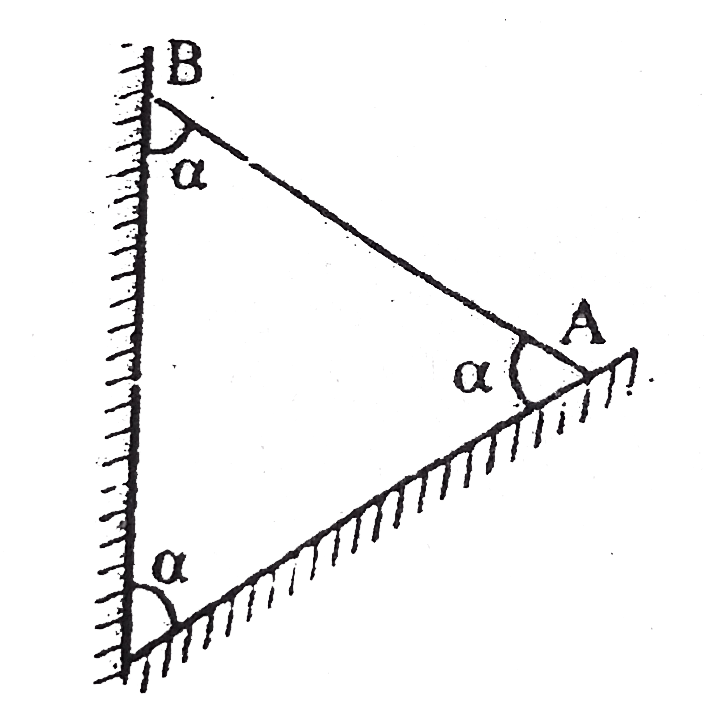
In the figure shown, the end A of the ro...

In the figure shown, the end `A` of the rod of length `L` is being pushed down parallel to the inclined surface with a velocity `v`. Let the velocity of end `B` be `u` and the angular velocity of the rod `omega` then

Promotional Banner

Similar Questions

Explore conceptually related problems

In the figure shown the end A of the rod of length L is being pushed down parallel to the inclined surface with a velocity =v let the velocity of end B=u and the angular velocity of the rod = omega then

A uniform rod of length l is spinning with an angular velocity omega=2v/l while its centre of mass moves with a velocity v . Find the velocity of the end of the rod.

A rod od length l is moving in a vertical plane ( x-y ) when the owest point A of the rod is moved with a velociy v . find the a angular velocity of the rod and b velocity of the end B .

A rod of length L is sliding on a frictionless surface as shown in the figure. Velocity of end A is 4m//s along the wall. Find the velocity of end B, when end B makes 30^(@) with wall PQ.

A rod AB is placed on smooth inclined plane as shown in the figure. At the instant which is shown in the figure, the angular velocity of the rod is

In the figure shown the instantaneous speed of end A of the rod is v to the left the angular velocity of the rod of lengthL must be

A uniform rod of mass M and length l is placed on a smooth- horizontal surface with its one end pivoted to the surface. A small ball of mass m moving along the surface with a velocity v_(0) , perpendicular to the rod, collides elastically with the free end of the rod. Find: a. the angular velocity of the rod after collision. b. the impulse applied by the pivot on the rod during collision. (Take M//m = 2 )

Figure shows a rod of length l resting on a wall and the floor. Its lower end A is pulled towards left with a constant velocity v. Find the velocity of the other end B downward when the rod makes an angle theta with the horizontal.

In the figure shown, the instantaneous speed of end A of the rod is v to the left. The angular velocity of the rod of length L must be

Rod AB has length L. velocity of end A of the rod has velocity upsilon_(0) at the given instant. (a). Which type of motion the rod has? (b). Find velocity of end B at the given instant. (C). Find the angular velocity of the rod.