


Similar Questions
Explore conceptually related problems
Recommended Questions
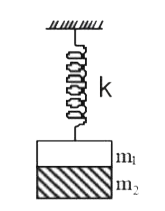
- Two masses m(1) and m(2) are suspended together by a massless spring o...
Text Solution
|
- Two masses m(1)and m(2) are suspended from a spring of spring constant...
Text Solution
|
- Two masses m(1) and m(2) are suspeded togther by a massless spring of ...
Text Solution
|
- Two masses m1 and m2 are suspended together by a massless spring of co...
Text Solution
|
- Two mass m(1) and m(2) are suspended from a massless spring of force c...
Text Solution
|
- Two masses m(1)=1.0 kg and m(2)=0.5 kg are suspended together by ...
Text Solution
|
- Two masses m(1) and m(2) are suspended together by a massless spring o...
Text Solution
|
- दो द्रव्यमान m(1) व m(2) एक द्र्व्यमाणहीन स्प्रिंग से जिसका बल नियतांक...
Text Solution
|
- Two masses m(1) = 1kg and m(2) = 0.5 kg are suspended together by a ma...
Text Solution
|