

Home
Class 12
PHYSICS
Figure shows a capacitor made of two cir...

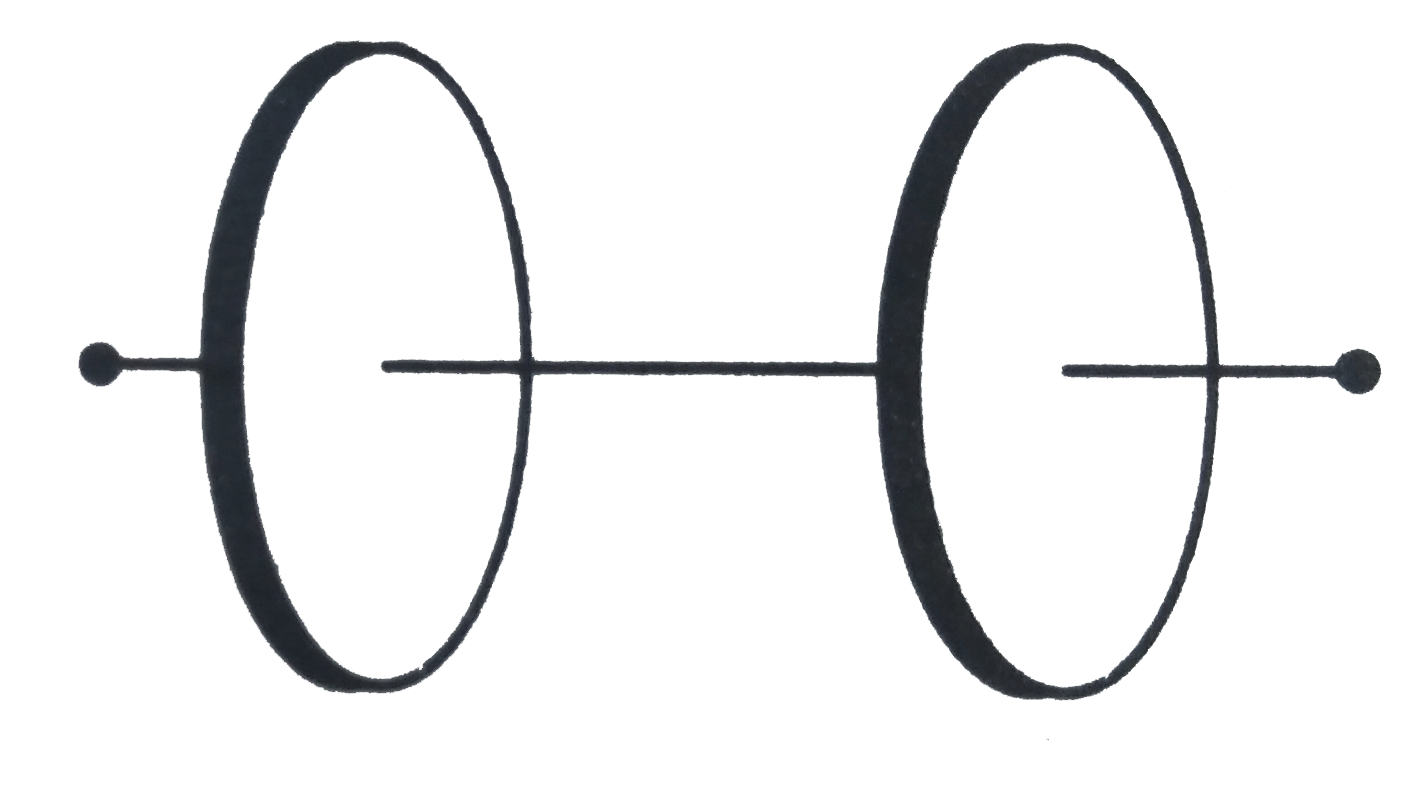
Figure shows a capacitor made of two circular plates each of radius `12 cm`, and separated by `5.0 cm`. the capacitor is being charged by an external source (not shown in the figure). The charging current is constant and equal to `0.15 A`
(a) Calcuate the capacitance and the rate of change of potential difference between the plates
(b) Obtain the displacement current across the plates
(c) Is kirchhoff's first rule(junction rule) vaild at each plate of the capacitor ? Explain.
.

Promotional Banner

Similar Questions

Explore conceptually related problems

Figure 8.6 shows a capacitor made of two circular plates each of radius 12 cm, and separated by 5.0 cm. The capacitor is being charged by an external source (not shown in the figure). The charging current is constant and equal to 0.15A. (a) Calculate the capacitance and the rate of change of potential difference between the plates. (b) Obtain the displacement current across the plates. (c) Is Kirchhoff’s first rule (junction rule) valid at each plate of the capacitor? Explain.

Figure 8.6 shows a capacitor made of two circular plates each of radius 12 cm, and separated by 5.0 cm. The capacitor is being charged by an external source (not shown in the figure). The charging current is constant and equal to 0.15A. (a) Calculate the capacitance and the rate of change of potential difference between the plates. (b) Obtain the displacement current across the plates. (c) Is Kirchhoff’s first rule (junction rule) valid at each plate of the capacitor? Explain.

Figure shows a capacitor made of two circular plates each of radius 12 cm, and separated by 5.0 cm. The capacitor is being charged by an external source (not shown in the figure). The charging current is constant and equal to 0.15 A. Calculate the capacitance and the rate of change of potential difference between the plates.

Figure 8.6 shows a capacitor made of two circular plates each of radius 12 cm, and separated by 5.0 cm. The capacitor is being charged by an external source (not shown in the figure). The charging current is constant and equal to 0.15A. Calculate the capacitance and the rate of change of potential difference between the plates. :

Fig. TBQ 8.1 shows a capacitor made of two circular plates each of radius 12 cm, and separated by 5.0 cm. The capacitor is being charged by an external source (not shown in the figure). The charging current is constant and equal to 0.15 A. Calculate the capacitance and rate of change of potential difference between the plates.

The figure shows a capacitor made of two circular plates each of radius 12 cm, and separated by 5.0 cm . The capacitor is beging charged by an external source (not shown in the figure. ) The charing is constant and equal to 0.15 A Calculate the capacitance and the rate of charge of potential difference between the plates.

Fig. shows a capacitor made of two circular plates each of radius 12 cm and separated by 5.0mm. The capacitor is being charged by an external source (not shown in the figure). The charging current is constant and equal to 0.15A. (a) Calculate the capacitance and the rate of change of potential difference between the plates. (b) Obtain the displacement current across the plates. (c) Is Kirchhoff's first rule valid at each plate of the capacitor ? Explain.

Fig. shows a capacitor made of two circular plates each of radius 12 cm and separated by 5.0mm. The capacitor is being charged by an external source (not shown in the figure). The charging current is constant and equal to 0.15A. (a) Calculate the capacitance and the rate of change of potential difference between the plates. (b) Obtain the displacement current across the plates. (c) Is Kirchhoff's first rule valid at each plate of the capacitor ? Explain.