

Home
Class 12
PHYSICS
A solid sphere with angular velocity ome...

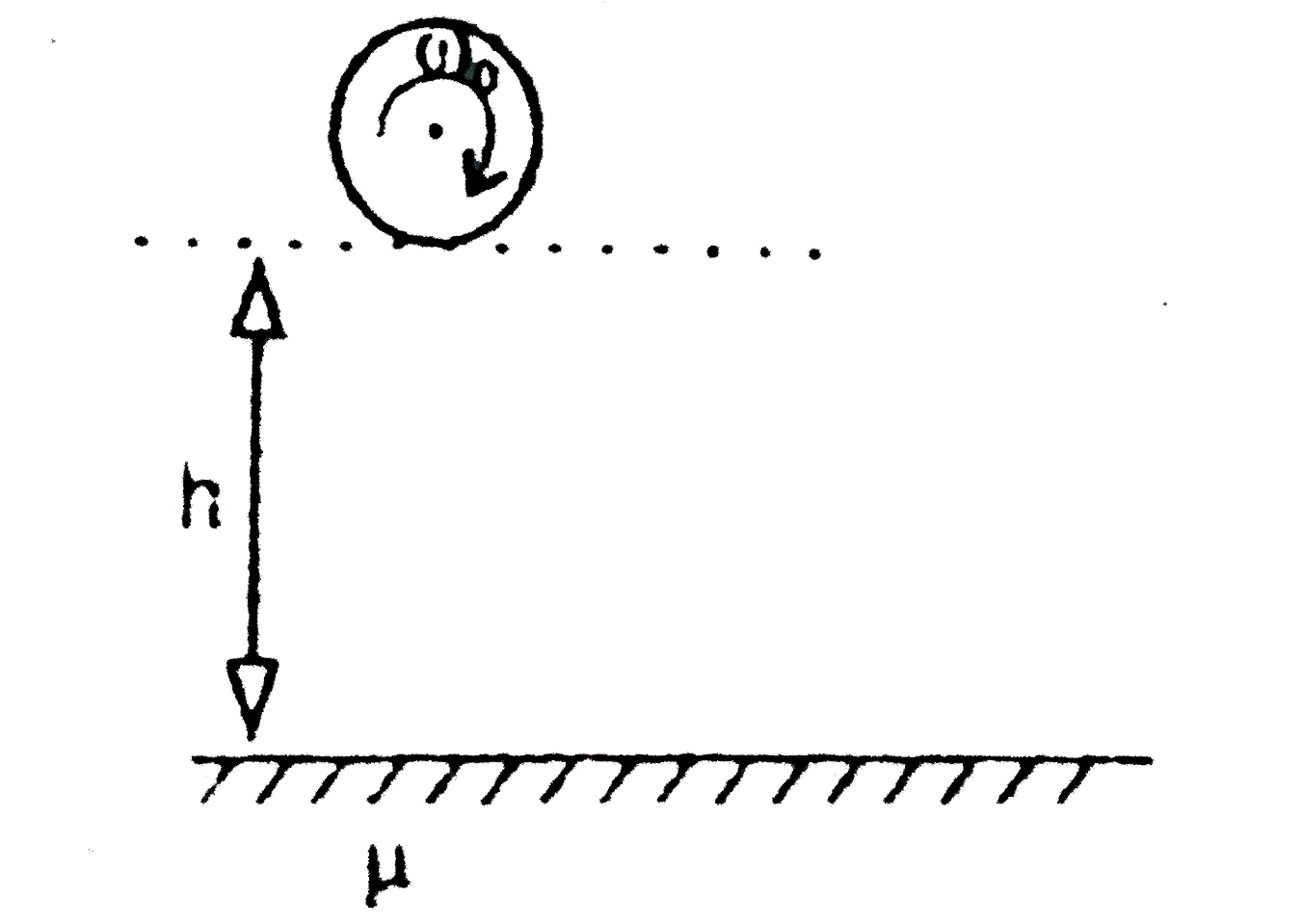
A solid sphere with angular velocity `omega_(0)` is dropped on a rough surface with coefficient of frication `'mu'` froma height `'h'`. If the collision with ground is perfectly inelastic if the velocity of centre of mass just after the impact is `musqrt((xgh)/(3))` then value of `x` would be :

Promotional Banner

Similar Questions

Explore conceptually related problems

A hoop of radius r mass m rotating with an angular velocity omega_(0) is placed on a rough horizontal surface. The initial velocity of the centre of the hoop is zero. What will be the velocity of the centre of the hoop when it cases to slip ?

A hoop of radius r mass m rotating with an angular velocity omega_(0) is placed on a rough horizontal surface. The initial velocity of the centre of the hoop is zero. What will be the velocity of the centre of the hoop when it cases to slip ?

A solid sphere with a velocity (of centre of mass) v and angular velocity omega is gently placed on a rough horizontal surface. The frictional force on the sphere :

A hoop of radius r and mass m rotating with an angular velocity omega_0 is placed on a rough horizontal surface. The initial velocity of the centre of the hoop is zero. What will be the velocity of the centre of the hoop when it ceases ot slip?

A solid ball of mass m and radius r spinning with angular velocity omega falls on a horizontal slab of mass M with rough upper surface (coefficient of friction mu ) and smooth lower surface. Immediately after collision the normal component of velocity of the ball remains half of its value just before collision and it stops spinning. Find the velocity of the sphere in horizontal direction immediately after the impact (given: Romega= 5 ).

A body of mass m is dropped from a height of h . Simultaneously another body of mass 2m is thrown up vertically with such a velocity v that they collide at height h/2 . If the collision is perfectly inelastic, the velocity of combined mass at the time of collision with the ground will be

A body of mass m is dropped from a height of h . Simultaneously another body of mass 2m is thrown up vertically with such a velocity v that they collide at height h/2 . If the collision is perfectly inelastic, the velocity of combined mass at the time of collision with the ground will be