

Home
Class 11
PHYSICS
A cyclindrical ice block is floating in ...

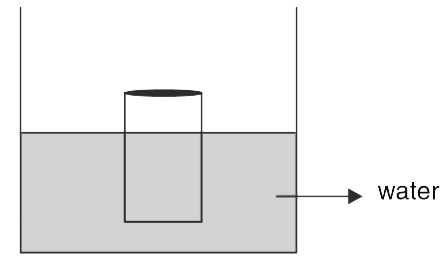
A cyclindrical ice block is floating in water 10% of its total volume is outside water. Kerosene oil (relative density=0.8) is poured slowly on top of water in the container. Assume that the oil does not mix with water. Height of the ice cylinder is H.

(a) As kerosene is poured, how does the volume of ice block above the water level change?
(b) What is the thickness of kerosene layer above the water when 20% of the volume of the ice block is above the water surface?
(c) Find the ratio of voume of ice block is kerosene to its volume in water after the kerosene layer rises above the top surface of ice and the block gets completely submerged. Neglect any melting of ice.

Promotional Banner

Similar Questions

Explore conceptually related problems

why kerosene oil floats on water?

An oil of relative density 1.2 and volume 1 litre is poured in water find the mass of the oil

A body floats in water with 40% of its volume outside water. When the same body floats in oil 60% of its volume remains outside oil. What is the relative density of the oil ?

A body floats in water with 40% of its volume outside water. When the same body floats in oil, 60% of its volume remains outside oil. The relative density of the oil is

A body floats in water with 40% of its volume outside water. When the same body floats in oil, 60% of its volume remains outside oil. The relative density of the oil is

An ice cube floats in water. What percentage of volume is outside water. Density of water = 1g// c c , density of ice = 0.9 g// c c .

An ice cube floats in water. What percentage of volume is outside water. Density of water = 1g// c c , density of ice = 0.9 g// c c .

A wooden block is floating on water at 1^@C with volume v above the water level. If the temperature of water starts increasing slowly, how will the volume of block above the water level is affected?