

Home
Class 11
PHYSICS
The following problems illustrate the ef...

The following problems illustrate the effect of a time-dependent force of a large average magnitude which acts on a moving object only for a short duration. Such forces are called 'impulsive' forces. According to the impulse-momentum theorem, impulse delivered to a body is equal to the change of linear momentum of the body.
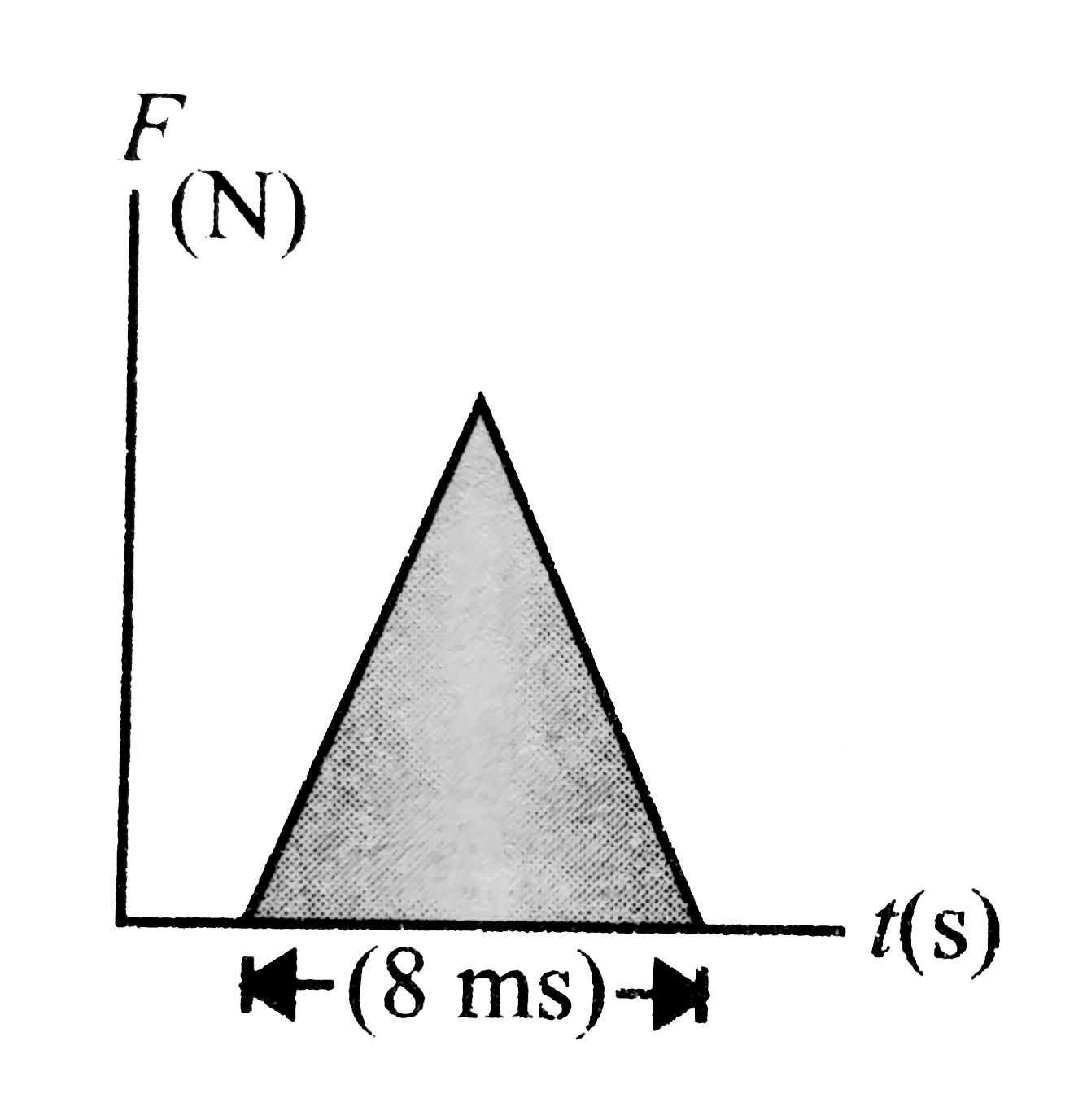
A ball of mass `250 g` is thrown with a speed of `30 m//s`. The ball strikes a bat and it is hit straight back along the same line at a speed of `50 m//s`. Variation of the interaction force, as long as the ball remains in contact with the bat, is as shown in Fig.

Average force exerted by the bat on the ball is
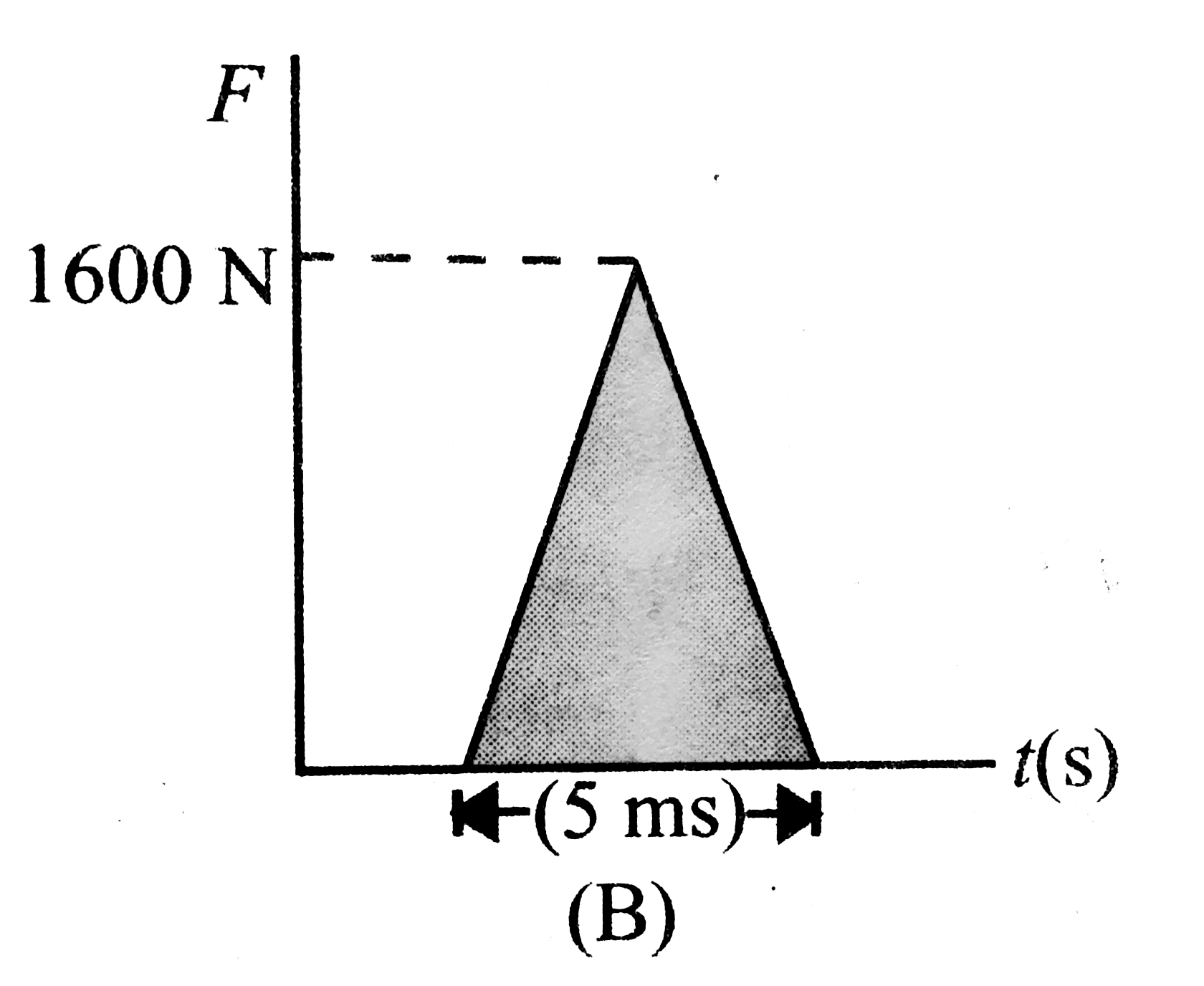
Let us consider another example. The given ball of mass `250 g` is dropped from a height `5 m` on a hard floor. Force exerted by the floor on the ball, as long as these are in contact, varies with time as shown in Fig.

Promotional Banner

Similar Questions

Explore conceptually related problems

The following problems illustrate the effect of a time-dependent force of a large average magnitude which acts on a moving object only for a short duration. Such forces are called 'impulsive' forces. According to the impulse-momentum theorem, impulse delivered to a body is equal to the change of linear momentum of the body. A ball of mass 250 g is thrown with a speed of 30 m//s . The ball strikes a bat and it is hit straight back along the same line at a speed of 50 m//s . Variation of the interaction force, as long as the ball remains in contact with the bat, is as shown in Fig. Maximum force exerted by the bat on the ball is

The following problems illustrate the effect of a time-dependent force of a large average magnitude which acts on a moving object only for a short duration. Such forces are called 'impulsive' forces. According to the impulse-momentum theorem, impulse delivered to a body is equal to the change of linear momentum of the body. A ball of mass 250 g is thrown with a speed of 30 m//s . The ball strikes a bat and it is hit straight back along the same line at a speed of 50 m//s . Variation of the interaction force, as long as the ball remains in contact with the bat, is as shown in Fig. Maximum force exerted by the bat on the ball is

The following problems illustrate the effect of a time-dependent force of a large average magnitude which acts on a moving object only for a short duration. Such forces are called 'impulsive' forces. According to the impulse-momentum theorem, impulse delivered to a body is equal to the change of linear momentum of the body. A ball of mass 250 g is thrown with a speed of 30 m//s . The ball strikes a bat and it is hit straight back along the same line at a speed of 50 m//s . Variation of the interaction force, as long as the ball remains in contact with the bat, is as shown in Fig. After collision with the hard floor, the ball will bounce to a height

The following problems illustrate the effect of a time-dependent force of a large average magnitude which acts on a moving object only for a short duration. Such forces are called 'impulsive' forces. According to the impulse-momentum theorem, impulse delivered to a body is equal to the change of linear momentum of the body. A ball of mass 250 g is thrown with a speed of 30 m//s . The ball strikes a bat and it is hit straight back along the same line at a speed of 50 m//s . Variation of the interaction force, as long as the ball remains in contact with the bat, is as shown in Fig. Linear momentum of the ball immediately after colliding with the floor will be

Prove impulse-momentum theorem.

What is meant by impulse of a force? Prove that, impulse of a force on a body is equal to the change in momentum of the body.

Show that the impulse of a force is equal to the change in momentum produced by the force.

Show that impulse of a force is equal to change in linear mometum produced by the force.