

Home
Class 11
PHYSICS
A ball of mass m is projected with a vel...

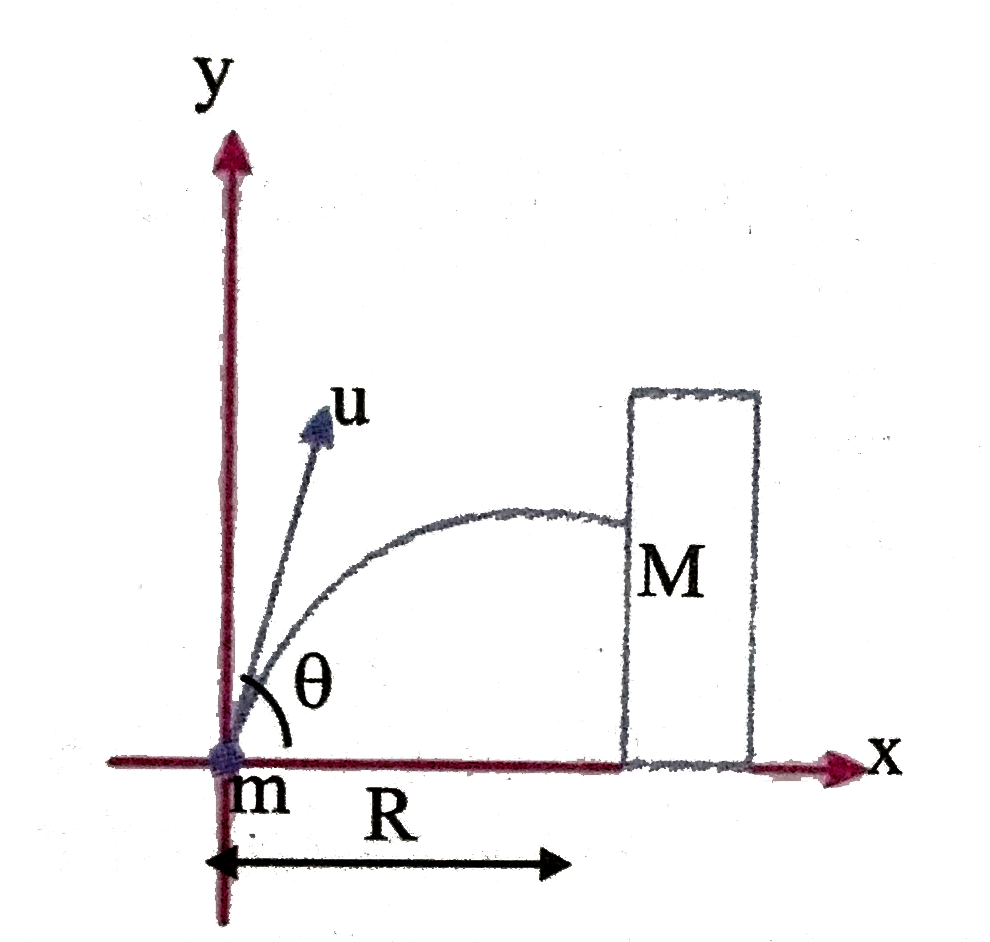
A ball of mass `m` is projected with a velocity `'u'` at angle `theta` with the horizontal. It collides with a smooth box of mass `'M'` at its highest position. If the co-efficient of restitution is `'e'`.

FInd the velocity of the ball after collision

Promotional Banner

Similar Questions

Explore conceptually related problems

A ball of mass m is projected with a velocity 'u' at angle theta with the horizontal. It collides with a smooth box of mass 'M' at its highest position. If the co-efficient of restitution is 'e' . Find the position at which the ball meets the x-axis from the origin

A ball of mass m is projected with a velocity 'u' at angle theta with the horizontal. It collides with a smooth box of mass 'M' at its highest position. If the co-efficient of restitution is 'e' . Find the horizontal distance travelled by the ball before collision.

A ball A moving with certain velocity collides with another body B of the same mass at rest. If the coefficient of restitution is 2/3. The ratio of velocity of A and B after collision is

A ball A moving with a certain velocity collides, with another ball B of the same mass at rest. If the coefficient of restitution is e, the ratio of the velocities of A and B just after the collision is

A glass ball collides with an identical ball at rest with v_(0)=2 m/sec. If the coefficient of restitution of collision is e = 0.5, find the velocities of the glass balls just after the collision.

A glass ball collides with an identical ball at rest with v_(0)=2 m/sec. If the coefficient of restitution of collision is e = 0.5, find the velocities of the glass balls just after the collision.

A ball is projected with initial velocity u at an angle theta to the horizontal. Then horizontal displacement covered by ball as it collides third time to the ground would be, if coefficient of restitution is e :