

Home
Class 12
PHYSICS
A beam of electrons striking a cooper ta...


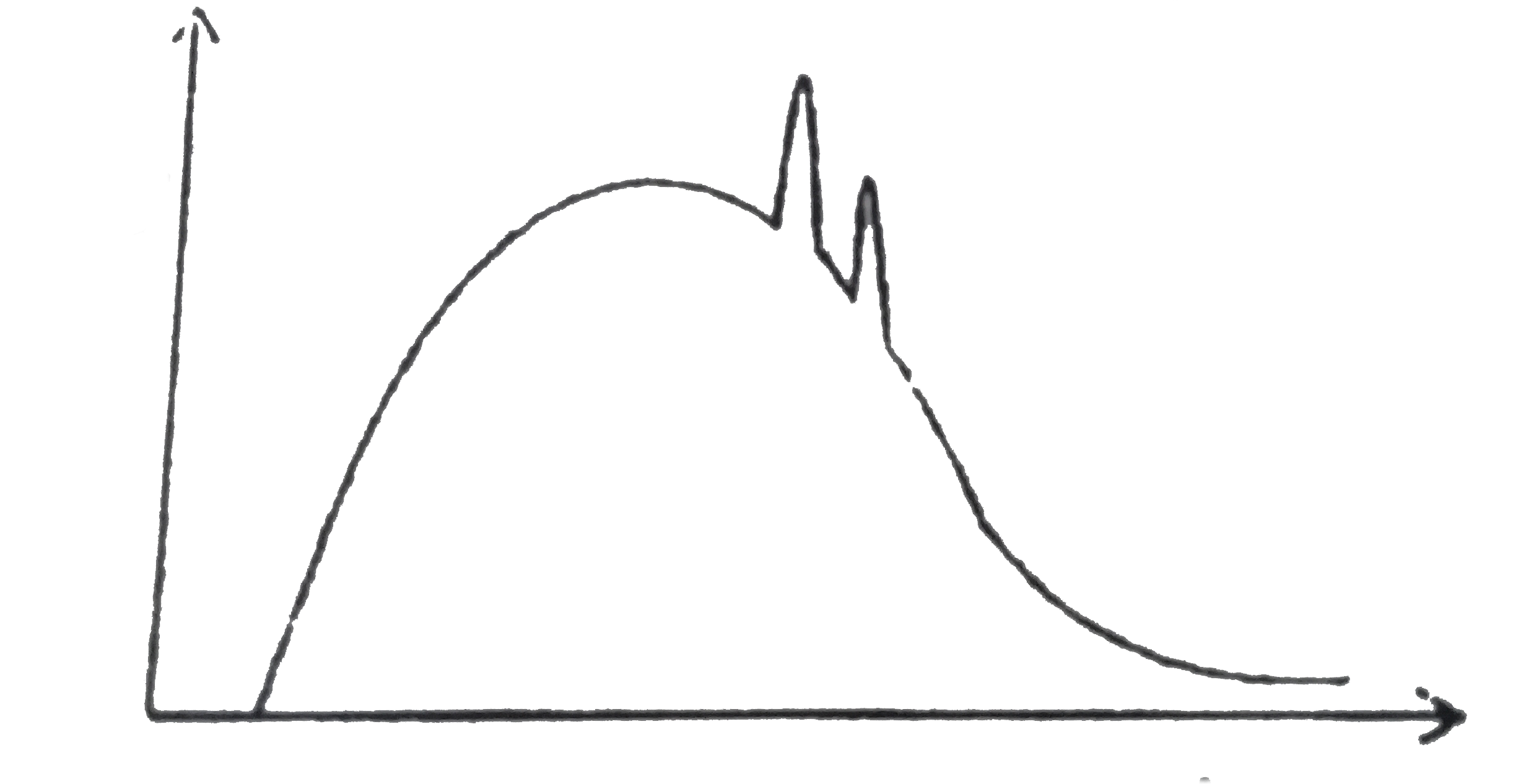
A beam of electrons striking a cooper target produces X-rays. Its spectrum is as shown. Keeping the voltage same if the copper target is replaced with a different metal, the cut-off wavelength and characteristic lines of the new spectrum will change in comparison with old as:

Promotional Banner

Similar Questions

Explore conceptually related problems

A beam of 35.0 keV electrons strikes a molybdenum target, generating the x rays whose spectrum is shown in Fig. What is the cutoff wavelength?

The kinetic energy of electrons that strike the target is increased , then the cut-off wavelength of continuous X-rays spectrum

The kinetic energy of electrons that strike the target is increased , then the cut-off wavelength of continuous X-rays spectrum

A beam of 350 keV electrons a molybdenum target, generating the X-rays. What is the cut-off wavelength?

If the potential difference applied to an X-ray tube is doubed while keeping the separation between the filament and the target as same, what will happen to the cutoff wavelength?

An electron beam hits a target to produce continuous X-ray spectrum. If E be the kinetic energy of each electron in the beam , what would be the lowest wavelength of the emitted X-rays ?

An electron beam is acceleration by a potential difference V to hit a metallic target to produce X-rays. It produces continuous as well as characteristic X-rays. If lambda_(min) is the smallest possible wavelength of X-rays in the spectrum, the variation of log lambda_(min) with log v is correctly represented in

An electron beam is acceleration by a potential difference V to hit a metallic target to produce X-rays. It produces continuous as well as characteristic X-rays. If lambda_(min) is the smallest possible wavelength of X-rays in the spectrum, the variation of log lambda_(min) with log v is correctly represented in