

Home
Class 12
PHYSICS
The wall of a house is made of two diffe...

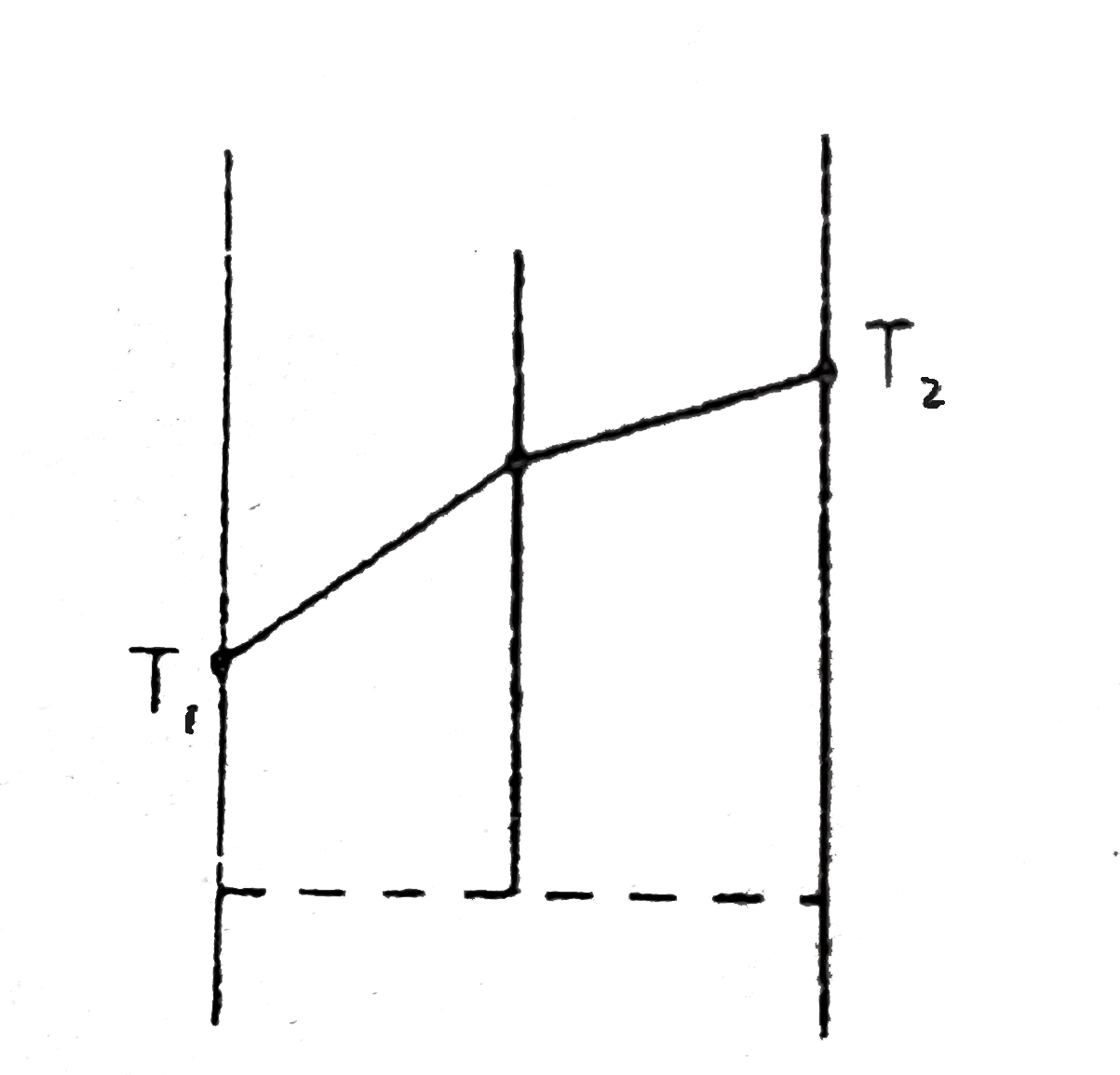
The wall of a house is made of two different materials of same thickness. The temperatures of the outer wall is `T_(2)` and that of inner wall is `T_(1) lt T_(2)`. The temperature variation inside the wall as shown in the figure. Then :

Promotional Banner

Similar Questions

Explore conceptually related problems

The wall of a house consists of two layers with different thermal conductivity coefficients. The ternpera ture of the outer wall is T_1 and that of the inuer wall is T_2 . Temperature variations inside the wall are shown in the figure. What layer, the inner or the outer, has a higher thermal conductivity coefficient?

A wall is of two layers P and Q each made of different material . Both the layers have same thickness . The temperature difference between the wall is 36^(@)C . What is the temperature difference across the layer P ?

A wall has two layers A and B each made of different materials. The thickness of both the layers is the same. The thermal conductivity of A, K_(A) = 3K_(B) . The temperature different across the wall is 20^(@)C in thermal equilibrium

A wall has two layers A and B, each made of different material. Both the layers have the same thickness. The thermal conductivity of the material of A is twice that of B . Under thermal equilibrium, the temperature difference across the wall is 36^@C. The temperature difference across the layer A is

A wall has two layers A and B, each made of different materials. Both the layers have the same thickness. The thermal conductivity of the material of A is twice that of B. Under thermal equilibrium , the temperature differeence across the wall is 36^(@)C . The temperature difference across the layer A is

A wall has two layers A and B, each made of different material. Both the layers have the same thickness. The thermal conductivity of the material of A is twice that of B . Under thermal equilibrium, the temperature difference across the wall is 36^@C. The temperature difference across the layer A is

A wall has two layers A and B, each made of different material. Both the layers have the same thickness. The thermal conductivity of the meterial of A is twice that of B . Under thermal equilibrium, the temperature difference across the wall is 36^@C. The temperature difference across the layer A is

A wall has two layers A and B, each made of different materials. Both layers are of same thickness. But, the thermal conductivity of material A is twice that of B. If, in the steady state, the temperature difference across the wall is 24^(@)C , then the temperature difference across the layer B is :