

Home
Class 12
PHYSICS
The graph of Fig. shows the variation of...

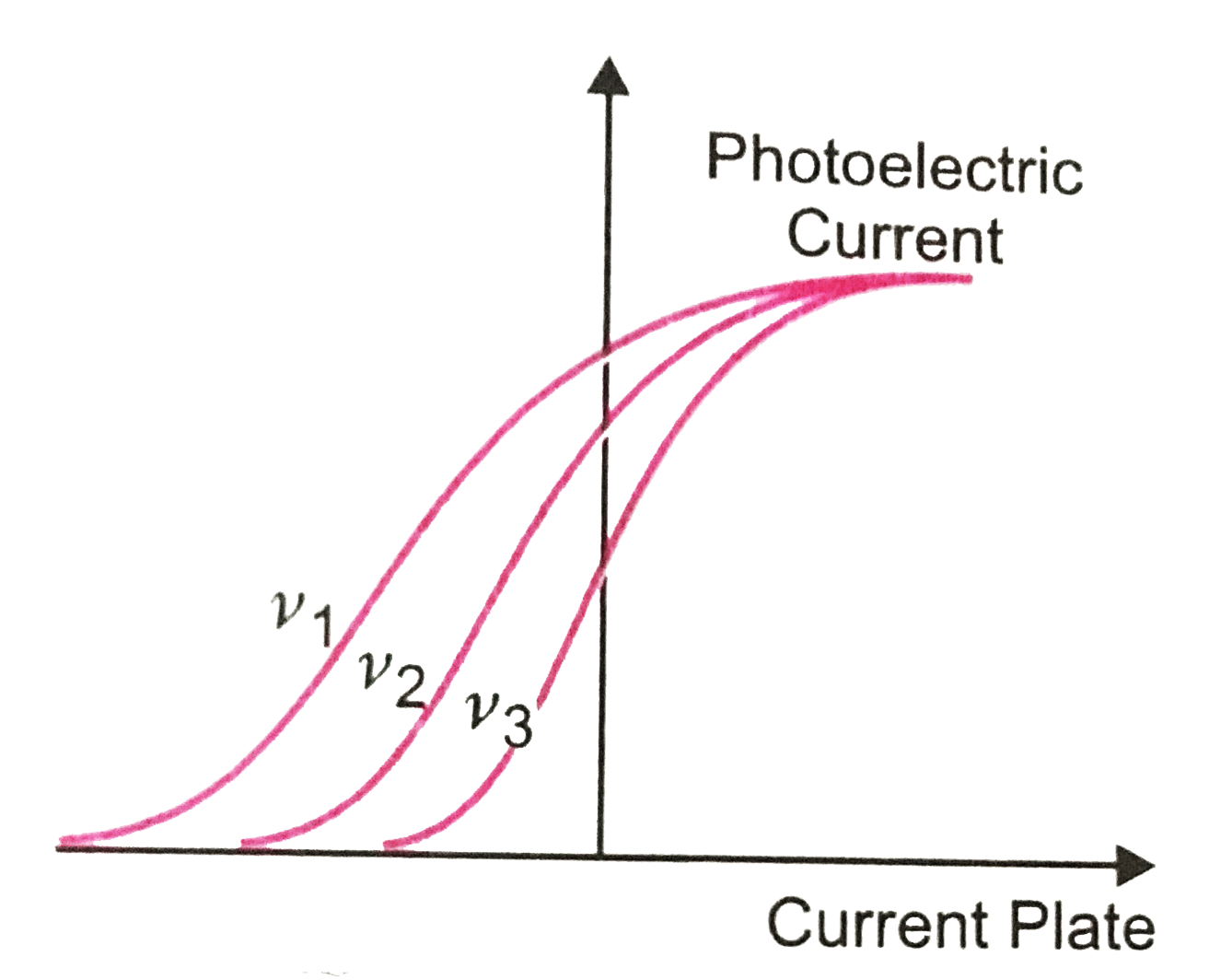
The graph of Fig. shows the variation of photoelectric current with collector plate potential for different frequencies of incident radiations.

(i) Which physical parameter is kept constant for the three curves?
(ii) Which frequency `(v_1,v_2 or v_3)` is the highest?

Promotional Banner

Similar Questions

Explore conceptually related problems

The variation of photo-current with collector potential for different frequencies of incident radiation V_1,V_2 and V_3 is as shows in the graph, then

The variation of photocurrent with collector potential for different frequencies of incident radiation v_1,v_2,v_3 is as shown in the the graph , then

The variation of photocurrent with collector potential for different frequencies of incident radiation v_1,v_2,v_3 is as shown in the the graph , then

Draw a plot showing the variation of photoelectric current with collector plate potential for two different frequencies, v_1gtv_2 of incident radiation having the same intensity. In which case will the stopping potential be higher? Justify your answer.

Draw a plot showing the variation of photoelectric current with collector plate potential for two different frequencies, v_1gtv_2 of incident radiation having the same intensity. In which case will the stopping potential be higher? Justify your answer.

Draw a graph showing variation of photoelectric current (I) with anode potential ( V ) for different intensities of incident radiation. Name the characteristic of incident radiation that is kept constant in this experiment.

Draw a plot showing the variation of potoelectric current with collector plate potential for two different frequencies, v_(1) gt v_(2) , of incident radiation having the same intensity. In which case will the stopping potential be hgiher ? Justify your answer.

Draw a plot showing the variation of photoelectric current with collector plate potential for two different frequencies v_1 and v_2 (v_1gtv_2) of incident radiation having the same intensity. In which case will the stopping potential be higher? Justify your answer.