

Home
Class 9
MATHS
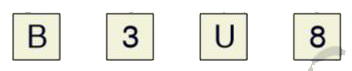
Once again you are given four cards. Eac...

Once again you are given four cards. Each card has a number printed on one side and a letter on the other side. Which are the only two cards you need to turn over to check whether the following rule holds?
"If a card has a consonant on one side, then it has an odd number on the other side."

Promotional Banner

Topper's Solved these Questions

  • PROOFS IN MATHEMATICS

    NCERT GUJARATI|Exercise EXERCISE - 15.3|6 Videos
  • PROOFS IN MATHEMATICS

    NCERT GUJARATI|Exercise EXERCISE - 15.4|15 Videos
  • PROOFS IN MATHEMATICS

    NCERT GUJARATI|Exercise EXERCISE - 15.1|17 Videos
  • PROBABILITY

    NCERT GUJARATI|Exercise DO THIS|3 Videos
  • QUADRILATERALS

    NCERT GUJARATI|Exercise EXERCISE - 8.4|6 Videos

Similar Questions

Explore conceptually related problems

Determine the number of 5 cards combinations out of a deck of 52 cards, if at least one of the 5 cards has to be an ace ?

A tea party is arranged for 16 persons along two sides of a long table with 8 chairs on each side. Four persons wish to sit on one particular and two on the other side. In how many ways can they be seated?

Water is filled up to a height h in a beaker of radius R as shown in the figure. The density of water is rho, the surface tension of water is T and the atmospheric pressure is P_0. Consider a vertical section ABCD of the water column through a diameter of the beaker. The force on water on one side of this section by water on the other side of this section has magnitude

Determine the number of 5-card combinations out of a deck of 52 cards if each selection of 5 cards has exactly one king.

The diagram shows a plant which has received light from one side only. Which characteristics are shown by the plant ?

Consider a disc rotating in the horizontal plane with a constant angular speed omega about its centre O . The disc has a shaded region on one side of the diameter and an unshaded region on the other side as shown in the figure. When the disc is in the orientation as shown, two pebbles P and Q are simultaneously projected at an angle towards R. The velocity of projection is in the y-z plane and is same for both pebbles with respect to the disc. Assume that (i) they land back on the disc before the disc has completed (1)/(8) rotation, (ii) their range is less than half the disc radius, and (iii) w remains constant throughout. Then

A large open tank has two holes in the wall. One is a square hole of side L at a depth y from the top and the other is a circular hole of radius R at a depth 4y from the top. When the tank is completely filled with water, the quantities of water flowing out per second from both holes are the same. Then, R is equal to

To suggest rule for inheritance of earlobe type. Procedure /Method : rarr The lowest part of the ear pinna called the earlobe, is closely attached to the side of the head, i.e., attached or not, i.e., free. rarr Observe the earlobes of all the students in the class. Prepare a list of students. Enter the data about the earlobes whether they are free or attached. rarr Find out about the earlobes of the parents of each student in the class. rarr Correlate earlobe type of each student with that of their parents. rarr In the column write F for free earlobe and A for attached earlobe. Answer the following questions on the basis of the collected data: From your collected data state which expression is dominant and which one is recessive for earlobe.

To suggest rule for inheritance of earlobe type. Procedure /Method : rarr The lowest part of the ear pinna called the earlobe, is closely attached to the side of the head, i.e., attached or not, i.e., free. rarr Observe the earlobes of all the students in the class. Prepare a list of students. Enter the data about the earlobes whether they are free or attached. rarr Find out about the earlobes of the parents of each student in the class. rarr Correlate earlobe type of each student with that of their parents. rarr In the column write F for free earlobe and A for attached earlobe. Answer the following questions on the basis of the collected data: Which expression of earlobe is observed more in number in your class?