


Similar Questions
Explore conceptually related problems
Recommended Questions
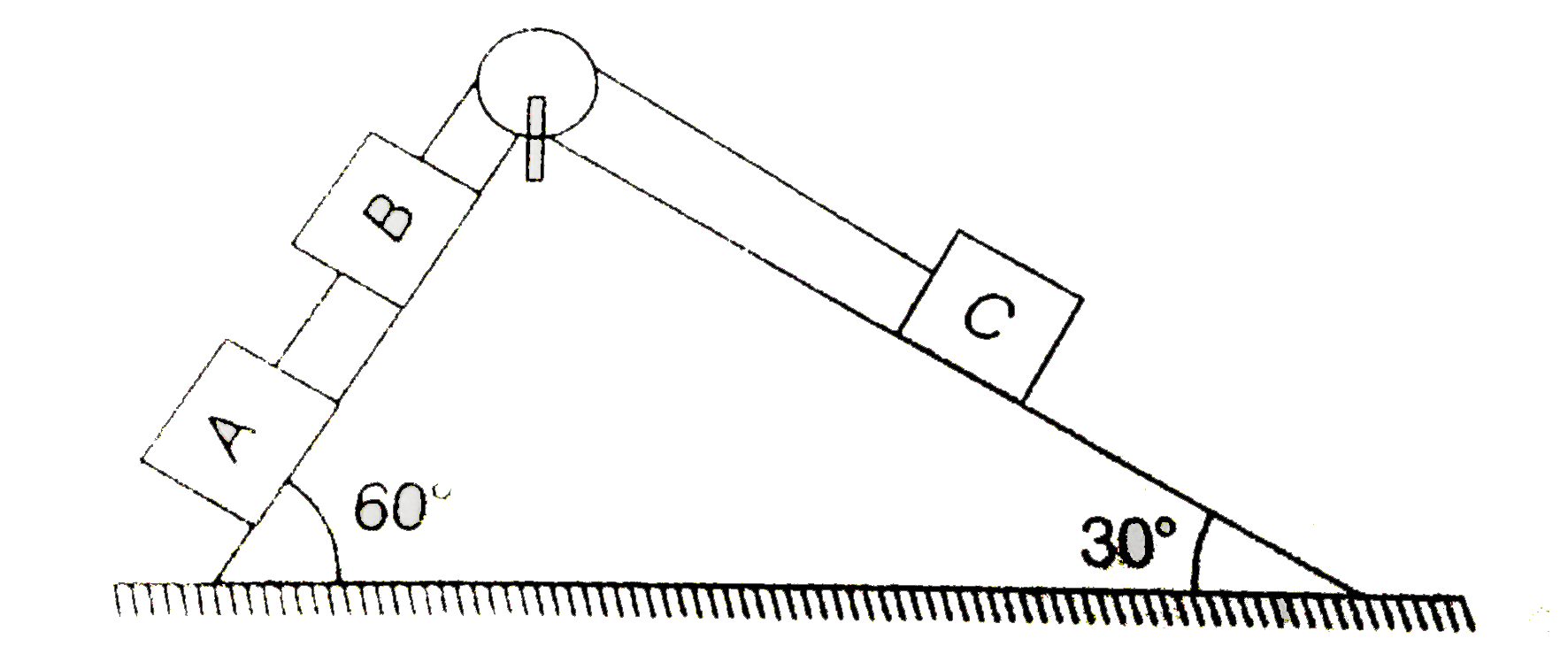
- In the adjacent figure, mass of A, B and C are 1 kg , 3 kg and 2 kg, r...
Text Solution
|
- In the adjacent figure, masses of A,B and C are 1kg ,3kg and 2kg respe...
Text Solution
|
- In the figure shown ,find : (g = 10 m//s^(2)) (a) acceleration of 1 kg...
Text Solution
|
- Three blocks A,B and C of mass 10 kg each are hanging on a string pass...
Text Solution
|
- In the system shown in fig., all pulleys are mass less and the string ...
Text Solution
|
- As shown in figure A, B and C are 1 kg, 3 kg and 2 kg respectively. Th...
Text Solution
|
- In the adjacent figure, mass of A, B and C are 1 kg , 3 kg and 2 kg, r...
Text Solution
|
- A 2 kg block A is attached to one end of a light string that passes ov...
Text Solution
|
- A 'block' of mass 10 kg is suspended with string as shown in figure. F...
Text Solution
|